|
Updates from the Oregon Department of Education
1.
2. Get to know the Multilingual & Migrant Education Team: Yuliana Kenfield, Ph.D - Migrant Education Specialist
3.
4. Developing Policy and Protocols for The Use of Generative Artificial Intelligence (AI) in K-12 Classrooms
Upcoming Events, Training & Conference Opportunities
1. Calling all Youth Presenters: Join Portland Community College’s 6th
1.
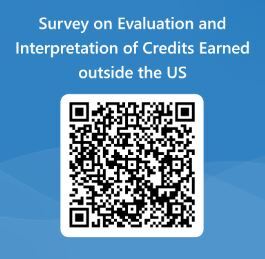
Pursuant to SB 940 (2023), ODE seeks to gather data on current practices, challenges, and needs for evaluating transcripts and credits earned outside of the US. Your feedback will provide critical insights, and will be incorporated into a public report to the legislature.
We seek respondents to our survey who are affiliated with an Oregon public school, district, or ESD involved in receiving, interpreting, and/or evaluating high school credits earned outside of the US, or in making credit and/or placement decisions based on those transcripts and other forms of evidence.
2.
Did you know we have a published author in our ODE MME team who is a Quechua scholar? We interviewed our dear colleague, Yuliana Kenfield, to spread the news about what she brings and what she does within our department. We asked her 3 questions that can help us get to know her better. One of our goals at ODE is increasing collaboration, and what better way to serve our students than working together? Take 10 minutes to watch this YOUTUBE video featuring Yuliana and deepen your understanding of our team members and what we do.
Contact Myrna A. Muñoz, Operations & Policy Analyst, for any inquiries or questions.
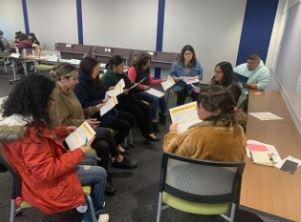 3.
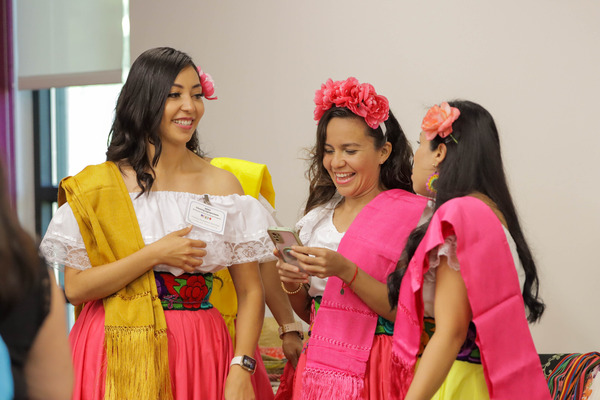
Did you know that Oregon has the largest Binational Teacher Program in the nation? The Oregon Department of Education leads the Binational Teacher Exchange Program in Oregon. This program emerges as a result of the Memorandum of Understanding that the U.S. has with the Mexican Government. As part of this binational effort, every year, Oregon brings teachers from across Mexico to provide culturally and linguistic relevant supports for our local Migrant Education Programs (MEP).
This summer of 2024, 31 teachers from Mexico will be assisting MEP regional summer programs, and we're seeking families interested in hosting these teachers. Families that can host binational teachers to provide a wonderful cultural experience receive a weekly stipend to offset expenses such as food, transportation to and from the school site, and any additional costs.
If you're curious about this program and considering hosting a binational teacher for an enriching summer experience, please reach out to Natalia Piar, Binational Teacher Exchange Coordinator. She'll connect you with our local Migrant Education Programs and address any queries you may have.
1.
On March 7, 2024, ODE staff presented at the 2024 COSA ML/EL Alliance Conference regarding a possible change in the ELPA assessment scoring, called Provisionally Proficient. Your feedback is needed to determine next steps. For more insight, please review the Provisionally Proficient Summary presentation and provide feedback via the Provisionally Proficient Feedback Form. The feedback form will close on March 20, 2024, for ODE to ensure timely next-step decisions.
Please contact Kim Miller, Education Program Specialist, or Ben Wolcott, English Language Proficiency Assessment Specialist, if you need assistance or have any inquiries.
2. FAFSA Update: Important News for Students and Parents without SSNs!
Attention all students and parents! If you've been struggling to start or contribute to your FAFSA form due to a missing Social Security Number (SSN), we have important updates for you.
As of March 11, 2024, parents without SSNs have faced obstacles in initiating or contributing to their child's FAFSA form.
In the first half of March 2024, the Department of Education will address FAFSA submission problems for the 2024-25 academic year. This means that students with contributors lacking SSNs will soon be able to complete and submit their FAFSA forms without any hurdles.
Stay tuned for further updates and ensure you're ready to seize your financial aid opportunities for the upcoming academic year!
3.
Generative AI holds immense potential for revolutionizing education in multiple facets, serving as a versatile tool across various domains. From aiding in the design of tailored learning experiences to functioning as an interactive tool, supporting differentiation, and even acting as a virtual assistance, its applications are vast and transformative. As technology rapidly evolves, its integration into education is poised for expansion, offering new avenues for equitable learning opportunities. Learn more about the transformative potential of generative artificial intelligence (AI) in education with ODE’s brief “Generative Artificial Intelligence (AI) in K-12 Classrooms”.
4. Developing Policy and Protocols for The Use of Generative Artificial Intelligence (AI) in K-12 Classrooms
1. Calling all Youth Presenters: Join Portland Community College’s 6th
Portland Community College’s 6th Ethnic Studies Youth Conference is a platform that centers middle and high school student art, testimonies, and research on the pressing issues of the day, including but not limited to environmental justice, health and healthcare, women’s rights, LGBTQ+ rights, immigrant, migrant, and refugee rights, education, art, youth rights, state violence, economic justice, and white supremacy. This conference bridges communication between and among people, connecting age groups, institutions, and geographies. Free and open to the public, this gathering is a platform for youth voices in a supportive environment.
Where: Portland Community College, Rock Creek Campus, 17705 NW Springville Rd, Portland, OR 97216
When: Friday, May 24th 8:30am-3:30pm
Why: To connect youth, advocates, research, and art
Art and research presentations of about 10-15 minutes (per group). Panels will be grouped by theme and moderated by educators, scholars, and community leaders. Presentations are followed by supportive discussion / question and answer periods. Other format and presentation ideas welcomed!
Participation is free, with a light breakfast and lunch provided at no cost. Space is limited - please RSVP.
1. Middle and high school teachers, counselors, and administrators, those in arts, civic, and cultural organizations, community groups and families are encouraged to share this opportunity with the youth they serve.
2. Share brief descriptions of arts and presentation topics by March 20th, 2023.
2.
This webinar explores how teachers can use generative artificial intelligence (GAI) to maximize access to content and agency in literacy learning for multilingual learners (MLs). Join CAL Board member Ester de Jong of the University of Colorado and CAL’s Director of PK-12 Language and Literacy, Kia Johnson, for an insightful conversation with Kevin Donley of Georgetown University. The speakers will discuss how AI tools, such as ChatGPT, can expand possibilities for teachers to practice linguistically responsive pedagogies. Listen for examples of how teachers can enhance existing scaffolds and accommodations, create new multilingual content, and facilitate multimodal and multilingual writing activities through student-generated text prompts, such as generating and requesting changes to images. Watch now.
3.
In this webinar, educators will learn more about the newly released Oregon Early Literacy Framework and how the guidance and resources about literacy in the framework operate in service of multilingual learners. Core topics of the webinar include considerations for a) integrating recommendations from Science of Reading with culturally and linguistically responsive instruction and b) emphasizing the role of oral and written language in the literacy development of multilingual learners across content areas. Participants across school roles will leave the webinar equipped with a stronger understanding of research, practices, and tools for providing multilingual learners a strong foundation of literacy or biliteracy.
|
Héctor AGUIRRE,
Migrant Education Title 1-C Specialist
|
Hector.Aguirre@ode.oregon.gov
|
|
Charlie BAUER
Interim Director of the
Title 1C High Risk Response Team
|
Charlie.Bauer@ode.oregon.gov
|
|
Leslie CASEBEER,
Office Specialist, Title III, Title I-C,
and ESEA Monitoring
|
Leslie.Casebeer@ode.oregon.gov
|
|
Diego CONTRERAS-MEDRANO,
Research Analyst
|
Diego.Contreras.Medrano@ode.oregon.gov
|
|
Jennifer FONTANA,
Multilingual Education Specialist
|
Jennifer.Fontana@ode.oregon.gov
|
|
Yuliana KENFIELD,
Migrant Education Title 1-C
Specialist
|
Yuliana.kenfield@ode.oregon.gov
|
|
Mary MARTINEZ-WENZL,
Director of Multilingual and
Migrant Education Team
|
Mary.Martinez-Wenzl@ode.oregon.gov
|
|
Estephany MEMBRENO,
Administrative Specialist II
|
MembrenE@ode.oregon.gov
|
|
Kim MILLER,
Title III Education Specialist
|
Kim.A.Miller@ode.oregon.gov
|
|
Myrna MUÑOZ,
Senior Multilingual and Migrant
Education Strategic Advisor
|
Myrna.Munoz@ode.oregon.gov
|
|
Reza NOROUZIAN,
Multilingual Education
Research Analyst
|
Reza.Norouzian@ode.oregon.gov
|
|
Tiffany PALANIUK,
Title III English / Multilingual
Learner Education Specialist
|
tiffany.palaniuk@ode.oregon.gov
|
|
Natalia PIAR,
Multilingual and Migrant
Education Team Coordinator
|
Natalia.Piar@ode.oregon.gov
|
|
Mariana ZARAGOZA,
Multilingual and Migrant
Education Specialist
|
Mariana.Zaragoza@ode.oregon.gov
|
You were added to this newsletter if you are part of the Migrant Education Program and/or the Title III English Learner listserv. Migrant Ed and Title III leaders, staff, and interested members of the public may subscribe to this newsletter through ODE's QuickSubscribe portal at any time. We thank you for serving Oregon's multilingual and migrant students.
|