NEW! Learning Standards for K-5 Page
The Standards and Instructional Supports team has launched a new Learning Standards for K-5 page. The K-5 standards webpage is specifically designed to support K-5 educators with the implementation of Oregon’s content standards. This new webpage complements the content area webpages by providing elementary educators with a single location to access grade-level learning standards. Educators can use the links on the page to quickly access standards across the grade level in preparation for horizontal integration of learning or to review the standards in previous or future grades to help better understand a vertical learning progression. An additional resource on the “bundling” of standards is available.
Assessment of Essential Skills Graduation Requirement Suspension Extended through 2027 – 2028
The Senate Bill 744 suspension of the Assessment of Essential Skills graduation policy was extended through 2027 – 2028 by the Oregon State Board of Education on Thursday, October 19, 2023.
This adoption by the Oregon State Board of Education allows further time for the Oregon Legislature to address the SB 744 Report: Community-Informed Recommendations for Equitable Graduation Outcomes, published by ODE on September 1, 2022.
Additionally, the current extension will allow for community engagement to better support operationalizing the two determinations and the remaining seven recommendations on graduation requirements.
Note: The Oregon State Board of Education’s extension of SB 744 applies to the Assessment of Essential Skills requirements for receiving an Oregon Diploma or Modified Diploma and does not suspend the local performance assessment requirements for students in grades 3 through 8 and at least once in high school.
- Though not related directly to assessment, it is important to note that Oregon’s challenging credit requirements and the Personalized Learning Requirements (education plan & profile, career-related learning, and extended application graduation) remain in place, as well.
For additional information or questions regarding the Assessment of Essential Skills policy, please contact ODE.SenateBill744@ode.oregon.gov.
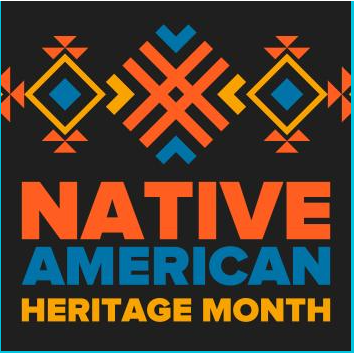
Oregon Open Learning Featured Resource Resources to Honor and Celebrate National Native American Heritage Month
Oregon Open Learning (OOL) is helping to celebrate and honor National Native American Heritage Month for November.
This digital repository and collaboration space is ready for you to curate, create and remix free high-quality Open Educational Resources (OER). Timely examples include:
For more information about OOL and the Language Arts group, please feel free to reach out to Tina Roberts with questions, comments, and suggestions, or contact the Oregon Open Learning Team at OregonOpenLearning@state.or.us. To receive the Oregon Open Learning monthly newsletter, sign up here.
|
Supporting Equitable Literacy Instruction through Text Selection, Analysis, and Use
Student Achievement Partners (SAP) has new resources available for educators around text selection. Included in this new batch of resources, you’ll find support for:
- Research-Based Text Selection
- Resources to Build Knowledge around Text Use in the Classroom
- Text Analysis Toolkit: Resources for Supporting Instruction
- Text Analysis & Reflection Tools
Students deserve equitable access to grade-level text as well as opportunities to develop their academic, linguistic, and cultural identities through culturally responsive and sustaining texts and learning experiences. These new SAP resources help support educators in relevant, research-based text selection.
Student Success Plan Integration
American Indian/Alaska Native Student Success Plan
The Office of Indian Education (OIE) at the Oregon Department of Education (ODE) is pleased to share the strategic American Indian/Alaska Native (AI/AN) Student Success Plan. This five-year state plan will guide agency decision-making through 2020-2025. This plan provides our communities with a refreshed mission that centers shared goals and sets specific data-driven priorities designed to meet the needs of AI/AN students in the state of Oregon. The plan was created with the overarching goal of success for AI/AN students and out-of-school youth.
The purpose of the American Indian/Alaska Native Student Success Plan is to share a vision and identify actionable strategies for working together to achieve that vision. The AI/AN Student Success Plan is a proven strategy that will increase attendance rates, high school graduation rates and create a pathway for equity and excellence for all AI/AN students.
Some of the language arts-aligned goals are:
- Through culturally relevant professional development and technical assistance opportunities to districts, schools have a supportive culture where employees have training, support, and professional development to contribute effectively to AI/AN student success.
- Educators (administrators, teachers, paraprofessionals, all support staff, school board members) will receive AI/AN culturally responsive professional learning that will provide an overview of the Essential Understandings of Tribal History/Shared History (TH/SH, also sometimes referred to as SB 13) to allow for implementation.
- Provide professional development and technical assistance to districts and educators that center AI/AN culture, language, and learning across multiple content areas of Tribal History/Shared History.
Check out some of the resources and lesson plans that can be used in classrooms to support AI/AN student success, as well as to implement Tribal History/Shared History.
Laura Bush Foundation for America’s Libraries Grant
If your public or charter school is Title 1 eligible – or if at least half of your private or parochial school students qualify for financial aid – you may be eligible to apply for a collection development grant from the Laura Bush Foundation for America’s Libraries. Their grant page lists additional eligibility requirements, an FAQ, and key dates – applications are due Monday, November 27th. Please direct questions to laurabushfoundation@bushcenter.org. This is an excellent opportunity for eligible schools to boost their collections, and several schools from Oregon received the grant last year! Thanks for helping to spread the news about this opportunity.
Building Student Research Lessons Using OSLIS Resources
Oregon School Library Information System (OSLIS) offers instructional text, videos, ebooks, and worksheets to teach skills related to the research process. Learn how to locate and use these OSLIS resources to build lessons that address gaps in students’ learning. Additionally, get a refresher on how to search the Oregon School Library Standards and Grade-Level Learning Goals database. Audience: Upper elementary through high school classroom teachers and library staff, and anyone else who is interested. NOTE: Audio for a short section has interference, but the speaker is understandable.
The Building Student Research Lessons Using OLIS Resources Webinar is available for your use.
Super Searchers for Library Workers
The ease with which misinformation can be created and spread online endangers everyday discourse—and libraries are uniquely suited to help counteract its negative effects. Using research developed at University of Washington, Google has created a new set of tools for evaluating material found online, making it easier to think critically about the veracity of digital information right at the point of search. In this interactive presentation, library consultant Toby Greenwalt will demonstrate the capabilities of Super Searchers and showcase potential applications in the library workspace.
Register Here
YALSA Joann Sweetland Lum Literacy Grant Opportunity for Literacy Project Funding
Gregory Lum is a retired school librarian and former president of the Oregon Association of School Libraries. The Young Adult Library Services Association (YALSA) Joann Sweetland Lum Literacy Grant was started four years ago to honor Gregory’s late wife. Applications for this year’s grant are due in a month – December 1st.
If you have a literacy project in mind, you are encouraged to apply for the $1,000 grant. Examples of literacy include, but are not limited to, digital, media, visual, computer, data, financial, civic/ethical, news, information, multicultural, and cultural.
The scholarship jury includes three of Joann’s relatives and librarians from around the country. Previous recipients were from South Carolina, Virginia, and Oregon, including last year’s recipient – Jessica Lorentz Smith from Bend-La Pine Schools.
You do not need to be a member of YALSA to apply for the grant. However, if your grant is selected as the winning project, you must become a member. Some of the grant funds can be applied to YALSA membership.
National Geographic Kids Content Integrated into Gale In Context: Elementary
All Oregon libraries can provide access to a suite of databases from Gale as part of the State Library’s Statewide Database Licensing Program, and central K-12 access is through the Find Information (elementary, secondary) on OSLIS. There is a new way to access content from a specific database that is available statewide.
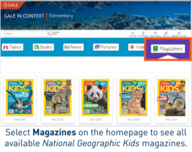
Content from National Geographic Kids (NGK) is now integrated into Gale In Context (GIC): Elementary to simplify access and increase student engagement for elementary learners. National Geographic Kids is still available as a stand-alone database. However, now all of NGK’s content is also available in GIC: Elementary.
There are a few ways to find NGK content in GIC: Elementary. The easiest approach is to click on the Pictures, Videos, or Magazines tab at the top of the GIC: Elementary homepage. Note that while “Books” is a tab option, NGK books are not included in that tab for technical reasons that relate to restrictions National Geographic has on its content. However, all NGK content types, including books, are discoverable in the results of basic and advanced searches and on topic pages. For details and supporting screenshots, see Gale’s integration tip sheet.
Want a bit more information? Read this Gale blog post, or register to watch a 15-minute recorded webinar about the integration. The recording is located at about the middle of this webpage.
|
KATE Reading Comprehension Research Study
WestEd (a nonprofit education organization) and researchers at Texas A&M University are seeking districts to participate in a fully funded reading comprehension research study. The groups have been funded to expand the use of the evidence-based reading comprehension program Knowledge Acquisition Transformation Expansion (KATE). Four studies of this program have found it to have a strong, positive impact on reading comprehension for 4th and 5th grade students. Many districts are looking for ways to accelerate learning in response to learning losses due to the COVID-19 pandemic. Federal funding for KATE offers a way to do just that, FREE of charge. (Participating teachers will earn a stipend of $1,000 for participation).
The comprehensive reading comprehension intervention consists of practice-based professional development for teachers, teacher-led reading comprehension instruction, and a web-based tutoring platform to improve reading instruction and student comprehension. The great thing about this program is that it can be used with any texts and curriculum currently in use. WestEd and Texas A&M are looking for school districts to participate in this study (funded by the U.S. Department of Education) starting in Fall of the 2024-25 school year. Interested districts can contact kate_literacy_study@wested.org or visit https://literacy.io/projects/kate to learn more.
Essay Opportunity: What Do Your Students Think About Diversity and Social Justice?
Conversations around diversity, equity, inclusion, and social justice dominate education today. The ongoing challenges about which books should be allowed in classroom libraries make that clear. But what do students think about such topics?
The International Literacy Association (ILA) has partnered with the American Educational Research Association (AERA) on a student writing project to share their perspectives on these important issues.
This unique opportunity is open to K–12 students nationwide; selected responses will be featured at the 2024 AERA Conference reflecting the theme, “Dismantling Racial Injustice and Constructing Educational Possibilities.”
Educators may submit student responses of up to 1,000 words between now and January 17, 2024. Visit www.literacyworldwide.org/AERA for full details.
If you have ideas for the newsletter or want to contact the ODE ELA specialists, please reach out:
Tina Roberts -- Language Arts Education Specialist
Tony Bertrand -- English Language Arts / Social Sciences Assessment Specialist
Sody Fearn -- K-2 Balanced Assessment Specialist
Sarah Thorud -- Early Language and Literacy Intervention Specialist
Mindi Helmandollar-Armatas -- PreK-3rd Grade Coordinator
|