Oregon Releases Early Literacy Framework
Oregon Department of Education (ODE) has released the final version of Oregon's Early Literacy Framework, a statewide resource document to fuel action and improve literacy proficiency for Oregon’s students. An overview of the framework is also available.
The framework provides coherence, clarity, and common ground for high-quality, comprehensive early literacy education statewide. This resource elevates critical elements of comprehensive literacy instruction including fostering students’ sense of belonging in school, instruction grounded in the science of reading, culturally responsive teaching, and a focus on serving all students, inclusive of multilingual students, students experiencing disabilities, and students with dyslexia.
Oregon's Early Literacy Framework is informed by extensive literacy research, state literacy data, literacy frameworks in other states, consultation with literacy researchers, and conversations with practitioners and community partners. ODE included feedback from educators, literacy experts, and community members across Oregon, building from the preview draft released in March.
Oregon’s Early Literacy Framework lays a foundation to improve reading and writing skills in K-5 classrooms and is directly tied to Governor Kotek’s Early Literacy Success Initiative (HB 3198), which was signed into law on August 2, 2023.
Early Literacy Success Initiative
On August 2, 2023, Governor Tina Kotek signed into law the Early Literacy Success Initiative (HB 3198), a comprehensive literacy initiative that aims to:
- Increase early literacy for children from birth to grade three;
- Reduce literacy academic disparities for student groups that have historically experienced academic disparities;
- Increase support to parents and guardians to enable them to be partners in the development of their children’s literacy skills and knowledge; and
- Increase access to early literacy learning through support that is research-aligned, culturally responsive, and student-and-family-centered.
You can find more information on ODE’s Early Literacy Success Initiative webpage and in the informational flier.
Universal Screening for Risk Factors of Dyslexia and Dyslexia-Related Training Updates
ODE updated the List of Approved Universal Screening Tools for Risk Factors of Dyslexia and the List of Approved Dyslexia-Related Training Opportunities for the 2023-2024 school year.
Oregon Administrative Rule 581-022-2445 requires school districts to universally screen all students for risk factors of dyslexia in kindergarten, and in first grade for students who are new to an Oregon public school in first grade, using a screening test that is on ODE’s approved list referenced in OAR 581-002-1820 as well as administering the measures in each area in 581-002-1820(2)(b) with fidelity as per guidelines of the test developers. Please see the updated list for more detailed information related to each of the approved screening tools.
OAR 581-022-2440 requires each school district to ensure that at least one kindergarten-5th grade teacher in each K-5 school receives training from the approved list, inclusive of content in all of the following focus areas: 1) Understanding and recognizing dyslexia; 2) Using evidence‐based practices to systematically and explicitly teach the foundational skills in reading; and 3) Intensifying instruction to meet the needs of students with severe reading difficulties, including dyslexia.
Questions? Please contact Sarah Thorud, Early Language and Literacy Intervention Specialist.
Oregon Open Learning Professional Learning Survey
The Oregon Open Learning team is looking for input from educators as they plan for professional learning offerings in the 2023-2024 school year. Please take two minutes to participate in this brief survey and share your thoughts on the topics and formats you'd like to see us offer in the future.
Also, check out the Oregon Open Learning Hub and contribute to this community by using these resources, providing feedback, or joining a group to create and share resources for use across Oregon! Join the Oregon OER Professional Learning group to learn more about OER and how to get started on the Oregon Open Learning Hub.
The Alphabetic Principle and Concept of Word in Text: Two Priorities for Learners in the Emergent Stage of Literacy Development
Kristin M. Gehsmann and Heidi Anne Mesmer co-authored this article on "the characteristics of learners in the emergent stage of literacy development and describes two instructional practices that facilitate the development of the alphabetic principle and concept of word in text," (Reading Research Quarterly). You can freely access the article here.
Oregon Open Learning Featured Resource
The Oregon Open Learning Hub is a digital resource repository and collaboration space for educators, administrators, and other educational partners to curate, create, and remix open educational resources (OER). The Hub is a portal to over 50,000 openly licensed resources available on OER Commons, searchable by grade level, subject, and standard.
One way educators get to know students at the start of a new school year is by asking them to write something. Check out this featured resource for a narrative writing lesson--just one example of the content that's included on the Hub! This particular lesson is aligned with grade 11 ELA standards; however, it is easily adaptable to other grade levels. The lesson begins with narrative mentor texts as a model upon which students can base their writing. Then it moves through the writing process and includes opportunities for peer-and-self-editing.
Want to learn more about OER and the Oregon Open Learning Hub? Asynchronous learning options include the OER Professional Learning Group on the Hub and the User Guide for Oregon Open Learning.
Multnomah County Library SchoolCorps Shares Indigenous Books to Support Implementation of Tribal History / Shared History
The Multnomah County Library SchoolCorps recently hosted a webinar sharing resources to support the implementation of Tribal History / Shared History. After the webinar, presenters shared this webliography with Indigenous resources and booklists. In addition to the booklists, there are featured lesson plans and links to the Oregon Department of Education’s Office of Indian Education resources.
Oregon Association of School Libraries (OASL) Fall Conference
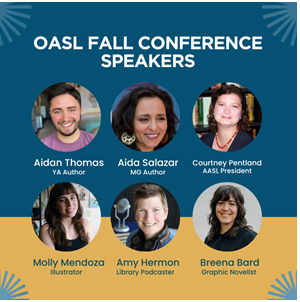
In just a little under two months, the exciting OASL Fall Conference in Lincoln City on October 13th and 14th. Registration will open soon, and the conference website is now live with details about hotels, scholarships, and more.
A dynamic lineup of authors and illustrators will be joining us, as well as our national organization president Courtney Pentland, and librarian Amy Hermon who hosts the phenomenal podcast School Librarians United. Twenty engaging sessions geared toward all library staff and supporters will be presented on Saturday by professionals from across the state!
If you have not attended the OASL Fall Conference in the past, consider applying for a First Timer scholarship.
The Oregon Association of School Libraries (OASL) is offering three scholarships to our Fall Conference in Lincoln City on October 13-14, 2023. Awards will cover the cost of conference registration.
Recipients must be:
-- Oregon school library staff currently employed in or on behalf of a public, charter, or private school or ESD or in a library media endorsement program with the expectation of working as a librarian in an Oregon school;
-- "First timers" or those who have not previously attended an OASL fall conference in person or online; and
-- Be an Oregon Library Association/OASL member or be willing to join OLA/OASL before the conference.
Applications will close on September 15. Participants will be notified of scholarship awards no later than September 25. After applying for a scholarship, please wait to register for the conference until after you receive notification from OASL. Scholarship recipients will receive a discount code to use when registering.
|
Celebrating the Freedom to Read
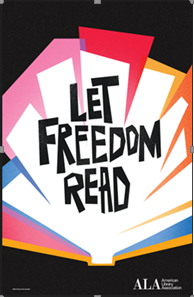
October 1-7 marks Banned Books Week this year. The theme for this year is Let Freedom Read. In an effort to reframe the event, the focus is shifting from talking about banned books to elevating “the ‘freedom’ aspect of freedom to read.”
The Oregon Library Association’s Intellectual Freedom Committee has curated resources for programming, displays, social media posts, as well as activities for all age levels. Check them out here.
|
Student Success Plan Integration
African American / Black Student Success Plan Spotlight
The African American / Black Student Success Plan was established by the passage of HB 2016 in 2015 and codified as ORS 329.841. The bill called for the Oregon Department of Education to create and implement a comprehensive, statewide education plan for African American / Black students in early childhood through postsecondary education programs. The plan has several identified goals/objectives, many of which can be supported through language arts instruction. One of the language arts-aligned goals is:
- Increase culturally responsive pedagogy and practice specific to learning styles and the needs of African American / Black students. Explore multiple academic assessment measures that gauge achievement of literacy and math proficiency.
To explore what that looks like in practice, educators can lean into the work of scholars like Zaretta Hammond, Gholdy Muhammad, and Alfred Tatum.
Hammond wrote Culturally Responsive Teaching and the Brain. In this book, Hammond refers to the work of Geneva Gay and Gloria Ladson-Billings saying, “each describe culturally responsive pedagogy as encompassing the social-emotional, relational, and cognitive aspects of teaching culturally and linguistically diverse students. Cognition and higher order thinking have always been at the center of culturally responsive teaching, which makes it a natural partner for neuroscience in the classroom” (4). Hammond calls on teachers to be “Warm Demanders,” which means focusing on building rapport and trust with students, showing them personal regard by inquiring about important people and events in their lives, holding high expectations for students while offering emotional support and instructional scaffolding, and encouraging productive struggle, among others (99).
Muhammad is the author of Cultivating Genius: An Equity Framework for Culturally and Historically Responsive Literacy. Her focus is on honoring students’ genius as they enter the classroom. Then, once in the classroom, the focus can shift to building a literary presence. This entails creating contexts for students to share their voices and visions authentically through reading, writing, and speaking. It means selecting texts that acknowledge and honor students’ multiple identities, rather than basing text selection solely on students’ reading identities. And, it means providing scaffolds for students to share their thoughts and responses to texts.
Alfred Tatum is a professor of literacy development and inclusive leadership. In his most recent book, Teaching Black Boys in the Elementary Grades: Advanced Disciplinary Reading and Writing to Secure Their Futures, Tatum illustrates how to sharpen students’ literacy development by utilizing a framework that emphasizes advanced literacy, knowledge, and personal development, providing instructional and curricular practices that are intended to help move Black boys across the learning spectrum toward advanced literacy.
To meet this stated goal from the African American / Black Student Success Plan, honor students’ funds of knowledge. Invite students to share themselves in the classroom. Ensure their sense of belonging by creating authentic activities that allow them to share their voices and grow their agency. Check out this NCTE blog post about the power of memoir writing for growing student agency and voice.
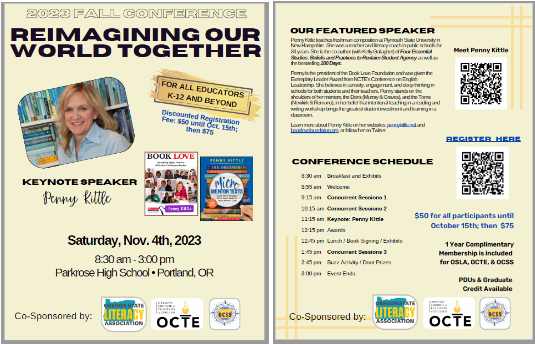
OSLA/OCTE/OCSS Joint Fall Conference–Save the Date!
Portland Book Festival: Save the Date!
Save the date! Literary Arts’ Portland Book Festival is happening Saturday, Nov 24, 2023. You can find more information on the Portland Book Festival website.

If you have ideas for the newsletter or want to contact the ODE ELA specialists, please reach out:
Tina Roberts -- Language Arts Education Specialist
Tony Bertrand -- English Language Arts / Social Sciences Assessment Specialist
Sody Fearn -- K-2 Balanced Assessment Specialist
Sarah Thorud -- Early Language and Literacy Intervention Specialist
Mindi Helmandollar-Armatas -- PreK-3rd Grade Coordinator
|