The Oregon Digital Learning Quarterly Newsletter from ODE is designed to provide creative frameworks, tools, and strategies for school leaders and teachers as they plan and implement digital learning in all capacities. The newsletter aims to engage educators across Oregon in all things digital learning by focusing on equity and uplifting promising practices implemented in schools and classrooms across the state.
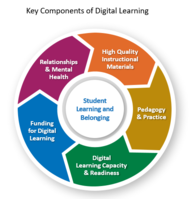
The Key Components of Digital Learning (the ‘Key Components’) is a great starting place for schools and districts to turn to when designing, planning, and implementing digital learning. The Key Components of Digital Learning is intended to serve as a foundational resource for districts to utilize in the planning, implementation, and development of strong leadership for digital learning. This issue focuses on the intersection of high-quality instructional materials, relationships and mental health, pedagogy and practice as a way to consider how to support students’ digital literacy and digital citizenship skills across grade levels and content areas.
Coupled with this quarter’s newsletter, there will be a Teaching and Tech session taking place on March 2nd (4-5PM) focused on digital literacy with a panel of experts from across Oregon sharing ideas and resources for integrating digital literacy into K-12 classrooms. You can register for the event here.
In addition, you can learn more about upcoming opportunities in the Upcoming Professional Learning and Events section at the end of this newsletter. We also encourage you to bookmark ODE’s Digital Learning Website for more information and resources regarding digital learning.
|

What is Digital Literacy?
Within 21st century classrooms, all students need access to instruction in digital literacy as a way to ensure that they have “the ability to use information and communication technologies to find, evaluate, create, and communicate information, requiring both cognitive and technical skills.” (American Library Association). As an educator, digital literacy means providing students with skills that are cross-cutting across content areas and are important in all areas including, but not limited to, communication skills, critical thinking, analysis and evaluation of media (critical media literacy), digital citizenship, etc.
|
In April 2022, National Council for Teachers of English (NCTE) released a position statement titled: Media Education in English Language Arts. This position statement notes that “literacy is expanding, and English language arts (ELA) educators at all levels must help learners develop the knowledge, skills, and competencies needed for life in an increasingly digital and mediated world.” The position statement defines digital literacy as learning where “students develop competencies in using digital platforms for lifelong learning through activities that involve guided inquiry, creative production, and connected learning.”
Why is Digital Literacy important?
In today’s world, students are inundated with technology - be it through online reading, social media, video games, etc., yet not all schools teach digital literacy to students in ways that support them in being able to critically think about how they are consuming and producing digital media. Organizations such as the NCTE, American Library Association (ALA), Learning for Justice, Common Sense Education, and others have put out a call to action to shift this in order to ensure conceptions of reading no longer only include print-based media but are responsive to the shifting landscape.
What existing frameworks can support Digital Literacy instruction?
There are several frameworks and standards that have been developed to support educators in teaching digital literacy across grade levels and content areas.
- Learning for Justice (previously Teaching Tolerance) has developed a Digital Literacy Framework which can be a helpful first step in understanding key areas in which students need support developing digital and civic literacy skills. The skills include 1) Students can locate and verify reliable sources of information, 2) Students understand how digital information comes to them, 3) Students can constructively engage in digital communities, 4) Students understand how online communication affects privacy and security, 5) Students understand that they are producers of information, 6) Students understand their role as customers in an online marketplace, and 7) Students can evaluate the value of the internet as a mechanism of civic action.
- The Oregon Library Association has developed a set of standards and learning goals that speak to the needs of the 21st Century Learner. In addition, they provide a Standards Crosswalk to Oregon English Language Arts & Literacy Standards - (previously known as ELA standards).
-
ISTE Student Standards: While the ISTE Student Standards do not focus specifically on digital literacy, digital literacy skills are woven throughout the standards as a way to support students in understanding, analyzing, and creating through digital means.
-
AASL Standards Framework for Learners: The American Association of School Librarians has developed standards that focus on several domains and competencies including: inquire, include, collaborate, curate, explore, and engage. These standards can support the integration of digital literacy skills for learners across grade levels and content areas.
How does Digital Literacy intersect with and complement other literacy learning?
Literacy is more than just reading. It involves reading, writing, speaking, listening, and critical thinking. When we consider how these components of literacy intersect and build on each other, it is important to extend that to the consumption and production of digital media, as well. Once students have been taught the code of a language and have become proficient readers, they must also be taught how to evaluate sources to determine the validity and reliability of those sources, and they must be taught how to be critical consumers of texts. “The definition of literacy continues to expand. It’s more than just reading – it’s writing, speaking, communicating, and being literate in today’s digital society” (Georgia Department of Education: Literacy for Learning, Living, and Leading).
According to ResourceEd, “digital literacy = digital tool knowledge + critical thinking + social engagement.” That means not only do we have to teach students how to read texts critically, but we must also teach them how to appropriately use digital tools, and how to appropriately engage in digital spaces. It is about ensuring that students know how to responsibly use technology, so they can effectively engage and interact with the world around them. This is not so different from what and how we teach students already. We want students to develop the skills to be able to engage with one another in critical conversations about texts they’re experiencing. Digital literacy expands those skills to the digital environment as well.
Digital Literacy in the Language Arts Classroom
When thinking about how digital literacy shows up in a language arts classroom, there are several considerations to keep in mind. First, digital literacy is about more than technology use. While one aspect of digital literacy is knowing how to responsibly use technology, that is only one component. Marianne Stenger, in "7 Ways to Teach Digital Literacy" explains that technology should not be seen as a substitute for traditional learning activities, "because although this might keep students engaged, it doesn't help them develop 21st century problem solving skills." Stenger suggests that students be allowed to use technology to problem-solve and be creative, in order to foster their desire to learn. This provides students the opportunity to build upon skills we already teach when we add digital literacy into our teaching repertoire. Intentionally teaching students how to think critically and be responsible consumers and producers of digital media is necessary, as this is the space where students live.
Learning how to utilize the technology students interact with every day by bringing it into the classroom, as teaching tools and resources, helps contextualize and make relevant the learning we ask them to do--beyond only doing so because it is included in the scope and sequence of the curriculum or the standards. Rather, embedding digital literacy within the curriculum, helps create authenticity in the work we ask students to engage in as they study novels, poetry, art, music, and more in a language arts classroom. As Stenger said, "giving students more freedom of choice and encouraging them to use technology in new and creative ways is one of the best ways to help them hit the ground running once they enter the workforce." To continue learning about the work happening within Language Arts, we encourage you to sign up for Oregon’s Language Arts Update.
Digital Literacy Resources:
As schools consider how to integrate digital literacy within their existing curriculum, they can look to the "Pedagogy and Practice" section of the Key Components of Digital Learning to consider how to design for purposeful learning and promote engagement, deeper learning and discourse as well as the High Quality Instructional Materials section to consider how they can integrate digital literacy within the core curriculum.
-
Learning the Landscape of Digital Literacy: To support an understanding of the benefits of teaching digital literacy, Learning for Justice has put together an overview of the what and why behind digital literacy as well as potential challenges within the classroom. This is a helpful foundation for educators interested in teaching digital literacy skills in their classrooms.
-
What is Digital Literacy?: In this special report, EdWeek discusses the definitions of digital literacy commonly used as well as nuances to understanding the broad landscape of digital literacy.
-
Digital Literacies Collection: The International Literacy Association has curated a list of resources focused on digital literacy with a broad array of topics covered.
-
Digital Literacy Lessons: Learning for Justice has developed a set of digital literacy lessons broken down by grade band, K-2, 3-5, 6-8, and 9-12. They provide a starting point for educators to begin integrating digital literacy lessons within their classrooms.
-
Lessons and examples to build students’ digital literacy skills: Nearpod has put together a collection of free lessons and resources to support educators who are interested in teaching digital literacy in their classrooms.
-
Teaching Lateral Reading: Civic Online Reasoning has put together a set of lessons to support students in evaluating where information comes from. The lessons focus on learning about websites through lateral reading e.g. reading other sources to learn about the validity of the content.
-
Lessons that Build Students’ Media and News Literacy: Cult of Pedagogy, in conversation with Common Sense Media put together a set of lessons to support students in developing their media literacy skills as well as their digital citizenship skills - both of which are part of the larger set of digital literacy skills.
-
PBS Newshour Media Literacy: In this set of lessons, educators can find a variety of activities and discussion topics that will support in deeper learning and discourse related to digital literacy.
-
News Literacy Project: The News Literacy Project, a nonpartisan education nonprofit, is building a national movement to advance the practice of news literacy throughout American society, creating better informed, more engaged and more empowered individuals — and ultimately a stronger democracy. The website has a variety of tools and resources for educators and students to use to support in growing their digital literacy skills.
-
Civic Online Reasoning Resource: The Stanford History Education Group (SHEG) Institute put together a Civic Online Reasoning resource. This includes a curriculum (lessons and assessments) and video resources.
Looking for additional resources? Consider the following books – both which provide professional learning opportunities related to digital literacy as well as lessons and resources that can be implemented across grade levels.
-
Read the World: Rethinking Literacy for Empathy and Action in a Digital Age by Katie Muhtaris and Kristin Ziemke
-
Developing Digital Detectives: Essential Lessons for Discerning Fact from Fiction in the ‘Fake News’ Era by Jennifer LaGarde and Darren Hudgins

What is digital citizenship?
Oftentimes when educators hear digital literacy, they automatically think of digital citizenship. While digital citizenship and digital literacy are related, there are distinct differences. In their Media Education in English Language Arts, NCTE defines Digital citizenship as “students… learn[ing] about the rights and responsibilities of people in complex, diverse societies and reflect on their own ethical choices as they use digital platforms in the context of work, life, and citizenship.” Digital citizenship includes: Privacy & Security, Cyberbullying, Digital Drama, & Hate Speech, Digital Footprint & Identity, Relationships & Communication, News & Media Literacy, Media Balance & Well-Being.
More recently, the language of digital civics has been used to understand “the study of the rights and responsibilities of citizens who inhabit the infosphere and access the world digitally” (Digital Civics). The term digital civics like digital citizenship is designed to “help young people learn to use digital media — safely and productively — to make an impact on issues they care about” (Harvard Graduate School of Education).
Why is Digital Citizenship important?
Digital citizenship is essential in ensuring that students can safely navigate the digital world while effectively using technology to consume and create digital content and interact and communicate with others. In the article “Digital citizenship is more important than ever,” Mike Ribble shares the acronym REP that he discusses in his book Digital Citizenship in Schools to help think about the “why” behind digital citizenship R is for respect yourself and others , E is for educating yourself and others, and P is for protecting yourself and others.
Digital Citizenship Resources:
As schools consider how to integrate digital citizenship within their existing curriculum, they can look to the "Relationships and Mental Health" section of the Key Components of Digital Learning to consider how to ensure that students feel safety, security, and belonging as well as the Pedagogy and Practice section to consider ways to integrate lessons that are centered in students’ lived experiences.
-
MESD Digital Citizenship Resource: Katy Tibbs, Education Technology Specialist at the Multnomah ESD curated a resource designed to support educators in integrating digital citizenship lessons and practices within their classrooms.
-
Teaching Digital Citizenship in Today’s World: This document produced by Common Sense and Project Zero provides research and insights behind the Common Sense Digital Citizenship Curriculum.
-
Common Sense Education: Digital Citizenship Lessons: Common Sense Education has developed a set of digital literacy lessons broken down by grade band, K-2, 3-5, 6-8, and 9-12. They provide a starting point for educators to begin integrating digital citizenship lessons within their classrooms.
-
Digital Civics Toolkit: The Digital Civics Toolkit is a collection of resources for educators to support youth to explore, recognize, and take seriously the civic potentials of digital life.
-
A Toolkit for Digital Civics: This website provides an overview of the Digital Civics Toolkit along with additional resources developed by the Harvard Graduate School of Education.
-
Digital Citizenship Resources Recommended by LTC Coaches: The Learning Technology Center has put together a set of resources including lessons, apps, games, and books to support digital citizenship education.
-
Critical Digital Citizenship: Civics of Technology, started by a number of professors and PhD students, includes resources and a curriculum to “offer youth powerful ways to confront oppression and use digital media to express their politics and promote civic engagement.
-
Digital Citizenship Resources: Beaverton School District has a comprehensive set of resources focused on digital citizenship.
|

This section highlights schools, districts, and ESDs across Oregon that are integrating digital literacy and digital citizenship across grade levels and content areas. We recognize that this only represents a snapshot of the beautiful work happening across Oregon and would love to hear from you about work happening in your classrooms, schools, districts, and organizations (contact information at the bottom of the newsletter).
In this newsletter, we are spotlighting the work of educators working at Multnomah ESD, Oregon Charter Academy, and Albany Public Schools who are each approaching digital literacy and digital citizenship in ways that support their communities. You can read about their work and get valuable resources in the “Digital Literacy and Digital Citizenship Spotlight”.
|

Teaching & Tech: Cadre Connection
Who: All educators interested in learning about ways to integrate technology into their classrooms and connect with other educators around the state to learn and grow in their craft.
What: An opportunity for educators to come together on a monthly rhythm to learn something new (a new technology integration framework, approach, strategy), discuss digital learning problems of practice, talk about “tech” they are excited about, and connect with other educators across the state! Educators can join us every month or whenever they have the capacity. **The March session (March 2nd) will feature a panel discussion focused on digital literacy with experts from across Oregon sharing ideas and resources to support digital literacy practices for K-12 students.**
When: The first Thursday of each month, 4:00-5:00PM.
Where: Teaching & Tech: Cadre Connection will take place on Zoom. Educators can register for the entire series (December-June) here. There will be an option to register for the entire series or those sessions you are able to attend. All materials from the sessions will be sent out post-session to all registrants.
|
|