The Oregon Digital Learning Quarterly Newsletter from ODE is designed to provide creative frameworks, tools, and strategies for school leaders and teachers as they plan and implement digital learning in all capacities. We hope to engage educators across Oregon in all things digital learning by focusing on equity and uplifting promising practices implemented in schools and classrooms across the state.
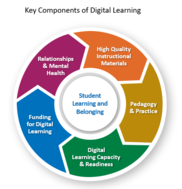
The Key Components of Digital Learning (the ‘Key Components’) is a great starting place for schools and districts to turn to when designing, planning, and implementing digital learning. The Key Components of Digital Learning is intended to serve as a foundational resource for districts to utilize in the planning, implementation, and development of strong leadership for digital learning. In this issue, we will focus on the intersection of the components, “Relationships and Mental Health,” “Pedagogy and Practice,” and “High-Quality Instructional Materials” as a way to set the stage for beginning the 2022-23 school year.
Throughout the 2022-2023 school year, the Digital Learning Newsletter will be coupled with professional learning opportunities wherein ODE will facilitate conversations grounded in the focus of the newsletter for the current quarter, with opportunities to learn from other educators across the state. Learn more about these upcoming opportunities in the Upcoming Professional Learning and Events section at the end of this newsletter. We also encourage you to bookmark ODE’s Digital Learning Website for more information and resources regarding digital learning.
This Quarter’s Newsletter Focus
This newsletter is designed to support educators in considering the intersection of Digital Learning and Social Emotional Learning (SEL) in order to think deeply about how to leverage instructional practices that effectively use technology to:
- strengthen a student’s knowledge, skills, and attitudes to develop healthy identities;
- manage emotions and achieve personal and collective goals;
- feel and show empathy for others;
- establish and maintain supportive relationships;
- and make responsible and caring decisions.
The content of the newsletter will provide resources and examples connected to each of the following questions (clicking on a question will take you to the associated resources).
|
What is Digital Learning?
Digital learning refers to “any instructional practice that effectively uses technology to strengthen a student’s learning experience and encompasses a wide spectrum of tools and practices,” as defined in the Every Student Succeeds Act. This is a comprehensive definition which includes the use of technology and practices across all instructional models, from in-person to fully online learning environments.
Why Digital Learning?
Digital learning and educational technology have the power to disrupt systems of oppression and marginalization, to engage and empower students and families, and to affirm students’ racial, cultural and linguistic identities. The widespread increase in the use of technology that occurred during the pandemic provides an opportunity to carry forward the best of what we learned and to leverage technology to address inequities in schools across Oregon. With an equity focus and mindset, digital learning can help reduce inequities between students. It is equally important to acknowledge that in the absence of this intention, digital learning can also perpetuate and exacerbate existing inequities and make schooling more difficult for those who are already marginalized within the system.
What is Social Emotional Learning and Transformative Social Emotional Learning?
While there are many definitions of SEL, the one most cited is from the Collaborative for Academic, Social, and Emotional Learning (2021, para. 1):
[Social Emotional Learning is] an integral part of education and human development. SEL is the process through which all young people and adults acquire and apply the knowledge, skills, and attitudes to develop healthy identities, manage emotions and achieve personal and collective goals, feel and show empathy for others, establish and maintain supportive relationships, and make responsible and caring decisions.
Transformative Social Emotional Learning is “a process whereby young people and adults build strong, respectful and lasting relationships that facilitate co-learning to critically examine root causes of inequity, and to develop collaborative solutions that lead to personal, community, and societal well-being.” (CASEL, 2022)
Transformative Social Emotional Learning asks these questions:
- What knowledge and capacities do humans need to thrive individually and as a community?
- What does it look like to create a culture of care, inclusion, belonging, agency, and liberation?
“This form of social emotional learning is aimed at redistributing power to more fully engage young people and adults in working toward just and equitable schools and communities. It emphasizes the development of identity, agency, belonging, curiosity, and collaborative problem-solving within the CASEL framework” (CASEL, 2022).
Why SEL?
In the short term, Social Emotional Learning helps us know ourselves, understand the perspectives of others, and make sound personal and social decisions. In the long term, the results noted in the Why SEL companion document are highlighted from research.
|
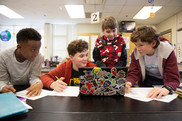
How can schools design purposeful and integrated social emotional learning using digital pedagogy?
Supporting students' social and emotional learning asks that schools consider how to integrate practices into their classrooms and school-wide culture that are designed for purposeful learning and centered in students’ lived experiences. The Pedagogy & Practice section of the Key Components of Digital Learning provides invaluable resources to support meeting this need. You can find additional resources below.
-
Oregon Classroom WISE is a free, digital learning program, website, video library and resource collection for all Oregonians to increase and strengthen school and community mental health and well-being, and promote care and connection!
-
Arizona Department of Education’s Digital Teaching and Learning Guide provides resources related to TPACK for a variety of different areas including Social & Emotional Learning.
-
CASEL’s Program Guide supports district and school leaders in identifying and implementing high-quality SEL programs. Educators can find a step-by-step process designed to meet the needs of the community.
-
Sources of Strength is designed as a suicide prevention program and has Remote Learning Resources and Physically Distanced Games that can provide students with a supported learning environment.
- Jeff Utecht, who hosts the Shifting Schools website and podcast, has several examples of materials that can support schools in designing for purposeful social emotional learning using digital pedagogies. Check out the Shifting Schools Resource Library for downloadable resources, including SEL specific resources, such as “The Art of the Start” and “Small Significant Shifts for Stronger SEL.”
How can schools support students' social emotional learning as they navigate the digital world?
As schools develop systems and strategies to support students’ social emotional learning while they navigate the digital world, they can look to the Relationships & Mental Health section of the Key Components of Digital Learning to consider how we can create structures to build community as well as foster a sense of belonging and safety for each student. You can find additional resources below.
-
SEL in Digital Life Resource Center is a resource developed by Common Sense Education, educators can find grade-specific resources to support their students' social and emotional learning as they navigate the digital world. They can also find a Teachers' Essential Guide to Social and Emotional Learning in Digital Life which links to a FAQ-style guide with resources for educators across grades and levels of experience. Educators can also find resources for teaching SEL (like movies), family engagement activities (by grade band), and professional development resources.
-
Building Connections: Social and Emotional Learning + Digital Citizenship is a webinar put on by CASEL in collaboration with Common Sense Education highlighting the learnings from the COVID-19 pandemic and strategies to ensure student belonging and safety within the digital space.
-
Digital Citizenship Curriculum was developed by Common Sense Media that is structured to allow for lessons to be filtered by topic and grade level. This resource provides educators with the opportunity to teach students about privacy and security online in order to feel safe, strategies for building relationships and communicating in a digital environment in order to build community safely, and strategies for what to do in a digital space when students do not feel safe.
-
SEL Strategies for Virtual Settings was developed by Education Elements and includes strategies to meet the needs of learners in virtual settings in a way that aligns to some or all of the CASEL competencies for SEL.
-
SEL 3 Signature Practices Playbook was developed by CASEL to provide responses to commonly heard questions: “But what does SEL LOOK like?” and “How can we start doing SEL right now?” The SEL 3 Signature Practices are one tool for fostering a supportive environment and promoting SEL. They intentionally and explicitly help build a habit of practices through which students and adults enhance their SEL skills.
-
A Supportive Classroom Environment was developed by CASEL to support teachers in creating a supportive classroom environment through building a strong sense of community, creating structures that foster belonging and emotional safety, and establishing student-centered practices that promote SEL.
What does culturally-affirming social emotional learning look like, sound like, and feel like in a digital learning environment?
As schools integrate culturally-affirming social emotional learning practices, they can look to the High-Quality Instructional Materials and Pedagogy and Practice sections of the Key Components of Digital Learning to support in a focus on culturally and linguistically responsive teaching center in students’ lived experiences. While the below resources are not specific to digital learning, they can serve as a foundation for creating a culturally-affirming learning environment that centers students’ social emotional learning no matter the instructional model. You can find additional resources below.
How can schools nurture educator well-being and integrate practices that support social emotional wellness and joy in teaching?
As schools consider not only the social emotional well-being and wellness of their students, but also their staff, they can look to the Relationships & Mental Health section of the Key Components of Digital Learning for strategies to support staff, as support staff is essential to supporting students. These resources are important for education leaders to consider whether their staff are teaching in person or virtually as they speak to the value of SEL for educators. You can find additional resources below.
|
This section highlights schools and districts across Oregon that are integrating SEL and digital learning to support both educators and students. We recognize that there are many schools and districts across Oregon doing incredible work in this area and would love to hear from you! We encourage you to fill out the ODE Digital Learning and SEL Survey to share the practices your school, district, or ESD is implementing to support student and educator SEL through digital learning pedagogies.
You can read about the SEL and digital learning practices of Beaverton School District and Philomath Academy in SEL and Digital Learning: Examples from Across Oregon.
In addition to the above examples, ODE has two efforts that are important to consider when understanding how SEL is being supported in Oregon - the Integrated Model of Mental Health and ODE’s Care and Connection initiative . Both of these efforts are designed to support districts in fostering healthy, supportive relationships and communities, and creating welcoming spaces for everyone. This means recognizing that each person will have different needs, and honoring, valuing, and respecting each individual’s ways of knowing and being. We encourage you to visit ODE’s Care and Connection website to find tools and resources for creating a foundation of care and connection in schools.
In addition, in 2021, House Bill (HB) 2166 was passed by the Oregon Legislature, with support from the Governor’s Racial Justice Council, community-based organizations, and the Oregon Department of Education. Section 4 of the bill directs the Oregon Department of Education, in consultation with the Early Learning Division and the Teacher Standards and Practices Commission, to convene an Advisory Group to propose to the State Board of Education: a) SEL standards, and b) an SEL framework, for K-12 education. The bill establishes that the State Board of Education shall adopt these no later than September 15, 2023 and shall require school districts to implement the standards and framework no later than July 1, 2024. To find out more about this work, please visit ODE’s Social Emotional Learning (SEL) Website or reach out to ODE.SEL@ode.oregon.gov.
Digital Learning and SEL Conversation Session hosted by ODE – November 17, 2022
Who: All educators, no matter their role or the instructional model in which they teach, who are interested in Supporting Students’ Social Emotional Learning in a digital environment and/or using digital pedagogies.
What: An opportunity for educators to come together to share, curate, and collaborate on digital learning and SEL. During this session, hosted by ODE, you will have the opportunity to learn from educators across the state about how they are supporting students’ social emotional learning at the intersection of digital learning (across instructional models).
When: Thursday, November 17th, 4:00-5:00PM.
Where: The Digital Learning Conversation Session will take place on Zoom. Educators can register for the session here.
Teaching & Tech: Cadre Connection Corner
Who: All educators interested in learning about ways to integrate technology into their classrooms and connect with other educators around the state to learn and grow in their craft.
What: An opportunity for educators to come together on a monthly rhythm to learn something new (a new technology integration framework, approach, strategy), discuss digital learning problems of practice, talk about teaching with tech, and connect with other educators across the state! Educators can join us every month or whenever they have the capacity.
When: The first Thursday of each month (beginning in December), 4:00-5:00PM.
Where: Teaching & Tech: Cadre Connection Corner will take place on Zoom. Educators can register for the entire series (December-June) here. There will be an option to register for the entire series or those sessions you are able to attend.
|
|