|
October Social Science Resources
|
|
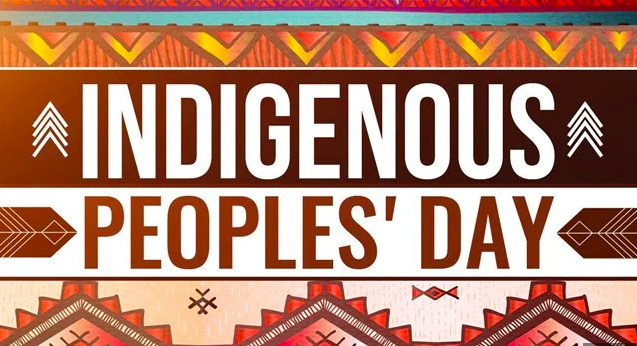 With the school year now in full swing, there is a long list of of opportunities for celebrating and learning in October. Hispanic Heritage Month continues through October 15th. Although International Indigenous Peoples' Day is recognized in August, Indigenous Peoples' Day, is celebrated in Oregon this year on October 10th. These resources provide an opportunity to explore issues and events related to indigenous peoples around the world.
Oregon is one of thirteen states to recognize the second Monday of October as Indigenous Peoples' Day.
Oregon has many different Indigenous communities including nine federally recognized tribes: Burns Paiute of Harney County; Confederated Tribes of Coos, Lower Umpqua and Siuslaw Indians; Confederated Tribes of Grand Ronde; Confederated Tribes of Siletz; Confederated Tribes of Umatilla Reservation; Confederated Tribes of Warm Springs; Cow Creek Band of Umpqua Indians; Coquille Indian Tribe; and Klamath Tribes.
Resources for Indigenous Peoples' Day
Indigenous Peoples' Day Celebrations
Additional Resources for Hispanic Heritage Day
|
|
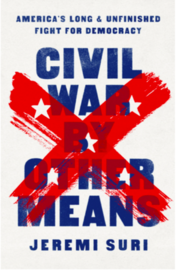
The demands of teaching make finding time to read a book of history challenging during the school year. If you are committing time to expand your historical knowledge, selecting a text that offers immediate relevance to your teaching is nearly a requirement. Jeremi Suri's latest, Civil War By Other Means, is an engaging and relevant exploration of a neglected facet of the twenty troubled years after Appomattox.
Suri teaches at the University of Texas, and each chapter reads like an engaging lecture intended to be interrupted with questions and comments. Every few pages provide compelling connections between the history and recent issues in American democracy. Teachers are likely to fill the margins with notes in anticipation of questions from high school students.
With a focus on executive and congressional leadership responding to a post-Civil War nation, Suri expands the "Reconstruction Era" beyond the Compromise of 1877 to the assassination of Garfield (the second presidential assassination in sixteen years) and the election of Grover Cleveland in 1884. Providing disturbing details of the racial terror faced by Black soldiers and newly emancipated Black citizens still subject to racist ideas of state sovereignty and white-only rule, Suri explores the contentious and often dark struggle over the definition of democracy. A chapter on Confederates fleeing to Mexico hoping to continue the war in the belief that the cause was not lost is a surprising revelation of dedication and commitment to treason. Looking for more information in the endnotes, readers will find a guide to readily available resources from online archives such as Teaching American History, the Miller Center, and the Avalon Project. The endnotes are full of excellent reminders all that is available to encourage student engagement with primary sources.
Suri lives and teaches in Texas, and there are several examples of nefarious activities by local politicians. However, there are also hints addressing Oregon's history and our role in the controversy over the electors of 1876 when Oregon's Governor and Secretary of State could not agree on electors.
What is the relevancy of a dispute from 1876 for current events and discussions of civics and democracy? In the last few weeks, the House and Senate proposed bills intent on cleaning up historic and ongoing electoral confusion.
The final chapter distills the history into a civics policy discussion as Suri identifies key aspects of American political life ripe for reform. The history and suggestions demonstrate that a truly representative democracy remains aspirational, but the purpose of Civil War By Other Means is to remind us that the avowed values of democracy are worth the struggle.
|
Classroom Resources
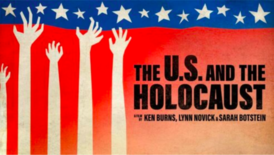
PBS Classroom Resources
This three-part series examines America’s response to one of the greatest humanitarian crises of the twentieth century. Americans consider themselves a “nation of immigrants,” but as the Holocaust unfolded in Europe, and in the context of global antisemitism, racism, anti- immigration sentiment, eugenics, and race laws in the American south, the U.S. proved unwilling to open its doors to more than a fraction of the hundreds of thousands of desperate people seeking refuge. Through firsthand testimony of witnesses and survivors, the series delves into the tragic human consequences of public indifference, bureaucratic red tape, and quota laws.
The PBS webpage includes links to video clips by topic along with supporting teacher materials like discussion questions, graphic organizers, and background readings.
Students can do their own investigation into newspaper archives through the US Holocaust Memorial Museum or through Oregon's Historic Newspaper database to learn more about what Americans knew plight of European Jews.
|
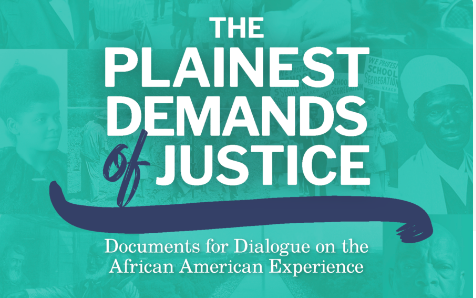
The Bill of Rights Institute Primary Source Collection
Through primary source analysis, this new resource from the Bill of Rights Institute explores the efforts to realize the Founding principles of liberty, equality, and justice by exploring key periods in African American history. Students of history know that there is no substitute for being there - but primary sources come close!
The Bill of Rights Institute will be releasing its latest primary source-based collection, The Plainest Demands of Justice: Documents for Dialogue on the African American Experience. This curriculum is designed to put teachers and students in conversation with those who strove and continue to strive for a greater realization of the promises of liberty and equality as outlined in the Declaration of Independence.
|
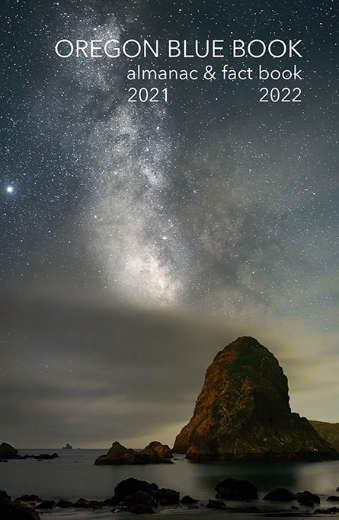
Oregon Secretary of State Shemia Fagan is pleased to invite all Oregon elementary and middle school-aged students to participate in the 2023-2024 Oregon Blue Book essay contest.
About the Contest
The Oregon Blue Book is a unique and special book because it captures snapshots in-time of our state. Oregonians can go back to editions from decades ago and gain an understanding of our state during that era. Since early 2020, Oregonians have been faced with the COVID-19 pandemic. Students have been impacted in many ways, and we’d like to hear about those experiences. These essays will be a part of our mission to tell the story of Oregon during this snapshot of our state’s history.
Essay Topic
Oregon students share their pandemic experience
Deadline for Submissions
Thursday, October 20, 2022
|
Opportunities for Teachers
WESTERN STATES CIVICS COALITION PRESENTS: TEACHING CLIMATE ACTION
October 20, 2022 from 3:30 to 5 p.m. PT
How should we teach about climate change in civics class? Teachers, students, and parents are more aligned than you might think. Join Dr. Deb Morrison, climate activist, scientist and educator on October 20, 3:30 - 5:30 pm pacific time for this session on teaching about climate. Following Dr. Morrison, Trevor Getz, Professor of African and World History will share the latest course from OER Project, Climate Project, a free three-week extension course on how to get to net-zero emissions. Designed for high school social studies classrooms, the course is focused on climate education, policy, and student action.
REGISTER
Western States Civics Coalition and OER Project is was created by state social studies leaders to combine resources and ideas across states in order to provide professional development options for teachers.
|
OJMCHE Teacher Opportunities
Teaching the Holocaust: A 10-Part Series - October 3 - December 19; Free | Zoom
Join the Holocaust Center for Humanity and the Oregon Jewish Museum and Center for Holocaust Education, in partnership with Echoes & Reflections, for a NEW 10-part interactive asynchronous Holocaust educator professional development that begins October 3. Through the platform of EdPuzzle and other web-based interactive services, educators will learn Yad Vashem and Echoes & Reflections educators and scholars about essentials of Holocaust education. The experience will allow educators to learn with and from each other at their own pace and will include two live sessions.
Elections, Leadership and the Power of History: Teaching for Civic Agency - Wednesday, October 12 from 4:30 - 5:30pm; Free | Zoom
How can learning about the history of Nazi Germany and various societies in which civil democracy was threatened, educate us about our civic responsibilities in the world today?
As the United States enters the 2022 mid-term election season we have an opportunity to discuss how people participate in the election of their leaders and what ideas and experiences shape their understanding of various issues. Join Facing History and Ourselves, the Oregon Jewish Museum and Center for Holocaust Education, and Classroom Law Project to explore frameworks, resources, and teaching strategies that empower students to be active members in a civil democracy.
|
Tachau Teacher of the Year Award
The Mary K. Bonsteel Tachau Teacher of the Year Award is given annually by the Organization of American Historians in recognition of the contributions made by pre-collegiate teachers to improve history education within the field of American history. The award, to be given for activities which enhance the intellectual development of other history teachers and/or students, memorializes the career of Mary K. Bonsteel Tachau, University of Louisville, for her pathbreaking efforts to build bridges between university and pre-collegiate history teachers.
|
Human Experience in the Oregon Great Basin: Past and Present Ways of Knowing
Presented in partnership by OHS, members of the Burns Paiute Tribe and Confederated Tribes of Warm Springs Indian Reservation, and the Deschutes County Historical Society.
The “Human Experience in the Oregon Great Basin: Past and Present Ways of Knowing” symposium brings to the public presentations by tribal knowledge-holders, anthropologists, and archaeologists who have researched and learned about the land, plants, animals, people, and climate of the Great Basin in Oregon. Discussions by Wilson Wewa (Warm Springs) and Diane Teeman (Burns Paiute) will frame each day, which will be filled with presentations about the recent archaeological research and analyses, partnership projects, and online databases that are helping build knowledge about the long and ongoing human experiences in the Great Basin. OHS will offer $500 stipends to a limited number of teachers who register for and attend the entire symposium.
Please contact education@ohs.org with any questions and to submit a W-9. PDUs are available for educators who attend. Educators are eligible for 6 PDUs for attending the entire day on Saturday, November 5 and eligible for 5 PDUs for attending the entire day on Sunday, November 6. Those who attend both days of the symposium are eligible for a total of 11 PDUs.
Saturday, November 5–Sunday, November 6 from 9am to 4:30pm
At Ray Hall, Rooms 011-012 on the OSU Cascades campus in Bend
Educators Register Here
|
The 2023 Bob and Marion Wilson Teacher Institute of Colonial Williamsburg
Scholarship opportunities for Oregon elementary and secondary school teachers for the 2023 Bob and Marion Wilson Teacher Institute of Colonial Williamsburg are now open. These scholarships are made possible by the generosity of Colonial Williamsburg Foundation friends, their deep commitment to and respect for teachers, and their belief in teachers’ role in educating the citizens and leaders of tomorrow.
Each scholarship includes admission to all programs, double occupancy room (there is an option to pay for a private room), most meals, and educational resource materials, including primary sources, lesson plans, and digital media.
Please feel free to share this information with any teachers and administrators in your school or district who may be interested. Applications are due by December 9, 2022.
If you have any questions or need further assistance, please contact the Teacher Institute at teacherdevelopment@cwf.org.
|
|
|
|
|
|