|
Digital Learning Quarterly Newsletter from ODE
|
|
 |
|
- Introduction
- Focus: Digital Learning Capacity and Readiness and Funding for Digital Learning
- Heading into Summer
- Upcoming Professional Learning and Events
|
The Oregon Digital Learning Quarterly Newsletter from ODE is designed to engage educators across Oregon in all things digital learning through focusing on equity and uplifting of promising practices implemented in classrooms across the state. We hope that this newsletter provides food for thought for school leaders and teachers as they plan and implement digital learning in all capacities.
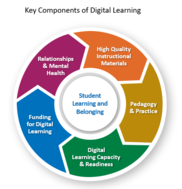
If you haven't yet had a chance to read through the Key Components of Digital Learning, this is a great starting place for schools and districts to turn to when designing, planning, and implementing digital learning. The Key Components of Digital Learning is intended to serve as a foundational resource for districts to utilize in the planning, implementation, and development of strong leadership for digital learning.
In each newsletter, we will highlight one of the five components and provide resources and examples from the field. In this month's issue, we will be centering on "Digital Learning Capacity and Readiness” and “Funding for Digital Learning.”
|
|
|
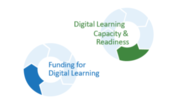
This newsletter's key component focuses on the importance of ensuring that all students have access to the digital tools and connectivity needed for learning while encouraging backward design and planning for long-term sustainability and systems-level change.
As this work exists at the national level, there are several organizations that we encourage you to connect with to learn more about how you might design for long-term change.
|
-
Design backwards for long-term sustainability and systems-level change. This practice involves thinking through funding sources as well as considering how past insights can provide learning for future decision-making.
-
Ensure access to the technology and connectivity needed for learning. Nested within this practice are considerations around e-rate and broadband in order to ensure that districts and schools have the capacity and readiness for sustained digital learning.
- Districts and schools can evaluate their capacity and readiness using the Digital Learning Capacity Framework. This framework offers a structured, clear way for leaders to assess and plan for digital learning across two dimensions: Technology & Connectivity Capacity and Teacher & Student Efficacy. Use this tool as a needs assessment and/or for ongoing reflection and improvement.
- Understanding State E-Rate Program and Broadband Connectivity information and resources is helpful in ensuring that students and educators have equitable access to the technology and connectivity needed for learning.
- There has been a lot of work happening across the United States as well as within Oregon with regards to increasing access to high speed internet connectivity.
-
Emergency Connectivity Fund: The FCC announced a third application window in the Emergency Connectivity Fund to help schools and libraries in the upcoming school year. The third application window will open on April 28 and close on May 13, 2022.
-
Oregon Broadband Office: The Oregon Broadband Office led by Daniel Holbrook (Broadband Manager for Oregon Broadband Office) has been focusing their efforts on Promoting Access to Broadband Services.
-
Connecting Oregon School Funds: The Connecting Oregon Schools Fund (COSF), led by Kaylen Dinsmore, the new Connecting Oregon Schools Fund Coordinator, was established in 2018, by HB 4023 as part of Legislature’s greater commitment to promote broadband infrastructure across the state. The COSF program will provide a state match to school districts, charter schools, ESD’s, and consortium going through the federal E-Rate special construction program. The federal program typically will subsidize up to 80% of the construction costs and will provide up to an additional 10% of those costs should a state match dollar for dollar. Kaylen is coming to ODE from DOJ’s Child Support Case Intake Unit. Prior to working for DOJ, she served as a community program manager in the non-profit and private sector. She is looking forward to the way the COSF program will tangibly further ODE’s vision for equitable education across the state by ensuring all students and educators have broadband access.
-
Provide training to staff, students and families around student data privacy and cybersecurity. Training staff on all federal and state statutes pertaining to protecting students while partnering with families can help to protect the privacy and security of all students. In addition, Districts can assess their Cybersecurity Readiness to guide the improvements and procedures needed to mitigate risk.

As we head into summer, we want to highlight schools and programs that are implementing digital learning in ways that enhance learning opportunities for students while ensuring access to the technology and connectivity needed for learning. You can learn about ways that McMinnville School District is enhancing student learning through digital means during their summer programs.
During the summer of 2021, the educators in McMinnville, gathered together to creatively problem solve around ways to engage students in unique and engaging learning opportunities within their community. Scott Johnson, McMinnville’s Lead After-School Program Coordinator, led the district in partnering with local organizations to provide approximately 1,300 students and their families with innovative summer learning experiences. Provided through both in-person and online platforms, the summer programs incorporated the use of technology as a means for supporting students in design thinking, creative problem solving, and collaborative exploration.
McMinnville partnered with Evergreen Aviation & Space Museum, Chemeketa Community College, and OSU Extension Services to provide unique and engaging learning experiences for students. Each of their summer programming opportunities highlighted the power of digital learning and community partnerships while enhancing student learning and family engagement. can read more about their programs in the McMinnville 21st Century CCLC Program Highlights.
We also encourage you to check out ODE’s Summer Learning website where you can find resources, professional learning opportunities, and the Summer Learning Best Practice Guide- all of which are designed to support educators, students, and families cultivate joy, connection and curiosity through well-rounded summer learning. Within the Summer Learning Best Practice Guide, you can learn more about ways to embed digital learning in order to expand students’ worlds, redefine what is typically possible within a school or summer program setting, and provide students with opportunities to engage in advocacy and social justice work through communication and connection across cultures and geographies.
|

Statewide OER Workshop - May 10
The Oregon Open Learning team will host a statewide OER workshop on Tuesday, May 10th from 4:00 - 5:30 pm. This virtual workshop will be an interactive professional learning event that will provide participants an opportunity to learn about open educational resources (OER) and the Oregon Open Learning Hub, Oregon’s K-12 repository for OER.
Register for the event and share the opportunity with your colleagues. Contact the Oregon Open Learning Team at OregonOpenLearning@ode.oregon.gov with any questions. Sign up to receive the Oregon Open Learning quarterly newsletter.
OJMCHE Digital Learning Teacher Advisory Board
This summer OJMCHE (Oregon Jewish Museum and Center for Holocaust Education) seeks five educators to participate in a Digital Learning Teacher Advisory Board to advance the capacity of the museum to use digital tools effectively so that educators, both regionally and statewide, can actively engage students with OJMCHE's resources and learning opportunities. Educators who are unable to visit the museum in-person or who primarily engage with OJMCHE through our digital resources and learning opportunities will be given priority. Board members will meet 4 times between June - August, receive a $200 stipend and 6 PDUs. Click here to apply for the board. Applications due May 20, 2022.
|
|
|
|
|