|
|
 Welcome Back!
Summer often feels too short, and the intensity of last year made the respite even more essential. I hope that your summer was healthy and rejuvenating.
After years of minimizing the importance of social science instruction, there is a long needed national conversation on what students are learning during social science instruction. Oregon continues to take a lead role in creating inclusive learning opportunities for educators and students.
The 2021 Social Science Standards integrated with Ethnic Studies remain optional until 2026, yet several school districts are using this year to introduce the new standards. Tribal History/Shared History resources and training opportunities continue to expand, and many teachers implemented the first lessons in their classrooms this past school year. Oregon teachers joined numerous professional development opportunities supporting Holocaust and Genocide Education, especially on topics that intersect with the new social science standards and Tribal History.
Teaching current events requires providing students with accurate background information. The national and local debate over the politics and policies addressing Covid-19, the end of U.S. military involvement in Afghanistan, approaches to mitigating deadly weather and climate phenomenon, ongoing threats to democratic norms and institutions, and heated confrontations about what is emphasized in teaching U.S. History, saturate the public discourse. Students have been listening. They will need opportunities to think through and discuss such issues in your classroom.
The new focus on how and what we teach will generate discussion and questions in our classroom, our communities, and our country. This is an important time to be a social science educator.
Please let me know if there is anything ODE can do to help you and your students.
Thank you,
Amit Kobrowski
Social Science Specialist
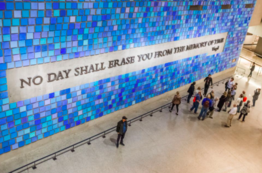
9/11 Anniversary Resources and Considerations
Center for Islam in the Contemporary World
This year’s 20th anniversary of September 11th is likely to generate increased public attention and our nation’s educators need to be supported as they prepare themselves and their students for such a pivotal commemorative experience. September 11th is not only a major event in U.S. history, it also continues to impact our social, cultural, and political realities both within the nation and globally.
Muslim students face increased anti-Muslim racism during 9/11 commemorative lessons in recent years. Muslim students share that during 9/11 lessons peers call out insulting language, teachers stare at them, and lesson plans fail to distinguish the differences between extremists and the faithful followers of Islam. The CICW resource page includes a webinar and supporting slideshow on culturally responsive and inclusive teaching on commemorating 9/11.
9/11 Memorial & Museum
Join students and teachers from around the world to commemorate the 20th anniversary of 9/11 by registering for the 9/11 Memorial & Museum’s free Anniversary in the Schools program.
The webinar will be available at 911memorial.org/webinar. Log in at any time beginning Friday, September 10 to view the program on demand. The live chat will be available from 9 a.m. – 3 p.m. EDT on September 10 and 11.
Watch the trailer for this year's Anniversary in the Schools webinar program above or with ASL interpretation, audio description, or in Spanish.
If your students or other viewers are participating remotely, direct them to 911memorial.org/webinar and click the "View Webinar" link at the top of the page. To access the video, participants will be prompted to answer a brief set of questions.
Participants will learn about 9/11 through personal stories from 9/11 family members Cait Leavey, Brielle Saracini, and John Spade, first responders from the FDNY and PAPD, and a student on 9/11, and ask questions through a live chat with Museum staff. The webinar will be interpreted in American Sign Language and captioned. An audio description and Spanish subtitles will also be available.
Additional 9/11 Resources from NEA
How To Teach The Sept. 11 Terrorist Attacks To Young People Nine lessons for grades 3-12
9/11 Anniversary Teaching Guide K-12 lessons and activitie
|
Start of School and Jewish Holidays
The beginning of this school year is undoubtedly a challenging time for educators, who are focused on ensuring the health of their students and colleagues. Given this focus, we are reaching out to remind you that the Jewish High Holidays (Rosh Hashanah and Yom Kippur) are coming at the beginning of next month.
Rosh Hashanah and Yom Kippur are some of the holiest days on the Jewish calendar and observances require day-long worship and abstinence from all work.
Whether Jewish students are attending school in-person or virtually, many of their parents or guardians will be requesting excused time off or other accommodations for children to observe these holy days with their loved ones.
This year:
Rosh Hashanah: Begins on Monday, Sept. 6 at sundown and ends at sundown on Wednesday, Sept. 8.
Yom Kippur: Begins on Wednesday, Sept. 15 at sundown and ends at sundown on Thursday, Sept. 16.
Find Out How to Accommodate Your Students for the High Holidays
Inclusivity and respect for diversity are central to creating welcoming learning environments. And respect for diversity includes religious diversity.
|
Oregon Career Connected Learning (CCL) CCL Design Teams 2021
Vision for this project
Learners thrive when they are immersed in relevant learning experiences that connect to future career opportunities and move them through a system of Career Connected Learning (CCL). During this summer, ODE initiated two phases of a project to create a CCL Resource Hub, focused on the domains of Awareness and Exploration and designed for educators, counselors and career advisors throughout Oregon. The first phase involved gathering ideas and strategies from educators and partners from across the state. The second phase expanded the research to include a national scan of precedents. From the resources gathered, we now have an opportunity to develop applications and approaches to advance CCL awareness and exploration.
The vision for this project is to take the learning from the CCL Resource Hub and begin to design responses, recommendations, strategies, and approaches for practitioners in Oregon to enhance CCL in their regions. That’s where you come in.
Your role
We are seeking to identify a CCL Cohort of 16 educators, counselors, specialists, and community partners to serve Oregon’s CCL by engaging in small Design Teams of four persons each to create resources and supports for educators and partners.
What is the stipend? $2,000.00 (estimated workload of 40 hours)
For more information Jim.Taylor@state.or.us or apply here.
|
Holocaust And Genocide Resources
OJMCHE is excited to continue to support educators as they teach about oppression and resistance. Whether your classroom is nearby or far away from the museum, we have a variety of resources available.
-
Museum Field Trip or Virtual Classroom Visit - We are welcoming student group tours back in the museum on a case by case basis. Alternatively, we’ll be continuing to offer virtual classroom visits where an OJMCHE educator facilitates an interactive workshop with your students via Zoom.
-
Speakers Bureau Presentations - Providing your students with an opportunity to hear from a Holocaust survivor or their family members is unforgettable. All speakers’ bureau presentations are FREE!
-
Oregon Holocaust Memorial In-Person or Virtual Tour - The Oregon Holocaust Memorial is a wonderful outdoor space where students can learn about the Holocaust and local connections. We are currently accepting requests for tours, which are FREE. If a field trip isn’t in the cards this year, the virtual tour is always available. A free educators guide is available upon request.
-
Core Exhibition Digital Experiences - Designed to mirror the physical exhibitions, the digital experiences provide students an opportunity to engage with the content through an interactive and engaging format.
-
Professional Development - Our fall professional development theme this year is Refugees. All programs are FREE and will take place over Zoom.
Friday, October 8th from 9am - Noon - Connecting the Past with Today: The Plight of Refugees with Echoes and Reflections
Thursday, November 4 from 4:30 - 6:30pm - Refugee, Integrating Authentic Literature in the Classroom with Author Alan Gratz
Tuesday, November 16 from 4:30 - 6:30pm - Climate Change, War, and Refugees with Dr. Alex Alvarez
|
Holocaust Education Grant Opportunities
The MSHE grant is meant for educators to teach their students, in an age appropriate way, about the Holocaust. The goal of Holocaust education is for students to learn the history and how lessons of the past can lead to kindness, respect and inclusion in our society.
|
|
|
Japanese American Museum Fifth Annual Minoru Yasui Day Student Contest for Middle School and High School Essay Contest
Minoru Yasui once said:
“If we believe in America, if we believe in equity and democracy, if we believe in law and justice, then each of us, when we see or believe that errors are being made, has an obligation to make every effort to correct them.”
Prompt: What are the duties, responsibilities, and/or obligations of an individual in US society in taking a stand against racism and discrimination?
Open to high school and middle school students and organized by the Minoru Yasui Legacy Project and the Japanese American Museum of Oregon, the contest offers students the timely opportunity to explore how people can stand up to racism and discrimination. In the process, they will learn about the life and legacy of Minoru Yasui, the only Oregonian to have been awarded the Presidential Medal of Freedom.
The full contest details will also be shared in the next ODE Social Science Update and posted to the Minoru Yasui Legacy Project website in the coming weeks. Contact Jennifer Fang, Director of Education, JapaneseAmerican Museum of Oregon (jennifer@jamo.org) for more information.
|
Harvard Case Method
Engaging Students in Civics & History with Case Studies
Portland area social studies teachers and students are invited to participate in a “Community Case Discussion” on Sunday afternoon, October 24. This will be a free interactive demonstration of the case method of teaching civics and history. Many teachers have found that this method engages high school students more than traditional teaching methods.
The Community Case Discussion will focus on the story of Martin Luther King and the Struggle for Black Voting Rights. Philip Clarke, a U.S. History teacher at Centennial High School in Gresham, will lead the discussion. Like other social studies teachers throughout the U.S., Philip received training from the Case Method Institute. Participating teachers also will learn how to apply for the free CMI training workshops.
This Community Case Discussion is planned as an in-person event. Masks and proof of vaccination will be required.
Time: Sunday, October 24, 1:30 to 3 pm (check-in starts at 1 pm)
Place: The Laurelhurst Club, 3721 SE Ankeny St., Portland
This professional development civics education event is hosted by the League of Women Voters of Portland. It is free, but registration is required.
Learn More here.
Register here.
|
Classroom Law Project
We the People Teacher/ Coach Workshop
Teachers and coaches are invited to join Classroom Law Project on Saturday, September 18 from 9:00 am - 12:00 pm in person or virtually. Learn about the 2021-2022 We the People season and discuss this year’s questions. Sign up here.
Call for OCC Proposals
Classroom Law Project is accepting proposals to present at the Oregon Civics Conference in December! The form for proposals will be available until September 15. This year’s theme is Growing Civic Community.Visit here for more information.
Get ready for the school year with the Educator Resource Community!
Join Classroom Law Project's resource platform to access their classroom-ready resources to help you plan for next year on their new We the Teachers: Educator Resource Community.
Sign up to access all resources, including past workshops and PD sessions organized by program and grade level.
Ready to join? Click here to sign up.
|
United States Senate Youth Program Opportunity for Qualifying Juniors and Seniors
The United States Senate Youth Program, funded by the William Randolph Hearst Foundation and endorsed by the U.S. Senate, is a once-in-a-lifetime experience for high school students interested in pursuing careers in public service, history or political science. For the 2021-22 school year, two delegates will receive a $10,000 college scholarship and attend an all-expenses paid trip to Washington, D.C., on March 5-12, 2022 (the Hearst Foundation is planning for in-person programming in Washington, D.C., pending public health and safety guidance for travel and indoor gatherings). Two alternates will receive a $200 cash award from the Oregon Department of Education.
All high school juniors and seniors must be nominated by their high school principal or designated school official to apply for the program. Nominated students must be active in elected or appointed leadership positions that relate to government, public affairs, education and/or community service. School officials must publicize the opportunity to all qualifying juniors and seniors, develop a process for selection of a nominee(s) from the school, and identify a student(s) to apply.
We encourage public and private high schools to share this information with eligible juniors and seniors, especially those from historically underserved communities.
The requirements and state online application are available on Oregon’s U.S. Senate Youth Program webpage. Completed applications are due by Friday, October 15, 2021.
|
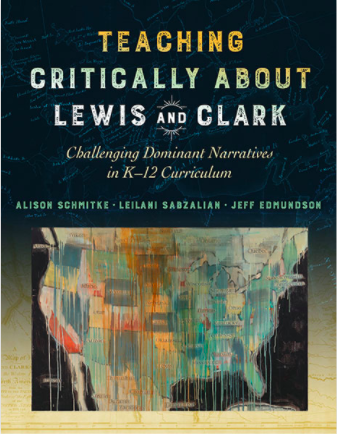
Book Review
Teaching Critically About Lewis & Clark
by Alison Schmitke, Leilani Sabzalian, Jeff Edmundson
The teaching of Oregon history often begins with the exciting adventures of Lewis and Clark before moving to stories of perseverance on the Oregon Trail. This book complicates the typical narrative and challenges students to consider the perspective of the Native Americans already living in the Louisiana Territory and what is now Oregon.
Teaching Critically... includes 14 lesson plans divided elementary and secondary with multimedia and primary document links for teacher and classroom use. The book provides a framework of "six orientations--place, presence, perspectives, political nationhood, power, and partnerships (The 6 P's)--designed to contribute to the efforts to extend and transform social science curriculum that respects and affirms Indigenous peoples an nations." Chapter 2, "The Doctrine of Discovery" is a thorough examination of the history and legal framework that sought to justify the taking of indigenous lands and a necessary understanding for teacher of world and U.S. history.
Lesson plans are linked to Common Core Standards and the C3 skills framework. It is also easy for Oregon teachers to connect the lessons to Oregon 2021 Social Science Standards. For example, the seven elementary lessons address many Grade 4 standards (2021 Standards 4.1, 4.3, 4.8, 4.9-4.14, and 4.17 or current 2018 standards 4.7-4.9, 4.11, 4.12. 4.14)
The book is an excellent local resource and complement to the required social science lessons from Tribal History/Shared History. Teachers may also be interested in the online Tribal History/Shared History training modules available on ODE's website.
Do you have a book that other teachers might find useful for teaching? Feel free to send me suggestions.
|
|
|
|
|
|