Important Dates
- March Claim - Due May 30, 2021
- Excess Operating Balance (EOB) Submission - Due June 15, 2021
- April Claim - Due June 29, 2021
|
Excess Operating Balance (EOB)
Oregon Department of Education Child Nutrition Program's (ODE CNP) will be collecting information regarding each Sponsor's net cash resource balance of the non-profit food service account for school year 2019-2020. All program sponsors are required to calculate and submit their year-end nonprofit food service account balance using the Excess Operating Balance Certification form by June 15, 2021. Please see ODE's EOB May 3, 2021 memo for more information and instructions on how to complete your EOB submission.
Please note: There are now three certification options on the Excess Operating Balance Certification form this year:
- Certification that the year-end balance is not in excess of three months' average expenditures.
- Sponsor has an excess of three months' average expenditure, but due to the increase operating expenses relating to COVID-19, sponsor is requesting approval to retain the excess of funds.
- Sponsor has in excess of three months' average expenditure and will spend down the amount to make it an allowable expenditure. (Sponsor's will complete their Spend Down Plan available on the Excess Operating Balance Certification form)
For more information, please see the Financial Management Website.
Pandemic Electronic Benefit Transfer (P-EBT) in Oregon Update
A new system has been created to manage Pandemic EBT (P-EBT) benefits in the state of Oregon. ODE CNP has identified a Point of Contact for each NSLP sponsor using the Child Nutrition Program Manager and at least one Eligibility Official listed in CNPweb. You may be contacted by staff from the Department of Human Services (DHS) who are coordinating P-EBT. Your input will help ensure these necessary benefits will reach eligible students in your community.
If you receive P-EBT questions from families, please refer them to the DHS P-EBT Website
Culinary Workshop Registration
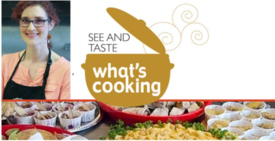
See and Taste What's Cooking with Chef Jessica
Join us for a virtual culinary experience with Chef Jessica. School and child nutrition professionals across Oregon are invited to an hour of inspiration on May 20th at 1:00pm. Watch or cook along with Jessica as she prepares easy, tasty and fun recipes that meet Child Nutrition Program guidelines. Participants will receive tips for shaking up old recipes with new flavors and ideas to keep kids coming back for more.
Remember Chef Jessica from our in-person ODE Culinary Workshops? After earning a degree in culinary arts and working in restaurants and hotels for 10 years, Jessica felt a pull to change her focus to school nutrition. In her current role as a Child Nutrition Specialist with Oregon Department of Education, Jessica has the opportunity to work with program professionals around the state to highlight the amazing work they do to provide healthy and delicious meals for kids. Jessica sees herself as a guide for child nutrition professionals for deeper understandings of the federal regulations while maintaining opportunities for creativity and fun cooking with nutrient-rich, local foods in innovative ways.
We hope you'll join us on Thursday, May 20th at 1:00. Click here to Register
Statewide culinary trainings and this event are sponsored by the Oregon Dairy and Nutrition Council and the Oregon Department of Education, Child Nutrition Services.
|
FY 2020 NSLP Equipment Assistance Grant Update
The NSLP Equipment Assistance Grant is a competitive award grant for local educational agencies and schools to purchase equipment, with a value greater than $1,000 but less than $50,000. The purpose is to provide equipment:
- needed to serve healthier meals
- improve food safety, and
- to help support the establishment, maintenance, or expansion of the School Breakfast Programs.
To be considered, School Food Authorities must follow the criteria as stated in the Request for Application (RFA), and submit a complete application according to the details in the RFA. These documents are found on SNP Grant Opportunities Website.
COVID-19 Clarification: Any school food authority (SFA) with a previously approved State agency agreement on file to operate the National School Lunch Program (per 7 CFR 210.9(b)), and that would otherwise be operating NSLP in SY 2020-2021, may continue to access NSLP Equipment Assistance Grants while utilizing the flexibilities granted under the current SFSP/SSO Nationwide Waiver.
Questions/requests for clarification regarding this grant will be provided in a published Frequently Asked Questions (FAQ) document only. The FAQs will be posted on SNP Grant Opportunities website on May 7, 2021.
Complete applications and additional documentation must be submitted no later than Thursday, May 20, by 1:00 pm to Noemi.Rios@state.or.us

Direct Certification Corner
Did you know when you get a Y2 match, it is showing a relationship to a matched student. It will copy the grade of the “matched” student into the grade field of the related Y2 match. Those Y2 matches will have a SSID of “0” and a blank District ID. What this means is if you have a 3-year-old showing that they are in the 10th grade, they are a match for a 10th grader enrolled in your district.
|
Procurement
FORECASTING
Forecasting drives the procurement process in the Child Nutrition Program (CNP). Forecasting is the process of analyzing current and historical data to determine future trends based off menu planning and average participation rates. In the case of CNPs, forecasting involves predicting and estimating the goods, products, and/or services needed in specified areas for the coming year, and/or assessing needs by reviewing current procurement activities.
The Average Daily Participation (ADP) for the National School Lunch and School Breakfast Program is based on attendance rather than enrollment. Calculating ADP in this manner is considered to be fairer to schools as it includes only children that eat lunch/breakfast in the calculation and excludes children who do not eat lunch/breakfast (i.e., part-day kindergartners). Regardless of the ADP of the district, accurate forecasting provides critical and valuable information. This information benefits both the school district and potential distributors who are considering bidding on the items in the solicitation document.
One of the reports critical to forecasting is a velocity report. This report provides the quantity, the date of purchase, and other valuable information about each item received. The report can serve as a tool for the SFA staff when forecasting the needs of the district and documents bid integrity. Upon request, the distributor can generate a velocity report for products purchased during a specific time period. Many distributors have online ordering systems that allow the SFA to produce a velocity report at any time. After one year’s history, it is easy to see whether or not the quantities were accurately calculated estimates. If it is discovered that the quantities previously listed have not been closely met, distributors will know that quantities are inaccurate, and may result in significantly increased prices.
Forecasting includes contemplating the use of USDA Foods. Many school districts have the ability to purchase ready-to-use end products made from USDA Foods. Ready-to-use end products allow for the use of USDA Foods in the final production of many mainstay menu items. By utilizing USDA Foods in the final product, there can be a cost savings to the district for high quality products. Check with the state food distribution agency to determine what is allowed before entering into a contract. Clarify state limitations on pricing structures and method of distribution of these items.
The integrity of a bid is strengthened when time is spent developing good forecasts. Distributors can be confident that the items specified on the bid in the quantities listed are accurate to the best of the district’s ability. With this knowledge, the distributor is willing to provide their most competitive pricing. Adequate forecasting is critical not only between district and distributor, but further along the supply chain to the manufacturer of the product. A manufacturer or distributor does not want to maintain too much inventory for fear the inventory will expire prior to the district being able to utilize the quantities on hand. Establishing valid forecasts requires reflection on the past, consideration of present conditions, and speculation as to the future. Some considerations include: student preferences; revenue from the previous year; the current inventory; the upcoming year’s menu; locally grown menu items; the likely cost of labor, goods, products, or services in the coming year (season); the number and ages of the students being served throughout the school year; and relevance of the last solicitation document.
Here are some past, present, and future types of questions to considering when forecasting procurement needs.
- Has the serving of this item been increasing, decreasing, or remaining the same?
- What are the revenues from the past year?
- In what meal service is the item menued?
- For what grade levels is the item menued?
- What is the EP cost of the product?
- Is the price of this item cost effective, including the impact of utility and waste removal costs?
- What menu items are grown locally?
- How often does the item appear on the menu?
- Is the menu of this item contingent on the availability of USDA Foods?
- What is the current inventory?
- Is there sufficient storage space including, space for recyclables?
- What is the upcoming year’s menu?
- Are there any changes in menu or meal requirements that no longer allow this item to be served in the same manner as it has been previously? Will this force the item to be menued to different grade levels?
- Is the item still affordable?
- What is the estimated dollar value of procurements for the upcoming year?
The SFA staff should be prepared to provide the state agency with some details on how the products and quantities were projected.
http://www.oregon.gov/ode/students-and-family/childnutrition/Pages/Procurement.aspx
|
 |
Extra! Extra! Read all about it. Newsletters will be distributed during the following weeks. We encourage you to access previous newsletters on the School Nutrition Memos Page:
- Mid-May, 2021
- 1st Week of June, 2021
School Nutrition Program Contacts
Civil Rights
In accordance with Federal civil rights law and U.S. Department of Agriculture (USDA) civil rights regulations and policies, the USDA, its Agencies, offices, and employees, and institutions participating in or administering USDA programs are prohibited from discriminating based on race, color, national origin, sex, disability, age, or reprisal or retaliation for prior civil rights activity in any program or activity conducted or funded by USDA.
Persons with disabilities who require alternative means of communication for program information (e.g. Braille, large print, audiotape, American Sign Language, etc.), should contact the Agency (State or local) where they applied for benefits. Individuals who are deaf, hard of hearing or have speech disabilities may contact USDA through the Federal Relay Service at (800) 877-8339. Additionally, program information may be made available in languages other than English.
To file a program complaint of discrimination, complete the USDA Program Discrimination Complaint Form, (AD-3027) found online at and at any USDA office, or write a letter addressed to USDA and provide in the letter all of the information requested in the form. To request a copy of the complaint form, call (866) 632-9992. Submit your completed form or letter to the USDA by:
1. mail: U.S. Department of Agriculture
Office of the Assistant Secretary for Civil Rights
1400 Independence Avenue, SW
Washington, D.C. 20250-9410;
2. fax: (202) 690-7442; or
3. email: program.intake@usda.gov
This institution is an equal opportunity provider.
|