It continues to be a challenging time for educators as we all navigate changes, and engage in continual adaptability. We are reminded of the changes and discomforts our ancestors endured and provided with a whole new level of appreciation for their strength and survivance. These times elevate the need for an understanding of the SB 13 Tribal History/Shared History curriculum in our schools and what it means to view the world from an Indigenous perspective. We are working to provide opportunities and ways of supporting educators in their work toward developing onsite and distance learning content for the 2020-2021 school year.
|
|
Recognition of Dr. Leilani Salbazian
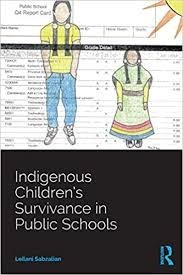
We wanted to congratulate and recognize Dr. Leilani Sabzalian, Assistant Professor, Indigenous Studies in Education at the University of Oregon. She was recently awarded with the 2020 American Educational Research Association (AERA) Outstanding Book Award for her publication: Indigenous Children’s Survivance in Public Schools. The Outstanding Book Award was established to acknowledge and honor the year’s best book-length publication in education research and development. Dr. Sabzalian has been a continual supporter in the work of SB 13 Tribal History/Shared History through advising, guidance and facilitation of professional development events on multiple occasions. She is also currently a member of the SB 13 Webinar Planning Committee. We are grateful for her tireless advocacy efforts, legacy building leadership and dedication to Indigenous education in our state. For more information on the award, please visit Award Winners in Education Research.
|
|
 |
 |
|
Professional Development Opportunities related to SB 13 Tribal History/Shared History |
Two presentations by ODE on SB 13 Tribal History/Shared History are now available for viewing online from the Grand Ronde Education Summit.
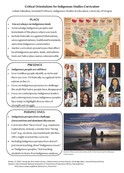
You will also find helpful presentations on Federal Indian Policy, Survivance, Cultural Education, The Confederated Tribes of Grand Ronde history and place-based curriculum, Critical Orientations, and SB 13 Tribal History/Shared History Implementation in Portland Public Schools.
On July 30th we provided a presentation at the Oregon Education Association 2020 Summer Conference via Zoom and are hoping to have this recording available for viewing. This session included modeling of two lessons within the SB 13 Tribal History/Shared History curriculum and a discussion of adaptations for distance learning. |
|
 |
Session Description: This course will start with a new ground-breaking curriculum initiative made possible through Senate Bill 13 – Tribal History/Shared History. These efforts seek to build partnerships between school districts and their local tribes and seek to expand learning of tribal nations and peoples in Oregon. Each nation has a distinct origin story, worldview, and timeline of their history and contemporary context. However, much of that information has been presented to the general American public from a non-Native American perspective, filled with clichés, misconceptions, and falsehoods. Participants will have the opportunity to review and model lesson plans recently developed to support Tribal History/Shared History.
We are continuing with our work to develop an SB 13 Tribal History/Shared History virtual interactive webinar course. This should be available by the start of the 2020-2021 school year. Educators will be able to receive professional development units for completing the course. The two overarching goals for the course are to dive deep into the Essential Understandings of Native Americans in Oregon as well as the Critical Orientations for Indigenous Studies Curriculum. It will allow for activities for engagement and reflection and link to lesson plans and more!
  Updates to lesson plans and brand-new lesson plans in grades 4, 8 and 10 are continually being added to the ODE website. To receive updates on Tribal History / Shared History lesson plans and other information, please visit the Tribal History / Shared History web page on ODE’s website or contact April Campbell, Indian Education Advisor to Director of Public Instruction april.campbell@state.or.us (503) 947-5810
Six (6) newly added lesson plans include:
1) Grade 4: Math: Philanthropy and Tribes in Oregon
2) Grade 4: Science: Oregon's First Geologists
3) Grade 4: ELA: chinuk wawa
4) Grade 8: Social Sciences: The Importance of Treaties
5) Grade 8: Math: Traditional Housing Styles of Native Americans in Oregon
6) Grade 8: Health: Cultural Appropriation
Tribal Place-based curriculum available online:
6th Grade Estuaries Curriculum - Confederated Tribes of Siletz Indians
6th Grade Wetlands Curriculum - Confederated Tribes of Siletz Indians
Confederated Tribes of Grand Ronde Tribal History Curriculum Unit (Grades 2, 4, 6 and 8)
 |
|
Coming soon...Oregon Open Learning Hub
Office of Indian Education Group/web page
|
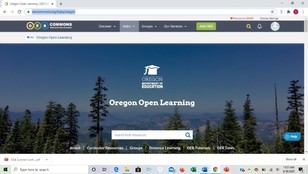
New! We are working on developing a new SB 13 Tribal History/Shared History presence under the Office of Indian Education group within the Oregon Open Learning Hub.
About: This will be a place to find and share open educational resources (OER) that are curated and created for and by Oregon educators.This can include distance learning resources and lesson plans developed by educators for educators. Our hope is to be able to upload all of the SB 13 Tribal History/Shared History lesson plans and provide space for networking and sharing implementation strategies and promising practices.
Community is at the heart of OER, and the Oregon Open Learning Hub intends to bring together educator authors and curators to collaborate in a virtual space for the benefit of all students, educators, and communities across our state. We invite you to contribute to this community by using these resources, providing feedback, and/or joining our Office of Indian Education group to create and share resources for use across Oregon!
 |
|
Lastly, please join us in our online space for SB 13 Tribal History/Shared History available for connecting, viewing events, resources, and networking through the Oregon Educator Network. We currently have 26 members in our group. You can locate the site to join here. |
 |
|
Tribal Attendance Promising Practices (TAPP):
Many TAPP Family Advocates are taking a well-deserved break. However, the work must go on….TAPP is pleased with the close collaboration with the Every Day Matters team.
And look forward to strengthening this partnership.
|
There are some exciting events being developed that will feature TAPP:
- TAPP will be part of a COSA presentation with the Every Day Matters team on, August 4th at 1:00 p.m. –2:00 p.m.
- August 11th TAPP will be part of the Leadership and Action Webinars produced by The Campaign for Grade-Level Reading discussing, Leveraging the Power of Data and Relationships: Reducing Chronic Absence in Rural Settings.
- TAPP will also be part of a panel, for the Every Day Matter’s Oregon-Washington Attendance/Engagement Virtual Summit, entitled: Developing Community Partnerships, on August 25th.
|
August 4th - Everyday Matters & TAPP COSA Presentation
August 11th - TAPP, Leveraging the Power of Data and Relationships: Reducing Chronic Absence in Rural Settings
August 25th - Every Day Matter’s Oregon-Washington Attendance/Engagement Virtual Summit, entitled: Developing Community Partnerships
ODE American Indian Alaska Native Advisory Committee meetings (currently scheduled virtually from 9:30 am to 3:30pm):
September 1, 2020
November 3, 2020
Future Funding Opportunities
Spirit Mountain Community Fund: annual grants up to $150,000 for Oregon Tribes. For more information call (503) 879-1637.
Siletz Tribal Charitable Contribution Fund
Application Deadline: September
 |
|
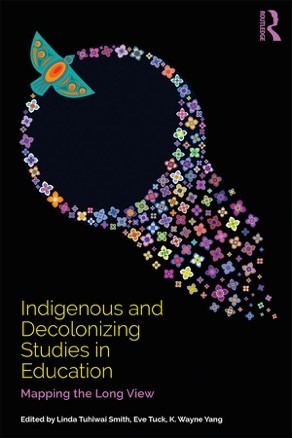
Indigenous and Decolonizing Studies in Education: Mapping the Long View, by Eve Tuck (Author, Editor), K. Wayne Yang (Author, Editor), Linda Tuhiwai Smith (Editor) I SBN-13: 978-1138585867
A must read for decolonizing education. Perfect invitation for educators and researchers to take a deeper look at theory, practice and activism. Pedagogies such as Water is Life, Land as Literacy and Creating Healthy Decolonized Spaces are discussed by various Indigenous contributors.
|
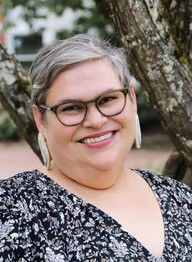
A conversation with Angie Morrill, Director of the Title VI Indian Education for Portland Public Schools. Angie is enrolled in the Klamath Tribes.
Tell us about yourself and what you do in your current work?
I grew up in Portland, OR and was enrolled in Indian Education, my mom used to tutor students for Indian Ed. Our offices are located at Jefferson HS in North Portland where I went to school and many of my family members did too, including my mom. We have a staff of four and we mainly work to support Native students and families, providing cultural and academic support. We provide camps, a spring break Land and Leadership Camp has been successful and we really like working with community partners, and providing role models for our students. We serve students from Pre-K through 12th grade, Sunshine Guzman (Oregon Indian Educator of the Year 2019) teaches Cherokee to our preschoolers, Valerie Nelson works with students learning Lakota. We have winter celebrations and of course Honor Day, our celebration of our Native HS graduates is a high point every year. This past year I helped with professional development in PPS to support Tribal History/Shared History curriculum implementation. I also work with ODE as a member of the American Indian/Alaskan Native State Advisory Council and I am the Chairperson of the Sapsik’wala Tribal Advisory Council at University of Oregon, the only program in the state currently training Native teachers.
Who and/or what inspired you to become an educator?
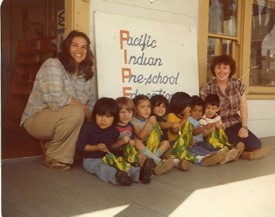
My mother is my biggest inspiration in every way. She helped to start two preschools when I was a kid, E-Kosh-Kosh and Pacific Indian Preschool Education (PIPE). She started a group of women who talked about what they wanted, and they wanted an alternative to Head Start, which had a white savior model at the time. So they created their own school.
What do you like most about working in education?
|
 |
|
I love the students, even though I have a PhD, I struggled to get through school and have many stories of feeling erased, feeling like I was invisible or the only Indian in the room. I love seeing families come together and celebrate our Winter Festival, Honor Day is always so moving. We always have first generation graduates and I am so proud and moved by how hard we work in a system that is still very difficult on our students. |
What Indigenous educator or leader do you admire the most and why?
Hard question, I am surrounded by amazing educators. I will say that I have so much respect and love for April Campbell, I was working at UO when she took her role at ODE and she has been a wonderful leader, she’s an effective collaborator and I love working with her and Ramona Halcomb. Her leadership has made a difference, seven years into her tenure and we have Tribal History/Shared History, we have a council where we work on state policy and at the same time build relationships with each other. One more? Mercedes Jones. The Grand Ronde Education Summit every June has been a fantastic tool for educators. I am so lucky to know so many amazing Native educators. I want to shout out to Korinna Wolfe and Lorna Fast Buffalo Horse at PPS, they lead in Multiple Pathways to Graduation and their work is so essential. All these women have so much love for our students and families and are amazing leaders.
What do you consider your greatest achievement(s) and why?
I earned my PhD in 2016, and it changed my life. It made it possible for me to become the Indian Education Director in Portland, it allowed me to come home. I didn’t see this path, but it opened up for me and I am grateful. Native women have the smallest number of PhD’s, and I try to use mine for my community.
What are some of your favorite books (children, young adult or adult level) and/or resources related to Indigenous studies/education?
I just read an amazing book, The Marrow Thieves, by Cherie Dimaline, a YA dystopic novel about a time that does not seem very far off from where we currently are in the world. But so full of hope and love. Dr. Leilani Sabzalian’s Indigenous Children’s Survivance in Public Schools is excellent, telling stories to help us recognize how strong we are, how much needs to change as well. And another current favorite is The Auntie Way by Sapsik’wala Director Michelle Jacob. She also tells stories of Aunties that celebrate “kindness, fierceness and creativity.” It is a workbook for living a good Auntie life!
How can educators contribute in meaningful ways to Indigenous education efforts in Oregon?
Support efforts to implement Tribal History/Shared History, don’t be afraid to dig in and do your best, it won’t be perfect but we all can contribute to support districts, teachers, families and most importantly, students. All students benefit from Indigenous education.
What kind of advice and/or personal learning experiences have you had that you can share with new and/or incoming educators who are new to working with American Indian/Alaska Native students, their families and communities?
Prepare to learn. We are incredibly diverse, and not only geographically, linguistically, but in so many important ways. Native people have experiences that vary widely, and so embrace the complexity of our communities and let go of expectations. Enjoy Native people! We can be so much fun! I feel very fortunate to work closely with Native people in many areas of my life, and although I am Native, I try not to make assumptions, people have different relationships to their tribes, their families, their experiences with education. Build relationships.Take time to listen, spend time and build trust.
Thank you all for your dedication to our Native children, students and families. Please take care of your health as well as your family and community’s health during this time.
Please know we are thinking of you.
|