Small behavior changes can lead to fewer pedestrian deaths and serious injuries
For more information, contact Matt Noble 503-779-9868
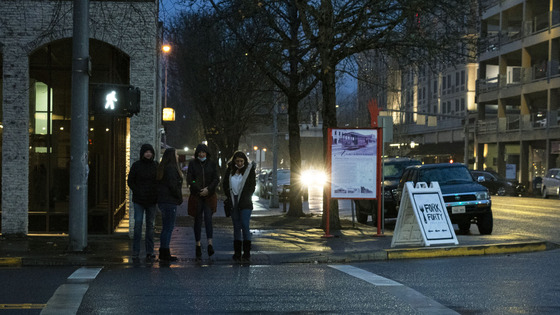
SALEM – Dark and rainy weather starts to envelop Oregon in November and the changing conditions can make people walking and rolling harder to see.
Pedestrian deaths from traffic crashes increase each fall and winter. Of the 477 total Oregon pedestrian deaths between 2020-2024, 62% happened in the fall and winter months (September - February.)
ODOT analyzed strategies to reduce pedestrian fatalities in Oregon’s new Transportation Safety Action Plan. Many factors contribute to pedestrian deaths and serious injuries — laws and policies, road design and lighting, weather, road user decisions — but this time of year, ODOT is showing how small behavior changes can have big safety benefits for people traveling in Oregon.
What drivers can do
Slow down in pedestrian-heavy areas. Speed limits are lower in walkable areas to keep everyone safe, especially pedestrians. A pedestrian's chance of serious injury or death in a traffic crash skyrockets as vehicle speed increases.
Pedestrian risk at different vehicle speeds
Be extra careful at night or in bad weather. People walking or rolling are harder to see at night or in bad weather, and we see the consequences in crash data. From 2020-2024, 74% of Oregon’s fatal crashes involving pedestrians happened at night, according to federal data.
Be alert outside of intersections, too. Sixty percent of crashes that kill or seriously injure Oregon pedestrians do not happen at intersections. People may be walking along or crossing a road at any point.
Treat every corner as a pedestrian crosswalk. Under Oregon law, crosswalk rules apply whether a crosswalk is marked or not.
What people walking and rolling can do
Ditch the distractions. Pause the podcast or wait to read the text until after you’ve safely crossed the road.
Use the crosswalk. You’re safest when crossing at a marked crosswalk or intersection. More drivers will be looking for you there, the lighting may be better, and there may be a flashing sign or signal to help drivers notice you.
If a crosswalk or intersection is not available, find a well-lit area where you have the best view of traffic and cross there.
Make your intentions clear. Show your intent to cross the road by gesturing with your body, cane or wheel. Make eye contact with drivers if you can. If you aren’t sure they see you, let them go first.
Be visible. There are many ways to make it easier for drivers to see you: Wear bright clothing; slip on a retro-reflective vest, fanny pack or waistband; carry a flashlight or use your phone’s light; or attach a blinking bike light to your jacket or backpack.
If you have a student who walks, bikes, or rolls to school, ODOT’s Safe Routes to School program has educational materials you can use to teach them safety tips.
More data and resources
|