Peak hour travel times double on I-5 southbound due to closure
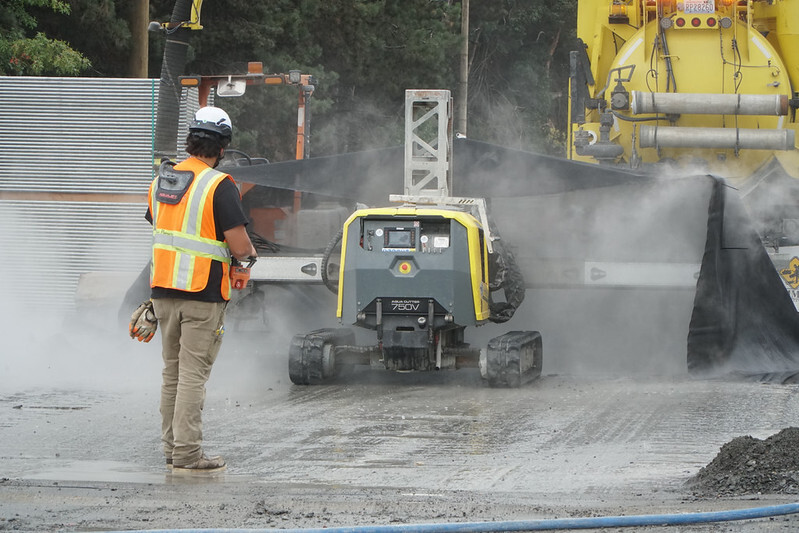 Construction crews remove the old concrete from the road surface on I-5 with hydorblasting machines.
Much of the congestion is still less than projected because drivers are using parallel routes and shifting travel times
For more information, please contact:
Sept. 22, 2026
PORTLAND – Data from the start of the closure of southbound Interstate 5 through the Rose Quarter shows some trips took twice as long as usual during peak hours prompting drivers to find new ways to deal with this temporary normal.
Since the closure began on Sept. 11, travel times on I-5 southbound, I-405 southbound, I-205 southbound and I-84 westbound have all increased throughout the day. During afternoon peak hour, the average travel time between the Columbia River and the I-405 junction increased from about 9 minutes last year to 22 minutes on average during the closure, according to data collected by the ODOT.
Crews are working around the clock, seven days a week, on I-5 southbound between the Moda Center and the City Center/OMSI exit to repair and reinforce weak areas, replace bridge joints, repave the surface, make safety improvements and repaint lane lines on the highway.
Before the closure, ODOT predicted travel times could increase by as much as three times and back-ups could stretch to Vancouver if travelers did not change their routines. So far, traffic backups have not reached much further beyond north of Columbia Boulevard.
“We are seeing many travelers start earlier or stay later, stretching out the morning and evening commutes to navigate this disruption,” said Monica Blanchard, Rose Quarter Project Director. "We appreciate everyone who is working from home, leaving earlier or later, or taking public transit or biking to help reduce the impact of this closure."
Peak travel times on I-5 south have started as early as 5 a.m., compared to 6:30 a.m. in September 2025, and heavy traffic lasts until after 7:30 in the evening compared to about 6 p.m. last year.
Drivers are choosing parallel or alternate routes, including I-205 south and I-84 west, North Interstate Avenue in the southbound direction, and Northeast Martin Luther King Boulevard in the southbound direction. There have been limited reports of significant cut-through traffic on neighborhood greenways or safe routes to school.
ODOT and the Portland Bureau of Transportation are monitoring traffic on the interstates and local roads and have taken steps to keep traffic moving safely. This includes the use of tow trucks staged that have allowed incidents to be cleared quickly. To date, the tows cleared 13 incidents with an average response time of 10-15 minutes. This quick response has helped keep traffic on I-5 flowing during this period of significant congestion.
PBOT engineers are regularly monitoring the city's network of traffic monitoring cameras and are remotely adjusting the timing of traffic signals to try and help keep traffic flowing smoothly. For example, PBOT recently adjusted signal timing at Northeast Everett Street and Northeast Grand Avenue to make it easier for freight vehicles to access I-84 eastbound. PBOT also removed parking spots along Northeast Everett to allow tractor trailers to turn more efficiently and safely.
Plan ahead, consider travel options
ODOT and the City of Portland continue to remind drivers to Shift Your Trip. Plan ahead, expect delays and consider other travel options such as the bus or MAX light rail to get around. The more people adjust their habits during this closure, the better it will be for people who do not have flexibility to adjust their trip, including emergency responders and freight.
TriMet continues to provide reliable travel options during construction, with MAX trains departing every 15 minutes throughout most of the day. TriMet experienced an uptick in ridership during the first week, particularly on the MAX Yellow Line, operating between Expo Center and Downtown Portland. From Sept. 13-19, riders took more than 18,000 additional trips on the Yellow Line. Even with the increased ridership, trains are not completely full, and there are plenty of parking spaces still available at TriMet’s various Park & Ride facilities. Those who would like to plan their trip in advance are encouraged to visit trimet.org.
# # #
See Below for Traffic Data for Key Travel Segments
Data was averaged over the course of the last week. Monday travel times had less delay and fewer vehicles on the road compared to other weekdays once travelers became more used to the closure.
I-5 southbound from Columbia River to I-405 junction: Travel times increased an average of 7.4 minutes in the morning and 12.7 minutes in the afternoon. Travel times in this segment remain greater than usual all day and increased 15 minutes over historical times on Friday, Sept. 18. Morning travel congestion began as early as 5 a.m. and evening congestion continued until 7 p.m. and later.
I-405 southbound to Highway 26: Travel times increased an average of 3.1 minutes in the morning and decreased by 0.7 minutes in the afternoon.
I-205 southbound from the Columbia River to I-84: Travel times increased an average of 1.2 minutes in the morning and 9.2 minutes in the afternoon. The afternoon peak lasted up to 30 minutes more. The number of vehicles (known as “volume”) crossing the Columbia River on both the I-205 Glenn Jackson Bridge and the I-5 Interstate Bridge have increased from 2025.
I-84 westbound to City Center: Travel times increased an average of 7.2 minutes in the morning and 7.6 minutes in the afternoon. The morning peak was 0.2 hours earlier than usual and the afternoon lasted up to 30 minutes more. Many people appear to be using I-205 south and then I-84 west to reach the City Center.
North Interstate Avenue in the southbound direction saw a 34% increase in travelers, with about 10,000 vehicles per day passing the intersection at North Graham Street, compared with 7,500 vehicles per day before the closure. Traffic speeds along the corridor have also declined during daylight hours, resulting in longer travel times.
Northeast Martin Luther King Boulevard in the southbound direction saw a 34% increase in travelers, with about 29,000 vehicles per day passing by the intersection at Northeast Everett Street, compared with 22,000 vehicles per day before the closure.
North Vancouver Avenue in the southbound direction saw a 54% increase in travelers, with about 8,000 vehicles per day passing by the intersection at North Mason Street, compared with 5,500 vehicles per day before the closure.
The Steel Bridge in the westbound direction saw a 67% increase in travelers, with about 7,500 vehicles per day compared with 4,500 vehicles per day before the closure.
Southwest Naito Parkway in the southbound direction saw a 35% increase in travelers, with about 8,500 vehicles per day passing by the intersection at Southwest Oak Street, compared with 6,000 vehicles per day before the closure.
Data collected on neighborhood streets like Northeast 7th Avenue, Northeast Rodney Avenue, North Michigan Avenue, and North Flint Avenue show traffic volumes similar to weekdays before the closure.
About the I-5 Rose Quarter Improvement Project:
ODOT is improving safety and congestion where I-5, I-84, and I-405 converge and reconnecting the Albina neighborhood by constructing a highway cover over a portion of I-5. Visit the project website for more information.
|