Wildfire season brings unpredictable travel conditions across Oregon
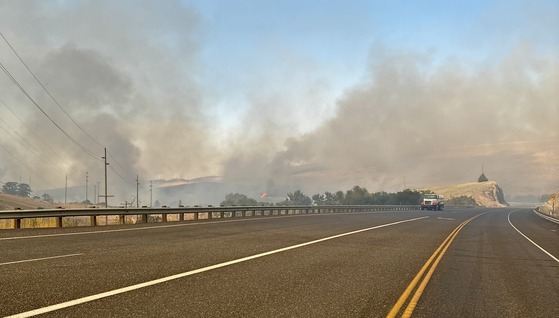 A wildfire recently burned along OR 11 near Milton-Freewater.
July 21, 2026
For more information, contact the ODOT Public Information Officer in your area.
SALEM – As wildfire activity in Oregon grows, travelers are encouraged to carefully plan their routes. Fires are burning near several highways, requiring crews to close and reopen roads, and change traffic patterns with little notice.
With hot, dry conditions expected to continue, wildfire-related travel disruptions will persist throughout the summer. ODOT urges anyone traveling this summer to check smoke, fire and travel conditions before leaving home, stay alert for changing conditions and slow down near wildfire activity.
"Wildfires can affect travel with very little warning," said ODOT Public Information Officer Kacey Davey. "A highway that's open when you leave home could close an hour later as fire behavior changes. If possible, choose a route that avoids active wildfires and be prepared to adjust your plans as conditions change."
Before you go
Before you leave, check TripCheck.com for current road conditions, closures and delays. TripCheck provides information from ODOT's dispatch centers 24 hours a day and updates in real time as fire situations evolve.
Travelers should:
- Plan routes that avoid active wildfire areas whenever possible.
- Consider delaying travel if wildfire smoke is reducing visibility or creating unhealthy air quality.
- Follow official detours. GPS may direct you onto local or forest roads that are also closed or unsuitable for traffic.
- Start with a full tank of fuel or electric charge, especially when traveling through rural areas where services may be limited.
- Carry water, snacks, medications and an emergency kit in case of unexpected delays.
Driving near wildfires
Smoke can reduce visibility as quickly as dense fog. If you encounter smoke:
- Slow down and increase following distance.
- Turn on your headlights using low beams. High beams can reflect off smoke and make visibility worse.
- Keep your windows closed and set your vehicle's ventilation system to recirculate.
- Stay alert for changing traffic patterns, emergency responders and stopped vehicles.
- If visibility becomes unsafe, pull completely off the roadway only when you can do so safely.
Many fire camps and staging areas are located near highways. Fire crews and heavy equipment may be entering and exiting the highway frequently.
When traveling near wildfire activity:
- Slow down and follow posted speed limits.
- Watch for firefighters and emergency personnel working on or near the road. Move over when you can, slow down when you can't and give them plenty of space to work safely.
- Give fire equipment extra space to merge, turn and access the highway safely.
- Obey all traffic control devices, flaggers and road closures.
Help prevent roadside fires
Drivers can also help reduce the risk of starting new wildfires by:
- Parking only on pavement, gravel or developed pullouts where hot exhaust systems and catalytic converters won't ignite dry grass.
- Properly disposing of cigarettes or other flammable materials.
- Securing trailer chains so they don't drag and create sparks.
More resources
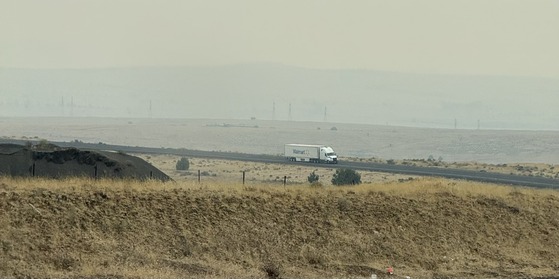 Smoke lingers along U.S. 97 near Shaniko on Monday.
|