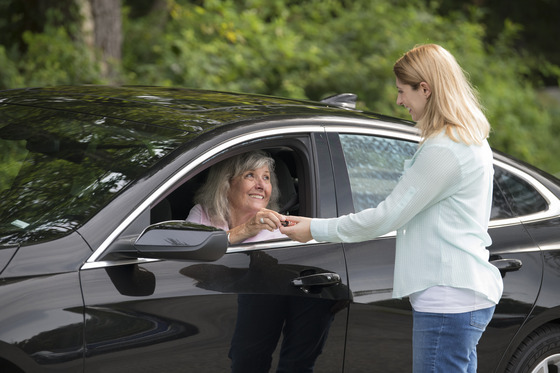
Older Driver Safety Awareness:
Encouraging families to "talk about it"
Older driver safety awareness image provided by NHTSA.
Dec. 1, 2025
For more information, contact Mindy McCartt, 503-507-6045.
SALEM – Older Driver Safety Awareness Week is Dec. 1–5 and the Oregon Department of Transportation is reminding families and caregivers that open conversations can help older adults stay safe—and stay independent—on the road.
Older adults are an important and growing part of Oregon’s communities. In Oregon and across the country, people 65 and older make up a larger share of the driving population than ever before. As we age, normal physical changes like reduced vision, slower reaction times, or the effects of medications can affect how we drive.
“We know these conversations aren’t always easy,” said Walt McAllister, Safe Driving Program Analyst. “But they’re essential. Families and caregivers play a key role in helping older loved ones stay safe behind the wheel or plan ahead for other transportation options. And remember, not every older driver is physically challenged. If you feel unsafe riding with an older driver, tell them so. Ask how they feel about their abilities, health, and driving in general. You might learn something that helps you support them and makes future conversations easier.”
ODOT’s work to support older driver safety
ODOT has supported older driver safety in many ways, including targeted outreach campaigns and statewide resources:
-
“Talk About It” media campaign: In 2023 and 2024, ODOT ran paid social media outreach and a 30-second TV PSA reminding Oregonians about how aging can affect driving. These campaigns reached adults 50 and older statewide.
-
Oregon Driver Fitness program: This comprehensive ODOT webpage includes resources on: Aging & Driving; Concerns About a Driver with guidance for Family & Caregivers (including warning signs), medical professionals including an online self-assessment tool for older drivers and information on when and how to report a medically At-Risk Driver and Getting Around without a car.
-
Older Road Users resources: Our webpage offers tips, tools, and additional guidance to help older adults drive safely for as long as possible. (This page will be updated during the week.)
Talking with older drivers
Driving ability is not determined by age alone, everyone ages differently. Some may notice changes in flexibility, strength, reaction time, vision, or memory. Certain medical conditions can also affect safe driving.
Families can help by starting conversations early, attending medical appointments with aging loved ones, and exploring transportation options before driving becomes difficult.
Delaying these conversations can make them more stressful. Approaching them with empathy and care helps older adults feel supported and involved in decisions about their mobility and independence.
Learn more
For additional resources on older driver safety, can be found at the NHTSA’s Older Drivers site.
Know Before You Go!
For 24/7 road conditions and traffic alerts visit TripCheck.com or call 5-1-1.
¡Infórmese antes de salir!
Para conocer las condiciones de las carreteras y las alertas de tráfico 24 horas al día, 7 días a la semana, visite TripCheck.com o llame al 5-1-1.
|
|
|
 |
|