|
February 2025
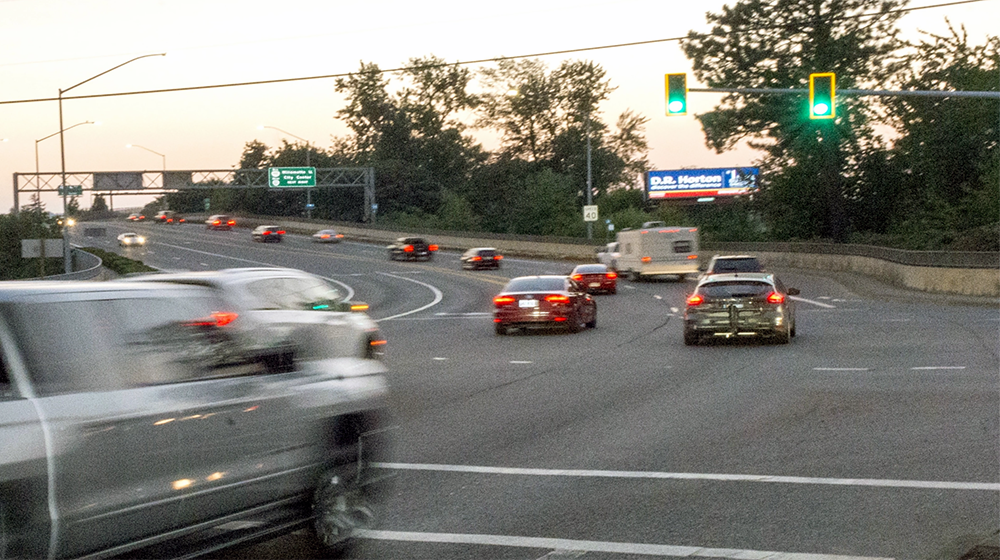
ODOT manages about 900 traffic signals statewide. As of 2025, about 94% of those signals are equipped with technology that collects live traffic data. That data helps ensure signals move traffic efficiently and safely.
Every time your car stops at a red light, your bike moves through an intersection, or your bus turns on a green arrow, it's counted as a “traffic event.”
Traditional traffic signals detect these activities and are periodically adjusted based on staff observations and driver reports. However, in recent years, ODOT has upgraded many traffic signals to use live data for better traffic flow, safety, and driver experience.
By combining live data tools with automated performance measures, ODOT can proactively identify and fix signal issues. These improvements make traffic signals:
- operate more efficiently,
- keep traffic moving,
- reduce fuel consumption,
- lower greenhouse gas emissions, and
- minimize traffic crashes caused by erratic traffic patterns and driver error.
|