TERO and ODOT: A Relationship that Honors Sovereignty
What is TERO?
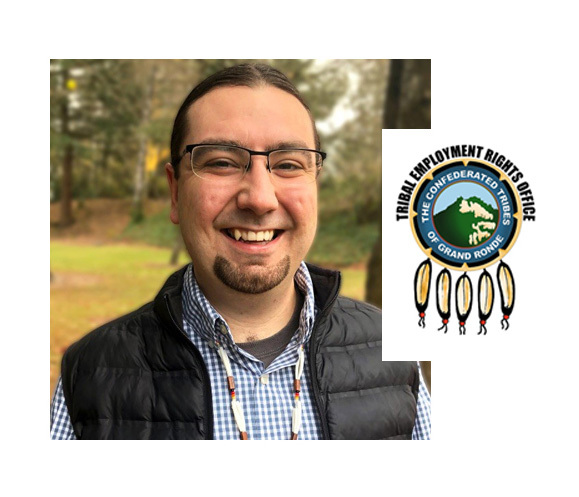
Harris Reibach, Director of the Tribal Employment Rights Office (TERO) of the Confederated Tribes of Grande Ronde, started our conversation by sharing how excited he was to have the opportunity to inform the public and the Native community about what TERO is and the benefits it provides. If you are anything like this interviewer, you might not have heard of TERO or have any idea what it has to do with ODOT. TERO is more than one thing, and understanding its importance and value requires sharing a bit of history and conveying the importance of tribal sovereignty. There are over 300 TERO's in the nation and three right here in Oregon. One each for the Confederated Tribes of Grande Ronde, the Confederated Tribes of the Umatilla Indian Reservation, and the Confederated Tribes of Warm Springs. Pursuant to each of these Tribes' inherent sovereign authority for self-governance, each Tribe has a Tribal Employment Rights Ordinance and an Office that ensures that qualified Native Americans are given hiring preference on all jobs and projects on or near reservations, specifically construction projects. The need to give preference to providing jobs to qualified Native Americans on and near their land is self-evident. However, ensuring that this actually happens requires specific action, including that policies are in place and that ongoing support for native workers is available. It is these actions, policies, and support that Harris and his team at Grand Ronde TERO provide.
TERO Puts Money in the Hands of Native Workers and the Economy
Harris's position as Director of TERO for the Confederated Tribes of Grande Ronde is important both because every day his actions reinforce Tribal sovereignty, or the right that tribes have to self-govern, and because his work in placing Native Americans in jobs addresses the disproportionate rates of poverty and underemployment that Native Americans face due to a long history of discrimination and ongoing structural barriers that make securing employment difficult. On a day-to-day basis, the TERO program seeks appropriate short- and long-term construction employment opportunities for Native Americans from any federally recognized tribe. Placing qualified Native Americans in paying jobs lifts up the economy in Indian country and benefits the larger economy as well. Harris shared, "That's why I show up to work every day. We're directly impacting the lives of Native workers." Harris and his team have a Skills Bank of over 300 Native workers, with approximately 50 of those workers ready to be dispatched (or currently dispatched) onto ODOT projects occurring within a 60-mile radius of the Grande Ronde reservation.
Benefiting Indian Country
The three TERO’s here in Oregon are unique because they each have an MOU with ODOT. While all TERO’s in the nation have a legal basis rooted in federal legislation that dates back to the 1970’s and rests upon Indian preference legislation dating back to 1834, not every TERO has an explicit MOU with the Department of Transportation in their area. This MOU between ODOT and each Tribe represents a relationship between those Tribes and ODOT founded on a shared goal of benefiting Indian country. When asked about the good working relationship he has with ODOT, Harris shared, “We're all working towards the same goal. All we're trying to do at Grande Ronde TERO is benefit Indian Country and the ODOT Office of Civil Rights shares that goal with us.” In 2020 alone, over 9,000 hours were logged from individuals that TERO dispatched out to ODOT projects. "Approximately $316,000 of wages went to individuals that we dispatched and supported on ODOT projects. That money then went into Native American pockets and that's something that's very special to me,” said Harris.
“We're all working towards the same goal. All we're trying to do at Grande Ronde TERO is benefit Indian Country and the ODOT Office of Civil Rights shares that goal with us.”
In addition to placing Native Americans in construction jobs, TERO also provides specialized training that ensures the individuals they place have the skills required to work on those ODOT projects. Harris assured me that any Native American from any federally recognized tribe can come to TERO., “All they need to do is show up on time and be ready to learn. But we do try and align our trainings to upcoming jobs. For example, looking to the future we knew we had a couple big bridge projects coming up so we aligned trainings to individuals who could potentially be on those projects." This ensures that there’s a qualified as well as a diversified workforce ready to support ODOT projects. To promote the strengths that each worker brings with them to the job TERO picks a Worker of the Month based on their hard work, commitment, and positive attitude on the worksite.
But the work that TERO does doesn’t end there, they also have an Indian Owned Business registry that operates similarly to ODOT’s DBE program and offers similar benefits. TERO is always looking for new Native-owned businesses to add to the registry so if you’re a member of a federally recognized tribe and own a business of any kind be sure to get certified. TERO also has relationships with unions to place Native Americans in apprenticeship programs and can fund certifications and trainings for Native Americans in any industry that are looking to advance their career. Harris summed it up well when he said, “TERO is one of those opportunities where the sky is the limit if you're able to show up, work hard, and be willing to learn. The benefit of TERO is how accessible it is. All you have to have is a drive to want to advance in some way and then give us the ball and we'll run with it together.”
Honoring Hard Work and Equal Opportunity
If you ever come across a TERO worker on a job, take a moment to reflect on the hard work that it probably took for that individual to get there as well as the support they have behind them and the many relationships it took to ensure equal opportunity. TERO and its relationship with ODOT speaks to the kinds of partnerships that can evolve when missions are aligned around equity and equal opportunity and honor the sovereignty of the Tribes. "It's a privilege to be on the job so treat it as such," said Harris as he was reflecting on the important work TERO does.

|
GET READY FOR BIG CHANGES
The state is replacing the Oregon Procurement Information Network (ORPIN) with a new system called OregonBuys. Here’s how the change will work
|
|
 |
-
June 16, 2021: ORPIN switches to an archived mode. The state will no longer post or edit documents on ORPIN. Existing contents will remain available for reference purposes only.
-
June 16-30, 2021: We’ll use this time to get ready for the new system launch.
-
July 1, 2021: All state procurement activity moves to the new OregonBuys.gov website. ORPIN Supplier accounts will not migrate over to OregonBuys, so you must register for an account in this new system to continue doing business with the state. Registration is easy and free. Visit OregonBuys.gov and click on the blue “register” button in the top right corner of the webpage to get started.
We appreciate your patience throughout this transition. If you have questions about ORPIN, contact the ORPIN helpdesk at info.orpin@oregon.gov.
For questions about OregonBuys registration, call 1-855-800-5046 or email Support.OregonBuys@oregon.gov.
 Welcome Newly COBID Certified Firms!
Firms certified 4/1/2021 – 6/15/2021
This data is provided to ODOT’s Office of Civil Rights by COBID.
Search by business name and/or vendor ID in COBID’s certified vendor directory to obtain additional details and contact information for any of the newly certified firms. The COBID certified vendor directory is available here.
ODOT’s open bidding opportunities are listed through ORPIN or EBids.
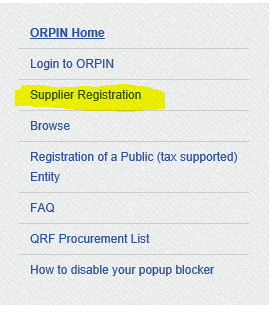
To get registered to bid through ORPIN, go to http://orpin.oregon.gov/open.dll/ from the main page, click on Supplier Registration and follow the prompts.
Once you are registered, you can browse by Organization to pull up all of ODOT’s listings. Check back every few days for new opportunities to bid on. It’s that easy!
OregonBuys is a new web-based eProcurement system that will automate the state’s eProcurement process and will soon replace ORPIN. ODOT is still using ORPIN for the time being, but registration is open for OregonBuys. In preparation for the change from ORPIN to OregonBuys, you can register for the OregonBuys system here: https://oregonbuys.gov/bso/
|
Current Bids on ORPIN
BID: 730-34525-21 Closing Date: 06/18/2021 1:30 PM
Title: RFP 34525: Major Bridge Inspections Services
BID: 730-34806-21 Closing Date: 07/08/2021 2:00 PM
Title:Coos County Maintenance Station Phase 1
BID: 730-34706-21 Closing Date: 07/12/2021 3:00 PM
Title:I-84 COLUMBIA GORGE CORRIDOR PROJECTS - STRATEGIC COMMUNITY ENGA
BID: 730-34900-21 Closing Date: 07/15/2021 10:00 AM
Title: Meacham Maintenance Station
BID: 730-34827-21 Closing Date:07/16/2021 12:00 PM
Title: Social Equity Bench
BID: 730-B34817-17 Closing Date: 12/31/2022 11:59 PM
Title: Trip Permit Agent Agreement
BID: 730-33638CTS-20 Closing Date: 12/31/2023 4:00 PM
Title: ODOT Class 7 and 8 Truck Body Repairs - Ongoing Request for Apps
BID: 730-25905ONGOING-14 Closing Date: 12/31/2023 5:00 PM
Title: Hot Mixed ASphalt Concrete and Tack Coats
BID: 730-SCP091A-15 Closing Date: 4/11/2025 4:00 PM
Title: Request for Qualified Firms: ODOT Small Contracting Program
BID: 730-15801-20 Closing Date: 07/15/2025 5:00 PM
Title: RFQ for Right of Way Appraisal Services
BID: 730-SP1116-19 Closing Date: 05/31/2029 2:00 PM
Title: Employer Based CDL Testing for Transit Providers
Disadvantaged Business Enterprise (DBE)
In order to be part of the Disadvantaged Business Enterprise program, your firm must be certified as a Disadvantaged Business Enterprise. Disadvantaged Business Enterprises include small businesses that are at least 51% owned by Minorities (Blacks, Hispanics, Native Americans, Asian-Pacific Americans, Subcontinent Asian Americans, and Women) Other individuals on a case-by-case basis.
Emerging Small Business (ESB)
The Emerging Small Business Program creates contract opportunities for Oregon’s small businesses. The program also helps remove some of the barriers which prevent small businesses from contracting with ODOT. The ESB program objectives are to:
- Ensure ODOT is following Oregon laws and requirements.
- Assist and encourage other state and local agencies to have Emerging Small Business programs.
- Ensure that opportunities are available statewide to a diverse pool of businesses.
- Ensure that Emerging Small Businesses can compete fairly for ODOT funded projects.
- Ensure that only eligible firms can participate in the Emerging Small Business program.
- Help develop firms so that they can compete outside of the Emerging Small Business program.
Title VI
ODOT complies with Title VI of the Civil Rights Act and other federal nondiscrimination statutes which prohibit discrimination based on race, color, national origin, age, disability or gender in ODOT’s programs, activities, services, operations, delivery of benefits or opportunities to participate.
In an effort to provide equitable access, ODOT provides accessibility aids, translation and interpretation services for public ODOT events and vital documents upon request. The public can get these services by providing reasonable advanced notice, at no charge to the individual.
Intermodal Civil Rights
The Intermodal Civil Rights Program makes sure that public transportation and passenger rail programs comply with civil rights laws and executive orders that prevent discrimination in programs that receive federal money. The Intermodal Civil Rights Program works with other programs in the Office of Civil Rights to keep ODOT following civil rights laws and policies. Learn about our program objectives.
Equal Employment Opportunity Contractor Compliance
The Oregon Department of Transportation is committed to equal opportunity in hiring and awarding contracts. ODOT promotes equal opportunity within its own workforce and with the workforce of contracted employers who provide services for the agency.
Workforce Development
ODOT is training future highway workers that will fill vacancies in the construction industry. By partnering with local nonprofits and Pre-Apprenticeship Programs, we’re poised to meet today current demands. Get a list of programs ready to work with you.
|