|
We want to take a moment to reflect on the gentrification and deep wounds caused by those responsible for displacing Black people throughout the country, including displacement of residents of the historic Albina neighborhood in Portland with the construction of I-5.
We remember Albina, located in Northeast Portland, a home to African American families who relocated to Oregon to find work and start a new life during the late 1800s and early 1900s. Sadly, Black Portlanders were pushed out of Northwest Portland at the turn of the century and most relocated to Albina, until the community was hard hit by urban renewal projects, forcing more than half of the neighborhood to relocate. The legacy of racist urban renewal projects, including the construction of I-5 through Albina, is a reminder of where we have been and the need to do business differently.
We are committed to a community-led and inspired vision for the future of Albina. Follow the development of the I-5 Rose Quarter Improvement Project and the Historic Albina Advisory Board meetings to learn how we are doing business differently.
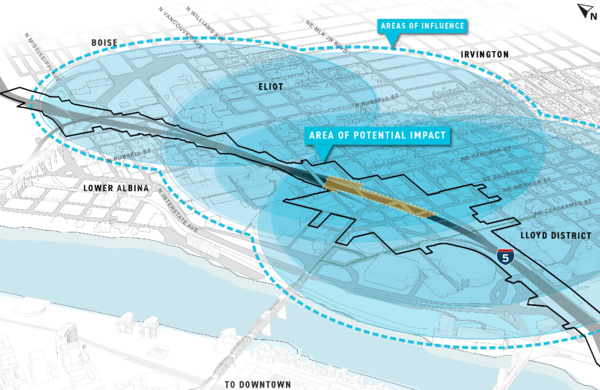 The Independent Cover Assessment team has launched a new website to engage with the historic Albina community and other stakeholders about development of the highway covers.
Last year, in response to direction from the Governor and requests from project stakeholders, the Oregon Transportation Commission directed ODOT to retain a consultant team of local and national urban design, engineering, and environmental experts to conduct an independent assessment of the highway cover designs included in the I-5 Rose Quarter Improvement Project. The requests from Metro, Multnomah County, the City of Portland, Portland Public Schools and Albina Vision Trust shaped the creation of the independent assessment process. The goal for this independent team is to understand the vision and goals of stakeholders in the project area, generate potential highway cover scenarios, and assess the impacts and benefits of these scenarios.
The Independent Cover Assessment team is seeking direct input from Black community members from the historic Albina neighborhood and other stakeholders through a series of virtual workshops and invites broader community input through online open houses, surveys, and public comments. Input gathered will inform the development of the highway covers in pursuit of restorative justice and a diverse, inclusive, and accessible neighborhood for current and future generations. The first online open house is open to the public and will be open until Monday, March 15.
The rebranding is an effort to better understand how we are showing up in communities. We are undergoing a community involvement process to inform this work and more closely align with the project values – which includes listening sessions with community members. The Historic Albina Advisory Board has been a part of these discussions and will help finalize the brand package this spring.
Executive Steering Committee
The Executive Steering Committee met in an online meeting open to the public on Monday, February 22, 2021. The committee heard a project Director’s update that answered prior questions posed by members, identified upcoming meeting presentations, and discussed recent efforts to work with project stakeholders to support an affordable housing development in the project area. The meeting closed with the first Independent Cover Assessment community engagement workshop focused on collective community visioning and defining shared outcomes and desired programming. Check the project's events page to view meeting materials or watch a recording of this meeting.
The Oregon Transportation Commission convened the Executive Steering Committee in consultation with ODOT and regional partners to advise the Oregon Transportation Commission and ODOT on I-5 Rose Quarter Improvement Project decisions. The committee advises on principles and values to guide the project, design elements such as highway covers, equitable engagement strategies, and other considerations. Oregon Transportation Commission Vice Chair Alando Simpson is the committee chair and Dr. Steven Holt facilitates the committee meetings. The next meeting will take place on Monday, March 22. The project's events page includes information for how to watch the meeting, what is included on the agenda, and how you can provide public comment.
Historic Albina Advisory Board
The Historic Albina Advisory Board met in an online meeting open to the public on Tuesday, February 23, 2021. The board heard a project update focused on answering prior questions from members and updates about the work of other project advisory committees. Most of the meeting was dedicated to the first Independent Cover Assessment community engagement workshop focused on collective community visioning and defining shared outcomes and desired programming. The meeting closed with a presentation about the project’s rebranding effort. Check the project's events page to view meeting materials or watch a recording of this meeting.
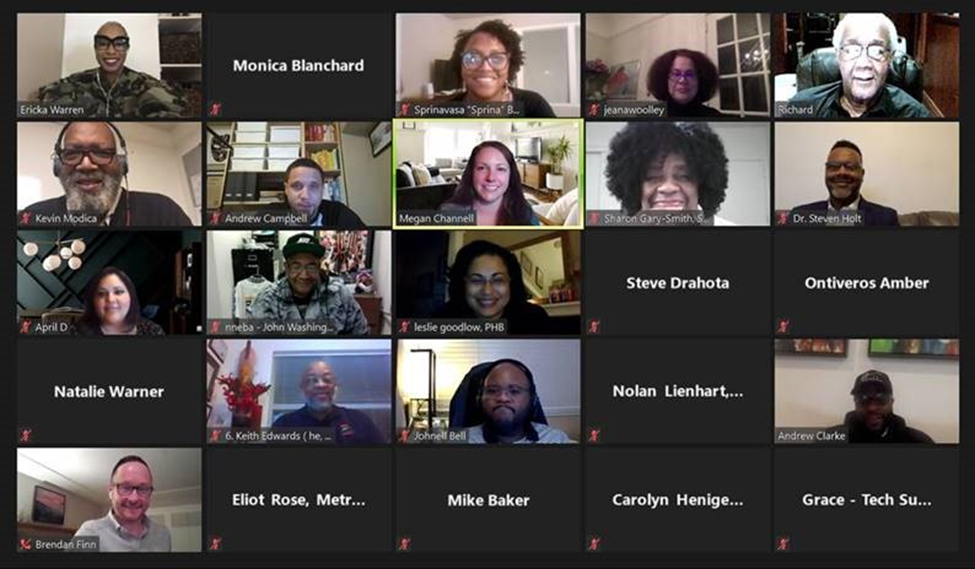 The purpose of the Historic Albina Advisory Board is to elevate voices in the Black community to ensure that project outcomes reflect community interests and values and that historic Albina directly benefits from the investments of this project. The board brings community perspectives into the project’s decision-making process concerning elements that most directly support community connections, urban design and wealth generation in the Black and historic Albina community. Ericka Warren facilitates the committee meetings. The next meeting will take place on Tuesday, March 16. The project's events page includes information for how to watch the meeting, what is included on the agenda, and how you can provide public comment.
Community Oversight Advisory Committee
The Community Oversight Advisory Committee focuses on the project’s workforce participation goals and advises on decisions about Disadvantaged Business Enterprise contracting requirements and on-the-job training opportunities. The committee oversees the development and implementation of a Diversity Plan that is being created by the construction management team, Hamilton Sundt, a Joint Venture in association with Raimore Construction. The plan will include:
- a subcontracting plan,
- apprenticeship and training opportunities,
- a workplace culture assessment,
- Disadvantaged Business Enterprise capacity-building strategies and more.
The committee will review and discuss the Diversity Plan in more detail at their next meeting happening Thursday, April 22. The project's events page includes information for how to watch the meeting, what is included on the agenda, and how you can provide public comment.
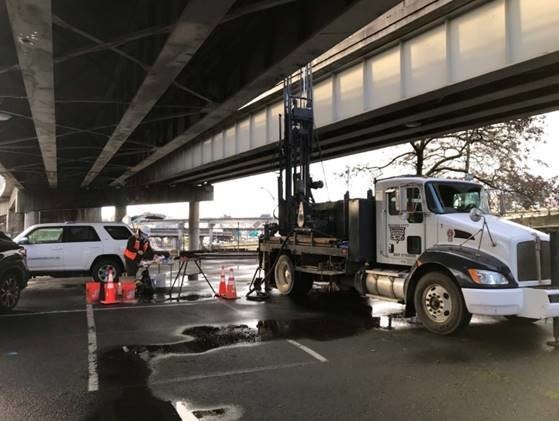 Crews drilling at the Oregon Convention Center using heavy equipment like the truck-mounted rig shown above.
ODOT contractor crews are out in the project area to collect critical data to inform project design and construction. This work will cause temporary closures and detours for people walking, biking, rolling, riding transit and driving, but the activities will be no louder than typical traffic noise.
Three types of separate field work are scheduled to take place:
| Activity |
Description |
Duration |
| Utility mapping |
Locate, map and record data on underground utilities in project area |
March 2021 – April 2021 |
| Soil sampling |
Soil sample collection in project area |
March 2021 – April 2021 |
| Hazardous materials sampling |
Collection of paint and other materials samples in project area |
March 2021 – April 2021 |
The I-5 Rose Quarter Improvement Project is committed to supporting a safer, more just and inclusive Albina community and greater Portland region. The project will make local, regional, and international travel more predictable and reduce frequent crashes on the I-5 corridor, supporting Oregon’s economy, and will create new community connections to support future economic development, including land redevelopment opportunities.
On I-5, the project will add auxiliary lanes and shoulders to improve travel reliability and safety and will smooth traffic flow between I-84 and I-405 where three interstates meet at the top traffic bottleneck in Oregon and 19th worst bottleneck in the nation. The project is led by the Oregon Department of Transportation. The Oregon State Legislature identified the project as a key transportation investment in 2017.
Learn more about the project and sign up for email updates at:
|



