|
Sept. 3, 2020
Area ramps also close during the Sept. 12-20 closure of the northbound span of the Interstate Bridge
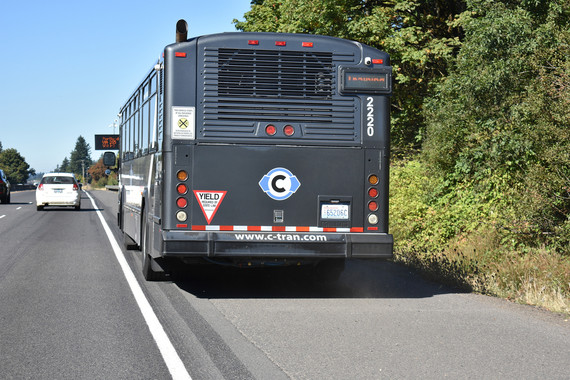 Buses may use the shoulder on I-5 and I-205 in targeted areas when speeds drop below 35 mph.
Bus on shoulder coming to I-5, I-205
The Glenn Jackson Bridge over the Columbia River may look a little different starting Saturday, Sept. 12 and not just because of additional traffic diverted from the Interstate Bridge closure.
That’s when the new Bus on Shoulder project extends to interstates 5 and 205 and reaches into Oregon for the first time. In this project, when traffic drops below 35 mph, buses may use the shoulder on:
- I-205 northbound from north of the Airport Way entrance ramp to south of the SR 14 exit ramp.
- I-205 southbound from south of the SR 14 entrance ramp to north of the Airport Way exit ramp.
- I-5 southbound from 99th Street and the Interstate Bridge in Vancouver. Buses will use the left shoulder.
Buses are only allowed to go up to 15 mph faster than other traffic. And emergency vehicles, stalls and breakdowns always get priority on the shoulders.
This is new to Oregon but not to C-TRAN. Its buses have been operating on the shoulder of SR 14 between I-205 and Southeast 164th Avenue since 2017.
In Oregon buses will operate on the shoulder Oregon side of the Glenn Jackson Bridge under a pilot project. To learn more about Oregon’s plans go to the project web site.
Behind the bridge: By the numbers
10
The number of full-time employees needed to maintain and operate the bridge.
20 minutes
The time needed to switch lane barriers on the southbound span.
87,000
Average number of vehicles daily crossing the Interstate Bridge in 1986.
135,700
Average number of vehicles daily crossing the Interstate Bridge in 2018.
$282 million
Estimated cost of maintenance and repairs needed through 2040.
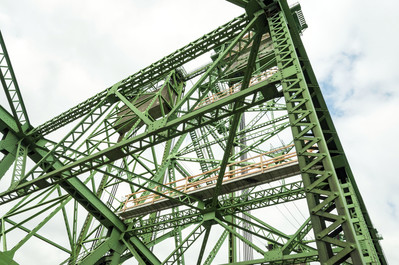
Right: Looking up the tower, toward the 706 ton counterweights.
|
Drive safely in the work zone
Traffic patterns will be new and unfamiliar. Pay complete attention to your driving. An inattentive driver is the most common cause of work zone crashes.
Slow down: The speed limit will drop to 40 mph. Expect delays — plan for them — and leave early so you can drive safely through the work zone.
Upcoming traffic impacts
Sept. 12-20: Nine-day closure of the northbound span
At 12:01 a.m. Saturday, Sept. 12, crews will begin closing the northbound span of the Interstate Bridge, which will remain closed until 11:59 p.m. Sunday, Sept. 20 while crews replace mechanical parts that help raise and lower the bridge.
During the nine-day closure, northbound and southbound traffic will share the three lanes and sidewalk on the southbound span. Movable concrete barriers will allow two lanes of traffic in the busiest direction, with two southbound lanes open for the morning commute and two northbound lanes open for the afternoon commute.
The sidewalk on the southbound span will remain open at all times for people walking or riding bicycles.
Ramp closures
During the bridge closure, four ramps in the project area will close for traffic control and to ensure a safe work zone:
- Marine Drive on-ramp to I-5 north in Portland.
- Hayden Island on-ramp to I-5 north in Portland.
- I-5 north to SR 14 off-ramp in Vancouver.
- SR 14/Washington Street on-ramp to I-5 south in Vancouver.
Signs will direct travelers to detour routes. Learn more on the project website.
Sept. 21-27: Lane closure on I-5 south
The left lane on the southbound span will close Sept. 21-27 around the clock as crews upgrade the median barrier, remove equipment and wrap up the project.
Other impacts
Before and after the September closure, travelers should expect occasional night lane closures on I-5, up to 30-minute bridge lifts on the northbound span and nighttime ramp closures between Victory Boulevard in Portland and SR 14 in Vancouver.
Learn more
|