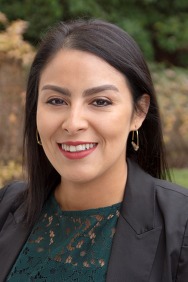
As we approach the end of 2026, I've been reflecting on how much Oregon has accomplished and how much work still lies ahead for immigrant and refugee communities.
This month, the American Immigration Council released its States Index, ranking Oregon fifth nationally for policies supporting immigrant inclusion. This recognition reflects years of community advocacy, legislative action, and state leadership. Importantly, the ranking measures policies through the end of 2025 and does not yet reflect Oregon's significant progress in 2026.
Under Governor Tina Kotek's leadership, with the continued advocacy of immigrant and refugee communities, Oregon's Legislature passed an immigration justice package strengthening protections in schools, privacy, public safety, and access to legal representation. Governor Kotek also established the Interagency Council for Immigrant and Refugee Coordination (ICIRC), creating a statewide structure for agencies to work together in responding to the impacts of federal immigration enforcement and policy changes.
These accomplishments deserve recognition. But they also come with a responsibility to ensure our commitments translate into meaningful protections and access to services.
Throughout November, our office has continued hearing from families and community organizations about immigration enforcement, disruptions to family stability, uncertainty around federal policy changes, and growing pressure on organizations providing essential support. We're also examining how federal decisions affect health coverage, workforce participation, and Oregon's broader economic future.
This work is personal for many of us. Behind every policy discussion are families making decisions about their children's education, health care, employment, and whether they feel safe accessing services.
One important milestone this month is the next phase of statewide employee training developed through ICIRC. Beginning November 19, Council agencies will receive early access to the Immigration Enforcement Response training, ahead of its statewide launch on January 4, 2027. This training is intended to help public employees understand their responsibilities, respond appropriately to immigration enforcement concerns, and protect access to state services.
We're also preparing for the 2027 legislative session. Our focus includes strengthening statewide coordination, identifying implementation gaps, understanding federal policy impacts, and ensuring immigrant and refugee considerations are integrated into broader conversations about health, education, workforce development, and economic stability.
As we look toward the new year, I keep returning to the importance of listening to communities. Their experiences help us understand where policies are working, where barriers persist, and where state government needs to respond differently.
I'm grateful to the community leaders, advocates, legislators, public employees, and partners who continue showing up for immigrant and refugee families across Oregon.
Oregon has made meaningful progress, and we should recognize it. But progress is measured not only by the policies we pass or the structures we establish. It's also measured by whether families experience greater stability, dignity, opportunity, and access to the services they need.
That is the work ahead of us, and I'm committed to continuing it together.
Jessica Ventura
Director, Office of Immigrant and Refugee Advancement
|
Federal changes to OHP and SNAP
Four things to know this month:
- Sarting November 21 people applying for or renewing SNAP must provide proof of housing and utility costs.
- This change supports ODHS’ efforts to make sure people receive the correct amount of food benefits.
- People who already receive SNAP do not need to send proof now unless ODHS asks them to. Otherwise, they can wait until renewal. ODHS will send a notice explaining what proof is needed, how to submit it and when it is due.
- ODHS will also share information through a news release, texts to people renewing SNAP in November and banners on benefits websites.
- SNAP income checks
- ODHS will check income information on more than 80,000 SNAP cases in November and December 2026, with more checks planned next year. These checks help make sure households receive the correct amount of food benefits.
- If income information is unclear, incomplete or does not match other available records, ODHS may ask the household for updated information or proof.
-
Not everyone will need to take action. If more information is needed, ODHS will contact the household or send an “Information Needed” notice explaining what to provide and when it is due.
-
Partners can help: Encourage people to read notices, respond by the deadline and ask ODHS for help if they have questions or trouble providing proof. Households that do not respond may lose their SNAP benefits.
- If a check results in a change to benefits or eligibility, ODHS will send a notice explaining the change.
- New EBT chip and tap cards are coming
- Oregon will replace about 600,000 EBT cards with new chip-and-tap cards to help protect SNAP and TANF benefits from theft, including card skimming.
- A pilot will begin with about 1,000 selected participants in Klamath and Lake counties in December 2026. The statewide rollout is planned for February and March 2027. Dates may change.
- New cards will be mailed automatically. People do not need to sign up or request one.
- OHP HR1 implementation continues
-
October 29 court ruling: Medical exemptions - A federal district court ruled in favor of Oregon and other states, blocking a federal rule that narrowed who could qualify for a medical exemption from work or activity rules. This is a win for Oregon and looks like it will enable us to keep more people covered, which is exactly our goal, especially for people who count on OHP as a lifeline. We're assessing exactly what the ruling will mean for OHP members and will provide details.
-
Some details and timelines may change. Please use OHA’s latest guidance when answering questions or sharing materials.
-
Find the latest information and partner materials:
OHP.Oregon.gov/Toolkit
You can also find these resources, as well as links do OHP information on the joint OHA/ODHS HR1 website.
Statewide Webinar on the New Public Charge Rule
Nine organizations came together to host a statewide webinar on the changes to the Public Charge rule implemented on September 18, 2026. Each and every one of us is grateful for your engagement, whether you could attend or not! Your interest shows us how important having timely conversations about these shifts are and helps us coordinate our efforts with a better sense of how we can strengthen our ability to serve those who call Oregon home.
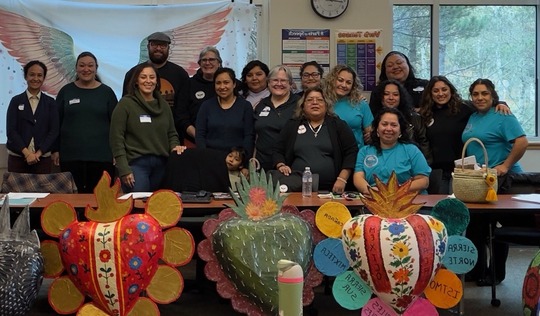
This month, we were honored to meet local organizations and groups from around the state, including Conexión Fénix in Lincoln County, Oregon. Each interaction and each connection builds a stronger community and OIRA is grateful for the warm welcome!

Ukrainian Winterfest Dec. 5, 2026
Mark your calendars for DAWN’s Ukrainian Winterfest in Portland!
- Saturday, 5 December, 2026
- 1 pm – 8 pm
- Holy Trinity Greek Orthodox Church – 3131 NE Glisan St, Portland, OR 97232
Experience a Ukrainian winter wonderland with us this December.
Entrance: FREE!
|
|



