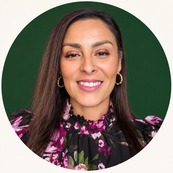
Arrival may be a moment. Belonging is something we build.
As we close September, I’ve been reflecting on just how much can happen in a month.
Over the past several weeks, our team has moved between conversations with immigrant and refugee communities, meetings with state agencies, discussions with refugee resettlement partners, presentations to legislators, and celebrations across Oregon.
The settings have been different, but the work is increasingly connected.
We heard directly from refugee resettlement leaders about what Oregon will need as the federal refugee landscape continues to change. Through our community engagement, immigrant and refugee partners shared what they are seeing, what families are experiencing, and what they need from state government.
We brought those experiences into the Interagency Council for Immigrant and Refugee Coordination, where agencies continued strengthening Oregon’s coordinated response to changes in federal immigration policy and enforcement. We also shared with legislators what we are learning through this work and how Oregon’s immigrant and refugee infrastructure continues to evolve.
At the same time, our office and agency partners have been responding to changes in public charge policy, strengthening immigration-enforcement response tools and training, and looking across state budgets and legislative proposals to better understand their impacts on immigrant and refugee communities.
And throughout Welcoming Week, I had the privilege of spending time with communities celebrating something equally important: what immigrant and refugee Oregonians bring to our state.
When I step back from all of those conversations, I keep returning to one idea.
Belonging is more than arriving somewhere.
Arrival can happen in a moment. We arrive in a new country, a new community, a new school, or a new job. Belonging takes time. It is built through relationships, trust, opportunity, and having a voice in the places we now call home.
That feels especially important right now.
Immigrant and refugee communities have different histories, legal statuses, and experiences. Yet many are navigating some of the same fear and uncertainty created by a rapidly changing federal landscape.
And still, communities across Oregon continue organizing, advocating, starting businesses, raising families, preserving languages and cultures, and taking care of one another.
They are not simply responding to change. They are helping shape what comes next.
That matters for government, too.
Under Governor Tina Kotek’s leadership, the Interagency Council for Immigrant and Refugee Coordination is helping strengthen how state agencies work together and how community experience reaches the people making decisions.
Because people don’t experience government as an organizational chart.
They experience whether they know where to go, whether they trust the system enough to ask for help, and whether the system works for them.
September has also reminded me that people do not arrive in Oregon without histories, knowledge, or leadership.
Talent does not begin when someone arrives in America. And neither does their story.
Our responsibility is not simply to welcome people to Oregon. It is to help create the conditions where immigrant and refugee Oregonians can build, contribute, lead, and have a meaningful role in shaping the future of our state.
There is a tremendous amount of work ahead of us. But after a month spent moving between community conversations and the places where government decisions are made, I am reminded why those connections matter.
Arrival may be a moment. Belonging is something we build.
|
 |
Public Charge FAQ
Starting Sept. 18, 2026, the U.S. Department of Homeland Security (U.S. DHS) rules relating to who will be considered a “public charge” will change.
New HR 1 Materials available: Toolkits, talking points and more
Have you visited the OHP toolkit web page recently? We posted new House
Resolution 1 (HR1) materials earlier this week. Please take a look and keep checking back for new resources, including additional language translations.
Here are some of the resources available now:
For Community Partners, Providers, CCOs, and more
- Talking points for member questions: English / Spanish
- HR1 Implementation Timeline: English
- Fact sheet for education partners: English
- HR1 CCO FAQ: English (Note: Will be updated as responses come in for outstanding questions)
- On the horizon: Provider Guidance & dedicated FAQ
For OHP members and the public
Videos on the new OHP work or activity rules:
Fact sheets that explain changes in plain language:
Sample notices showing what members may receive:
Notice explainer explaining how to understand all three notices: English
Social Cards and Newsletter Content
On the horizon: Dedicated info sheets for certain groups, like gig workers.
Web pages
State Financial Aid Application for Oregon: Information for Undocumented Students and Mixed Status Families
The Higher Education Coordinating Commission (HECC) is committed to removing barriers that prevent Oregonians from being able to access state financial aid. The HECC Office of Student Access and Completion has become aware that some students from mixed-status families in Oregon have decided not to file the Free Application for Federal Student Aid (FAFSA) because they have concerns related to data privacy. As a result of not completing a FAFSA application, they are not able to access state aid. The HECC is providing an option for students in this circumstance to complete the ORSAA in lieu of the FAFSA to access state and institutional aid. The information below can be shared with students to enable them to make informed decisions on whether to submit a FAFSA or ORSAA
By completing the ORSAA, undocumented students and students in mixed-status families may demonstrate eligibility for state-funded and privately funded grant and scholarship programs administered by the HECC Office of Student Access and Completion (OSAC), as long as students meet all other program requirements. Information on eligibility and deadlines for these programs is available at www.OregonStudentAid.gov.
As part of the application process for these programs, individuals who are undocumented Oregon students or students with a DACA, TPS, or U-Visa status must complete the ORSAA to be considered for HECC-administered programs.
As of October 1, 2026, the ORSAA may be used in lieu of the FAFSA by students in mixed-status families to apply for Oregon state-administered financial aid programs. This expanded access to the ORSAA is effective as of the 2027-28 aid year. Please note that students from mixed-status families will forgo access to all federal aid in addition to Oregon Promise state funds if they decide to file the ORSAA instead of the FAFSA. Oregon Law requires all students eligible to file a FAFSA to do so to be eligible for the Oregon Promise. Students who do not complete the FAFSA will not be eligible for federal financial aid programs such as the Pell Grant, Federal Supplemental Educational Opportunity Grant, work study, and federal loans.
For additional information please read the MEMO: ORSAA for Mixed Status Families available in English and Spanish or read the FAQs: ORSAA for Mixed Status Families document.
Protecting Oregon Elections toolkit
From the Oregon Department of Justice
We’re six weeks out from Election Day, and despite Trump’s attempts to interfere in our elections, nothing will change for Oregon’s elections this fall, which will once again be safe, secure, and accurate. The Supreme Court’s ruling from last week still stands, and mail-in voting will work as it has for decades.
Attorney General Rayfield and the Oregon Department of Justice have just launched a “Protecting Oregon Elections” toolkit to help Oregonians understand how our state leaders are ensuring safe, secure, accurate elections. The toolkit includes answers to FAQs, resources for Oregon voters, and more.
Please continue to follow guidance from your state and local elections officials. Attorney General Rayfield has also assured us that the Oregon Department of Justice will remain vigilant and will immediately take action if there are any further threats to our elections.
From Arrival to Belonging: A Personal Reflection
During Welcoming Week, OIRA Director Jessica Ventura shared a part of her own immigration story publicly, reflecting on arriving in the United States from El Salvador at age five with her 20-year-old mother.
She later adapted those remarks into a personal essay about migration, her mother, women’s leadership, and what it means to create opportunities for those who come after us.
“The older I get, the younger twenty looks.”
|


