All flourishing is mutual.
It is a phrase I often return to, and one that has stayed with me throughout my first year as Director of the Office of Immigrant and Refugee Advancement.
June is a month filled with celebration, reflection, and community. Across Oregon, people are gathering to celebrate Pride, commemorate Juneteenth, and recognize World Refugee Day. At the same time, the FIFA World Cup is bringing countries from around the world together across the United States, Canada, and Mexico.
While these moments are different in history and purpose, they all remind me of something I have been thinking about a lot over the past year: our lives are more connected than we sometimes realize.
When I started on July 1, 2025, I knew OIRA had an important mission. What I did not yet know was how profoundly community would shape our work.
Over the past year, our team has traveled across Oregon, meeting with community organizations, educators, healthcare providers, local leaders, state agencies, advocates, and families. We listened to stories of resilience, uncertainty, hope, frustration, and determination. We heard about barriers that remain, systems that work well, and systems that still need improvement.
Those conversations shaped OIRA's first strategic plan. They informed new coordination efforts across state government. Most importantly, they reinforced a lesson that communities across Oregon continue teaching us: people closest to challenges often have the clearest understanding of what is working, what is not, and what needs to change.
Over the past year, OIRA has grown alongside this work. Our team has expanded. Our responsibilities have expanded. Our partnerships have expanded. We have taken on new coordination responsibilities, increased our visibility across state government, and deepened our relationships with communities throughout Oregon.
One of the most significant milestones came earlier this year when Governor Tina Kotek signed Executive Order 26-04, creating the Interagency Council for Immigrant and Refugee Coordination. The Executive Order reflects Governor Kotek's recognition that immigrant and refugee communities are an important part of Oregon's social, economic, and civic fabric, and that the issues affecting those communities often touch multiple public systems at once.
The Council creates a stronger foundation for agencies to communicate, coordinate, and respond across systems. It also reflects something we have heard consistently from community partners throughout Oregon: people experience government as a whole, not one agency at a time.
I am grateful for Governor Kotek's leadership and commitment to ensuring that immigrant and refugee communities are considered in the development and implementation of public policy across state government.
Some of the most important insights shaping OIRA's work this year did not come from reports, dashboards, or conference rooms. They came from conversations with parents, students, community leaders, service providers, educators, healthcare workers, and families navigating systems in their daily lives.
That does not diminish the importance of expertise. It reminds us where expertise can be found.
Good government requires listening. It requires humility. It requires recognizing that communities are not simply recipients of public services. They are partners in shaping solutions.
As someone who crossed the border with my family as a child, grew up undocumented, and now has the privilege of serving as OIRA's Director, I have seen firsthand how our lives become intertwined. None of us succeed alone. Communities do not experience government one agency at a time. Families do not navigate schools, healthcare, housing, employment, or public services separately. Their experiences are connected. Their opportunities are connected. Their challenges are connected.
As this message is published, our nation is also approaching its 250th anniversary. Moments like this invite reflection on who we are, where we have been, and who we aspire to be.
The story of the United States is complex, imperfect, and still unfolding. It is a story shaped by Indigenous communities who have called this land home since time immemorial, by those who fought for independence, by generations who expanded the promise of freedom, and by people who came from around the world seeking opportunity, safety, self-determination, and the chance to build a better future.
For 250 years, immigrants have not simply been part of the American story. They have helped shape it. They helped build communities, strengthen institutions, grow the economy, defend the country, and expand our understanding of what it means to belong.
The American story was not written by institutions alone. It was written by ordinary people, workers, families, immigrants, refugees, advocates, community leaders, and generations of people who believed they had a role in shaping the future of this country.
As we reflect on our nation's history, I am reminded that the promise of America has always been larger than any one generation, community, or origin story. It has been carried forward by people from many backgrounds who believed in the possibility of building something better together.
That lesson feels especially relevant today.
Our communities, our institutions, and our futures are connected. The well-being of one community is tied to the well-being of another. The strength of our state depends on the strength of all who call it home.
After one year, I believe that lesson more than ever.
All flourishing is mutual.
Thank you for being part of this journey. The work continues, and I am grateful to be doing it alongside you.
|
 |
Each year on June 20, people around the world recognize World Refugee Day, a day designated by the United Nations to honor the strength, resilience, and contributions of refugees who have been forced to flee their homes due to conflict, persecution, or violence.
World Refugee Day is an opportunity to recognize not only the challenges refugees face, but also the courage it takes to rebuild a life in a new community. It is a reminder that behind every refugee story is a person, family, and community working toward safety, stability, and belonging. The World Refugee Day walk event in Portland was a great success- thanks to the Pacific Refugee Support Group, Oregon for All, CareOregon, and several other partners who came together to put this on!
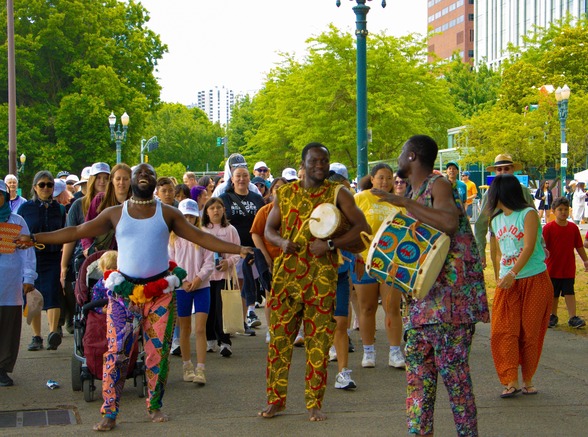 A joyful celebration on the Portland waterfront for World Refugee Day
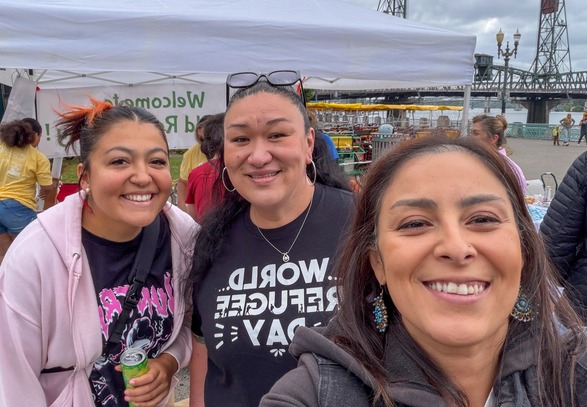 OIRA team members Brenda Gonzalez, Misty Schoene and Jessica Ventura
|
Meals on Wheels (MOW) programs for adults age 60 years or older, as well as for children in Portland
We operate dining centers throughout the Portland-Vancouver metro area that serve lunches at least one day a week. These centers offer a welcoming space for older adults, 60 years of age or older, to connect, engage in activities, and enjoy nutritious meals together.
If you are over 60 years of age and would like to talk to us about receiving home-delivered meals, please call 503-953-8111 or toll-free 866-788-6325 or request meals online.
Effective June 2026: Meals 4 Kids is accepting new referrals. Please complete the form. The Meals 4 Kids program is primarily funded by the Portland Children’s Levy. We serve children and families experiencing food insecurity who live within the city of Portland whose income level is 185% or lower of the federal poverty level who are also experiencing any of the following:
- Chronic condition or illness of caregiver or child
- Lack of facility to prepare meals
- Lack of ability and/or transportation to access food resources such as food pantries
- Other barriers impacting access to food resources and/or the ability to prepare meals
The Meals 4 Kids home delivery program delivers nutritious meals, milk, bread, and fresh fruit directly to the homes of families in need each week on weekdays between 9 a.m. and 2 p.m.
|

Portland Public Schools Pre-Kindergarten Registration for 2026-2027 Now Open
PPS Pre-Kindergarten is available to any child 3 or 4 years of age by September 1, 2025 that resides within the PPS boundary.
Program Eligibility: Our Pre-Kindergarten programs are funded through Preschool Promise, Preschool for All and Head Start grants with priority populations including:
- Children from families affected by homelessness, incarceration, substance abuse, mental health issues, and domestic violence;
- Children who speak languages other than English;
- Children who experience developmental delays and disabilities;
- Children of teen parents or military families;
- Children living in foster care;
- Children enrolled in a Title VI Indian Education Program or organization.
|
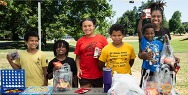
Summer Free for All – Free Lunch + Play
Where kids have fun in the sun and share a meal together! In partnership with our USDA nutrition partners, including Portland Public Schools, Centennial, David Douglas, and Parkrose School Districts, Free Lunch + Play provides free lunch, drop-in games, crafts, and recreation for youth ages 18 and under. The program is held late June through mid-August, Monday through Friday from 10 am to 2 pm. Youth 18 years and under must be in person to receive meals, meals must be eaten on-site, and lunch may only be served during stated mealtimes.
The 2026 Summer Program will be held June 22 through August 21, 2026, with no program on Friday, July 3. Multiple language translation flyers available.
|
Join us on Saturday, August 8, from 11:00 AM to 2:00 PM for the Salvation Army Back To School event! This community-focused celebration is the perfect way to gear up for the new school year. Hosted at the local Salvation Army, it’s an event that brings families, students, and neighbors together to prepare for success in the classroom and beyond.
Nonprofit Resources, Vaccines & Dental Screenings, Free Lunch & Ice Cream, Bill Discount Sign Ups (Bring your utility bill to see if you qualify), Face Painting, Backpack & School Supply Giveaway (Limit 3 per household, while supplies last)
|
Back to School Block Party: A Community Kermés & Resiliency Fair
This August 15, come celebrate the start of a new school year! Join CareOregon, Latino Network, Boys & Girls Clubs of Portland Metro (Rockwood Campus), Open School, and CSN for a free day of music, games, food, and community joy in the heart of Rockwood.
A kermés is a beloved Latino tradition — a jubilant neighborhood celebration where families come together to eat, play, dance, and connect. That's the spirit behind this event, and we're bringing it in full. Families will also find free school supplies, local resources, and information on programs to support health, education, and winter preparedness.
|
Oregon Futures Lab is excited to continue to offer repeating and new programs. Check back for continual updates!
Our programs work to seek out BIPOC leaders, support them in their work, and sustain their place in the movement.
Upcoming programs include: BIPOC Legislative School on Dec. 11, 2026, Compliance training, Board and Commission training.
|
|