February invites reflection.
Across Oregon, immigrant and refugee communities are observing cultural and historical traditions that mark resilience, migration, and shared history. This season includes Black History Month and Lunar New Year, along with related celebrations such as Tet and Seollal. Many communities also recognize national independence days that carry deep meaning in diaspora spaces. On March 8, International Women’s Day offers an opportunity to honor the leadership, strength, and contributions of women across cultures, including immigrant and refugee women who help sustain families and communities. In addition, many Muslim communities will observe Ramadan, a sacred month of reflection, prayer, and community connection. Together, these observances reflect the rich cultural fabric of Oregon and the diverse traditions that shape our shared experience.
|
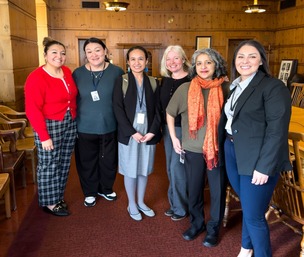
At OIRA, we also pause this month to recognize our staff.
In a time marked by heightened federal immigration enforcement and rapid policy shifts, OIRA staff continue to show up with clarity, compassion, and discipline. They respond to partners navigating uncertainty. They track federal changes across systems. They coordinate with agencies, community organizations, and the Governor’s Office to ensure Oregon’s response remains steady and aligned with our values.
Public service is daily work. It requires care, stamina, and coordination. I am proud of this team and the professionalism they bring to this moment.
|
This month also marked an important step. Governor Tina Kotek formally launched the Interagency Council on Immigrant and Refugee Advancement as part of Oregon’s continued response to evolving federal immigration enforcement.
Interagency Council for Immigrant and Refugee Coordination
On January 30, Governor Tina Kotek signed Executive Order 26-04 establishing the Interagency Council for Immigrant and Refugee Coordination. The Council is designed to ensure state agencies are aligned, responsive, and consistent in supporting immigrant and refugee communities as federal immigration enforcement activity increases across Oregon.
I convened the first meeting of the Council on February 11, and Governor Kotek joined to affirm the importance of coordinated statewide action.
The Council’s initial focus is to inventory current agency protocols and practices related to immigration enforcement activity and identify opportunities to strengthen coordination, communication, and support for impacted communities. In the coming months, the Governor’s Office and OIRA will share updates as this work progresses.
Earlier this month, Governor Kotek and I joined OPB’s Think Out Loud to discuss the Council’s launch and the importance of cross-agency coordination in response to evolving federal activity.
Community resilience is real. We see it every day. But resilience does not replace institutional responsibility. Our role is to ensure that state systems meet community care with coordination and action.
In community, with purpose.
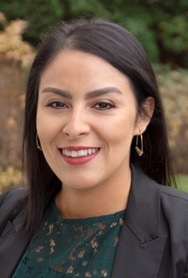
Jessica Ventura
Director
Office of Immigrant and Refugee Advancement
Statewide Presence. Coordinated Action.
Over the past two months, OIRA has participated in more than 35 direct engagements with legal providers, refugee resettlement agencies, youth leaders, regional immigration tables, business alliances, and cross-agency partners across Oregon.
This is not random outreach. It is disciplined statewide presence.
Policy must be informed by lived experience. As federal enforcement activity increases and conditions shift, communities are experiencing changes in real time. We are listening for patterns, not anecdotes.
Across dozens of conversations, several themes continue to surface:
• Increased enforcement visibility and confusion about rights and protocols
• Legal uncertainty for asylees and refugees
• Income instability among newly arrived families
• Mental health strain among youth
• Schools and service providers serving as stabilizing anchors
These insights are shaping how we approach our work. Coordination is not a one-time meeting. It is a daily practice built on relationships that already exist before a crisis escalates.
When federal conditions shift, trust cannot be built overnight. Communication channels must already be open. Escalation pathways must already be understood. Agencies must already be aligned.
Engagement is not separate from our work. It is infrastructure. Each conversation strengthens Oregon’s ability to respond consistently, lawfully, and with clarity.
This is how we reduce confusion. This is how we steady systems. This is how we ensure state response reflects lived realities rather than assumptions.
State of Oregon warns of scam targeting Spanish-speaking injured workers
The Oregon Department of Consumer and Business Services (DCBS) is warning the public about a scam targeting Spanish-speaking injured workers in other states, including in nearby Idaho and Montana.
In these scams, workers are contacted by phone, email, social media apps such as Facebook Messenger or WhatsApp, or video calls. The scammers try to convince the worker to appear at an online workers' compensation hearing, and at times, this results in an official appearing order in their favor. Thereafter, they are told must pay money to receive the workers' compensation benefits or the settlement for their claim. These communications may appear official and the hearings may include a fake judge, attorney, or government representative. The Oregon Workers' Compensation Division (WCD), part of DCBS, and the Workers' Compensation Board (WCB) will never ask anyone to pay to receive benefits.
Here's what you should know:
- WCD, WCB, and insurance companies do not ask for payment to release workers' compensation benefits. Never pay money up front for benefits or settlements.
- WCD and WCB will never ask for payment via gift cards, wire transfers, or cryptocurrency. Be skeptical of any requests for payment.
- Official communications from WCD and WCB will not pressure you to act or pay immediately.
- WCB, which conducts workers' compensation hearings, does not charge or collect fees for hearings or mediation.
- WCB does not use social media or applications such as Facebook Messenger or WhatsApp to communicate with parties about hearings or mediations.
If you are unsure whether a communication is legitimate, do not send money or personal information. Verify before you act by contacting the Ombuds Office for Oregon Workers by phone at 800-927-1271 (toll-free) or email at oow.questions@dcbs.oregon.gov. The office serves as an independent advocate for workers by helping them understand their rights, benefits, protections, and responsibilities within the workers' compensation system and workplace safety and health laws and rules.
If you believe a scammer has contacted you:
- Report the incident to local law enforcement
- Report any scams, fraud, or suspicious business activity to the Oregon Department of Justice's fraud hotline at 1-877-877-9392 (toll-free)
- Report the scam to the Oregon Department of Justice and the Ombuds Office for Oregon Workers
- Early reporting helps others from becoming victims
If someone representing an insurance company is calling and threatening you, contact the Oregon Division of Financial Regulation, also part of DCBS, at 1-888-877-4894 (toll-free).

Governor's Marketplace event: April 2, 2026
The Governor's Marketplace brings information about public contracting opportunities and business resources to Oregonians across the state.
In-person, free, one-day event April 2, 2026 at the Salem Convention Center, located at 200 Commercial St SE, Salem, OR 97301
Visit the webpage and register to attend this free event!
|

Connect North Marion event: March 18, 2026
Connect North Marion brings together businesses and entrepreneurs with state, regional and local service providers. We invite businesses and entrepreneurs to attend one of two Business Fairs where they will have the opportunity to meet with providers, gather information, and spend one-on-one time with representatives. If you are a business owner or representative, or are interested in learning more about starting a business, join us at our next Resource Fair to learn about the organizations and resources available to help them start or grow a business.
March 18, 2026: 4 - 7 p.m., 4910 Brooklake Road NE, Brooks, OR 97305
|

You are invited: PODER Statewide Town Hall
Wednesday, March 18 | Noon–1 p.m. | Zoom
Immigrant and Refugee Advancement within the Oregon Department of Human Services
Featuring: Jessica Ventura
Director, Oregon Office of Immigrant and Refugee Advancement
Jessica leads statewide policy coordination to ensure immigrant and refugee Oregonians are treated with dignity and respect, especially during times of federal change.
A first-generation immigrant who grew up in Oregon, she brings more than a decade of experience in equity-centered policy development and legislative strategy.
Join the Conversation online via Zoom
🗓️ Wednesday, March 18 2026 | Noon–1 p.m.
|

Refugee and Immigrant Girls World Cup: March 29, 2026
March 29, 2026, 8 a.m. - 4:30 p.m.
Eastside Timbers Sports complex
Celebrating community, culture, diversity, youth and family empowerment
Contact: bottlestosoccer@gmail.com or check out their Facebook page
|
|