|
Date: February 27, 2026
Contact: Communications.odhs@odhs.oregon.gov
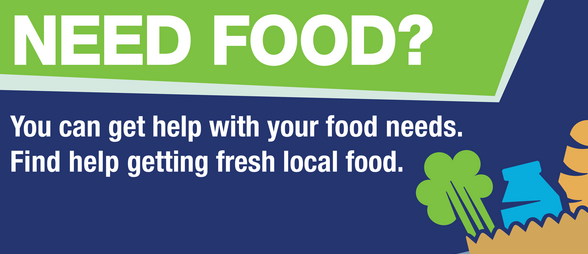 NeedFood.Oregon.gov is a central, statewide resource that connects people to food pantries and meal sites, the Supplemental Nutrition Assistance Program (SNAP), other food assistance programs, and local food resources in their communities.
To support outreach and referrals, the Oregon Department of Human Services (ODHS) has made new flyers and wallet cards available in multiple languages. These materials can be printed and shared with individuals and families who may be experiencing food insecurity. The materials are available on the NeedFood.Oregon.gov website—scroll to the bottom of the page and select “Materials to print and share.”

The Oregon Council on Developmental Disabilities (OCDD), the Oregon Self-Advocacy Coalition (OSAC) and The Arc of Oregon are leading the state’s celebration. They’re hosting several events starting on March 3 and more throughout the month. Join us and help promote DD awareness.

The nation’s 2026 tax filing season is officially open. Taxpayers have until Wednesday, April 15, 2026, to file their 2025 tax returns and free help is available. Filing your taxes could mean you could get money back – even if you don’t have to file or don’t have a Social Security number. Plus, this year you could get your share Oregon’s $1.4 billion kicker refund. You could get money back if:
- You work
- You have children younger than 6 and you earn $30,000 or less
- You paid more in tax withholding than required.
|

Oregon’s State Rehabilitation Council recognized four businesses for their partnership with the Vocational Rehabilitation (VR) program at its quarterly meeting Feb. 5.
The council’s Partner Awards go to businesses that partner with VR directly or through a contracted provider or workforce partner. The award recognizes businesses that have gone above and beyond in recruiting, hiring, retaining and promoting individuals with disabilities.
“These businesses have created an environment where people with disabilities can thrive, whether they are students beginning to explore their future careers, people entering the workforce for the first time, or people looking to change careers or advance to the next level,” said Ed Cortez, chair of the SRC. “These four businesses recognize the value people with disabilities bring to their workplaces.”
|
 |
|
The Oregon Department of Human Services is proud to celebrate an exciting milestone for Director Liesl Wendt, who has been selected to serve on the American Public Human Services Association (APHSA) Leadership Council. This national appointment recognizes Liesl’s leadership and highlights the work happening across Oregon to strengthen human services and improve outcomes for people and families. |

Starting February 1, 2026, some people who receive Supplemental Nutrition Assistance Program (SNAP) food benefits and live in certain rural counties will not have to meet the work rules for the rest of 2026. This change is for people who live in areas where employment services that help them meet the requirements are not readily available.
This change affects 1,310 people living in Crook, Gilliam, Jefferson, Lake, Morrow, Sherman and Wheeler counties. More than 730,000 people in Oregon receive SNAP benefits.
The Oregon Department of Human Services (ODHS) will apply these discretionary exemptions for people with an Able-Bodied Adult Without Dependents (ABAWD) status who live in seven rural counties without local employment service centers.
|
 |
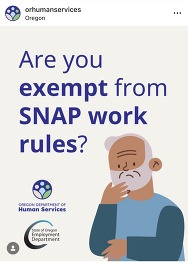
Last year, a new federal law changed who does and does not have to meet work or activity rules to get SNAP food benefits. The rules apply to people who have Able-Bodied Adults Without Dependents (ABAWD) status – which is now defined as anyone who is aged 18 through 64, does not have children or dependents under the age of 14, and is physically and mentally able to work.
We know life is a little more complicated than this definition. There are some exemptions to the rules. You can view the list of exemptions by clicking the link in our bio.
If you think you may qualify for one of these exemptions, it’s important that you let us know right away. Call us at 833-947-1694 or email snap.abawdteam@odhs.oregon.gov. Even if you’re not sure, please reach out to us so we can talk through your situation. We partner with @oremployment to offer help so that you can meet the work rules if you need to.
Note – Previously, veterans, people who were in foster care, and people experiencing homelessness were exempt from meeting the work rules. The new federal law made it so that people in these situations are no longer exempt. If this change impacts you, reach out to us by phone or email to talk about how we may be able to help.
|
|