Since the beginning of April, developments at the national level have affected immigrant communities across the U.S. These changes—ranging from shifts in federal policy to public conversations about immigration—have created a sense of uncertainty for many. At the Office of Immigrant and Refugee Advancement, we recognize how deeply these changes can impact individuals, families, and the communities that support them.
In moments like this, we remain committed to our mission of promoting belonging, safety, and opportunity for all. We are continuing to monitor updates, share trusted information, and work with our partners to support community members as needs evolve. We know policy may change—but our dedication to dignity, inclusion, and access stays the same.
With gratitude for all you do,
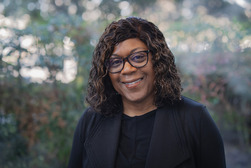
Cheryl Miller
|
Oregon Department of Education offers webinars to learn about the Community Care Implementation Blueprint
The Community Care Implementation Blueprint is a model that addresses the health, mental health, and basic needs of students, families, and staff in school communities.
Based on the first two years of the Community Care Development Project, this model places staff in school buildings who build upon pre-existing health and mental health supports/structures. This model emphasizes responding to local needs, leading staff to take on a wide range of activities such as assisting with OHP/SNAP/TANF applications, making referrals to health and mental health services, hosting community events, providing food/clothing, and making connections to housing resources.
A webinar on the Community Care Implementation Blueprint is being hosted on Zoom with two sessions (both offering the same information).
1st session: Tuesday, April 29th, 2:00pm - 3:00pm (recorded)
2nd session: Thursday, May 1st, 2:00pm - 3:00pm
For any questions, please contact jeremy.hogeweide@ode.oregon.gov
Grants to Grow Oregon's Provider Network for Health-Related Social Needs through Oregon Health Authority
Oregon Health Plan supplies coordinated care organizations (CCOs) with Community Capacity Building Funds (CCBF). CCOs use CCBF funds to support their community partners to become health-related social needs providers.
Health-related social needs are social and economic need that affect your ability to maintain health and well-being.
Organizations who would like to apply for CCBF grants need to contact their local CCO to apply. See the Local Contacts for Community Capacity Building Funds web page for contact information.
Each CCO has their own application process. They also have specific service areas they’re interested in funding. Contact them directly to learn more.
As directed by the Oregon Legislature in House Bill 3005, Business Oregon is working with the Department of Early Learning and Care, other state agencies and private and non-profit entities to implement a grant and loan program to provide financial assistance for child care infrastructure activities.
Business Oregon has opened a Request for Grant Application (RFGA) for the Child Care Infrastructure Program. All grant funds awarded under this RFGA must be expended by May 31, 2027, unless extended at the discretion of Business Oregon. Business Oregon anticipates announcing award recipients in June of 2025. Applications are due no later than 4:59 p.m. PST on April 30, 2025. After logging into your account please click on "Round 2" to complete your application for Round 2. More information is available in the 'Additional Resources' section of this webpage and all documents are available in multiple languages.
The Community Grants program is housed in ODE’s Office of Equity, Diversity, and Inclusion (OEDI) and will focus on three specific community-based goals:
- Expand culturally and linguistically responsive early literacy programs for children in early elementary grades by:
|
-Encouraging family and caregiver engagement; and
-Providing research-aligned professional training and coaching for direct service staff in early literacy.
|
- Develop and implement programs that engage parents and children in early elementary grades in early literacy and that are available equitably and statewide.
- Provide high-dosage tutoring programs and training to tutors to qualify the tutors for instruction in a manner consistent with research-aligned literacy strategies.
Announcement: On March 31, ODE opened a second Request for Application (RFA) for the Community Grants program on OregonBuys. Cohort 2 will identify Grantees for funding that will run for 2 years throughout the 2025-27 biennium. All communications, including any questions or information requests, must be directed to the Procurement Single Point of Contact (SPC) Tim Beaver at this submission question form.
 |
Metro, the regional government for the Oregon portion of the Portland metropolitan area, is studying how smaller, more flexible transit options, called community connectors, can help connect more people to transit routes.
Community connector transit (CCT) is a type of public transportation that typically uses smaller vehicles—think shuttles or vans—to get people to work, school, shops, the doctor or parks. They have a survey (also in Spanish) that is live on the CCT Study website until May 4 where they are asking for people to tell Metro where they would like to go but cannot reach by transit today, including jobs, health centers, schools, and major recreation areas.
OHA invites you to complete this brief survey to share your thoughts on the qualities, skills, and experiences that are most critical for the success of the next Equity and Inclusion Division Director at Oregon Health Authority. Your insights, along with the job description and broader community input, will help shape the recruitment strategy, candidate evaluation criteria, and interview process for this important role.
Survey Link: https://www.surveymonkey.com/r/PP9GNDY
The survey will remain open through Friday, April 25 at 5:00 PM PST.
Salem For Refugees, in partnership with Home First Development and with funding from Oregon Housing and Community Services, is proud to announce the opening of Blossom Gardens—a new 90-unit affordable housing community in Salem, Oregon.
Blossom Gardens offers a mix of 1-, 2-, and 3-bedroom units, serving households earning between 30% and 60% of the Area Median Income (AMI). Designed with families in mind, the development includes in-unit washers and dryers, a youth services room, a community clubhouse, two playgrounds, and outdoor spaces for basketball, soccer, and volleyball. The community is also within walking distance of Chemeketa Community College.
As the on-site service provider, Salem For Refugees will offer a range of resident services including English language classes, youth programming, and health and mental wellness activities.
At Blossom Gardens, we look forward to building a diverse and connected community—where both refugee families and other Salem neighbors facing housing challenges can find stability, dignity, and support.
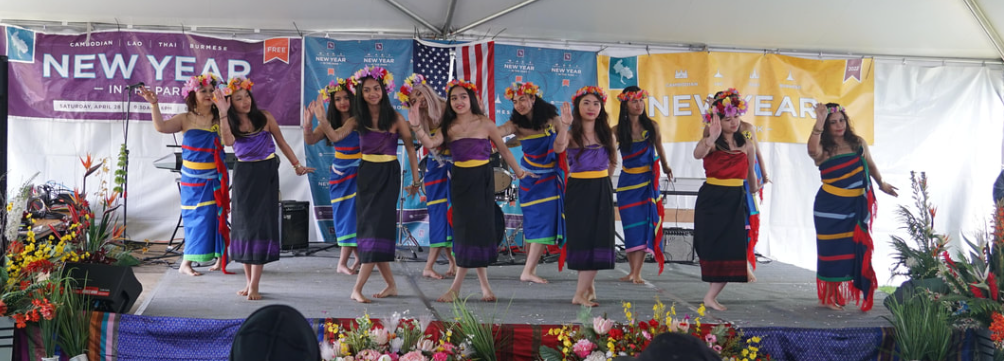
New Year in the Park
Join us in celebrating one of the largest and most important cultural festivals in several Southeast Asian countries, right here in Portland, Oregon!
Saturday, April 26, 2025 at Glenhaven Park, 7900 NE Siskiyou St, Portland, OR 97213
Attendance is free and all ages are welcome!
|
|