|
Please share the following information with others who may be affected by, and interested in providing input about, the proposed rule changes.
Palliative Care - Jan. 17
HSD is holding a Rules Advisory Committee to discuss proposed rules related to a new palliative care program resulting from HB 2981.
The RAC will be held on January 17, 5 to 8 p.m.
-
Join the meeting. Meeting ID: 223 458 627 589, Passcode: qS92L5 Call-in number and participant code (audio only): 971-277-2343, ID: 368745848#
- Contact Kian Messkoub at Kian.Z.Messkoub@dhsoha.state.or.us or 971-283-6563 if you are interested in becoming a RAC member.
Civil Commitments (Part 2) - Jan. 23
HSD has scheduled a RAC meeting to discuss proposed rules related to
The RAC will be held on January 23, 2 to 4 p.m.
Telehealth - Jan. 26
HSD has scheduled the following RAC meeting:
- Program: Division 410 Chapter 120 OHP General Rules; Division 410 Chapter 141 Oregon Health Plan (MCE & CCO) Administrative Rules
The RAC will be held on January 26, 9:30 to 11:30 a.m.
To my colleagues in Oregon’s health community – first, thank you. I know you and your families continue to make many sacrifices as we navigate the trauma and uncertainty of this pandemic era. As we look ahead to this new year, and as I step in to lead the Oregon Health Authority (OHA), I wanted to share my reflections on the opportunities and challenges we’re facing.
Governor Kotek takes office at a time when there’s never been more at stake for the health of Oregonians. Today, our front-line health workers shoulder the strain of record-setting hospitalizations from respiratory viruses. Hospital beds remain jammed with patients who can’t be discharged because they lack needed housing, behavioral health treatment or long-term care options. All parts of the health care system are struggling with adequate staffing, which further threatens treatment capacity.
But while Oregon must tackle these acute challenges, we still need to solve the deeper, longer-standing problems that are common to communities in every corner of the state: Too many people find themselves on the street, in jail or the hospital because they’re in crisis and can’t find the behavioral health treatment they need. Too many people die preventable deaths from fentanyl, methamphetamine and other dangerous substances. Hundreds of thousands of people who gained health coverage in recent years risk returning to a time when small changes in income can bounce working families on and off the Oregon Health Plan (OHP), especially as federal pandemic coverage and funding winds down.
We need to come together to solve these problems, which have tragically claimed lives and burdened communities across Oregon, from Burns to Brookings, for too long. With her focus on statewide collaboration, Governor Kotek takes office with the expectation that we’ll reach beyond the comfort of our well-worn lanes, our usual partners and established positions to listen to new and different voices, rethink our roles and stretch the possibilities of what our systems can deliver.
This vision isn’t happy-talk aspiration. For the first time, Oregon has many of the tools we need to solve our acute and chronic crises, even if we’ll never have all the resources we’d like (especially as federal pandemic relief measures taper away). But finding these solutions will require us to use our tools and work together in new and different ways. That starts with Oregon Health Authority – the agency I’m stepping in to lead.
A public service clinician with roots in health equity
At my core, I’m a community health primary care clinician with deep roots in advocating for social justice and health equity. For years, I provided clinical care to rural, primarily Spanish-speaking patients who frequently drove more than 50 miles each way to see me so they could talk to someone who spoke their language. At that time, nearly all my adult patients were uninsured. Many migrated every few months to find work. To this day, I carry a profound respect for their strength and resilience, and an abiding commitment to break down barriers to care that many families continue to face.
Their experience has inspired me to be led by those we serve, even as I moved on to larger health care organizations – including my most recent role as the CEO of Health Share, Oregon’s largest coordinated care organization (CCO).
Another core value is collaboration. As a community health practitioner, I had to enlist partners from local hospitals, clinics, county health departments, nonprofits, schools and businesses to solve the problems that undermined my patients’ health – from hunger to housing instability. Most importantly, this meant listening to my patients, building trust with the community and working together to find solutions to shared problems.
Focusing on protecting health coverage, implementing the Medicaid waiver and repairing behavioral health
I’ll continue to apply these values at OHA, especially as we pursue the agency’s top priorities:
- Maintain coverage for all 1.4 million people now enrolled in OHP (and who remain eligible) as the federal pandemic emergency ends and ensure that economically vulnerable working families who move off OHP have affordable coverage options.
- Implement Oregon’s ground-breaking Medicaid waiver and fulfill its potential to interrupt many of the root cause problems that undermine health and quality of life in communities statewide.
- Help communities across the state develop a behavioral health system of care that is able to meet the needs of people who are struggling or in crisis.
Under the Medicaid waiver, the federal government has given Oregon new tools to improve the health and lives of OHP members, including game-changing new benefits to address homelessness. Starting in 2024, housing navigation, housing support and up to six months’ rent payments will be covered under Medicaid benefits for OHP members. If state agencies, CCOs, health systems, counties and housing providers work together well, this benefit can do more than keep thousands of medically vulnerable people housed. It can move thousands more off the streets and into safe and stable residences where they can find greater health and independence.
While I was at Health Share, we recently launched a supportive housing program for OHP members, in an effort similar to the housing benefits the new waiver will support statewide. We prepared for more than a year, working with people who’d experienced housing insecurity, and people representing housing providers, counties and other partners. That collaboration paid off. Together we have been able to reduce houselessness, add more housing capacity and improve the health of our communities. We know covering these services will lead to fewer episodes of homelessness, fewer hospitalizations and fewer arrests for the people we serve – and over time this effort should save taxpayers millions of dollars.
Doing things differently
But Oregon can’t realize the new Medicaid waiver’s full impact on homelessness and health coverage (or address the severe shortage of behavioral health services in Oregon) if we continue to operate in the same familiar, fragmented and siloed ways. The Oregon Health Authority must lead the way in doing things differently.
During the pandemic, Oregon had the second lowest COVID-19 infection rate and ninth lowest death rate among states. This happened because OHA, community-based organizations, health systems and CCOs all worked together, often for the first time. Together, we created new tables for collaboration, and we developed new habits of problem-solving. We need to keep these partnerships going and bring even more people into the room, especially people who may challenge our views, habits and assumptions about what’s possible.
Here’s something else that needs to change: OHA can put more focus on holding partners accountable for better outcomes, instead of documenting compliance with process and output measures through burdensome reports. That’s especially true when it comes to our urgent need to eliminate health disparities in areas such as infant mortality, health coverage or chronic diseases. Incentive payments to CCOs have reduced avoidable emergency department visits and increased childhood immunizations for OHP members. We need to measure and reward better results across all our systems.
As I start at OHA, here’s one thing that won’t change: OHA’s commitment to eliminate health inequity in Oregon by 2030. Oregon has proven it can be done. Today, the adult COVID-19 vaccination rate for Latinos is on par with whites, and the COVID-19 vaccination rate for Black, African and African American persons outpaces both groups. I will do everything I can to keep the agency focused on health equity and sustain the community partnerships that made these gains possible.
As a clinician, I learned that most solutions to people’s health problems came from outside my office. In my new role at OHA, I know our partners have as many solutions as we do, if not more. I look forward to hearing your ideas and working with you to protect health coverage, make health care more affordable and get more people across Oregon access to housing and behavioral health services.
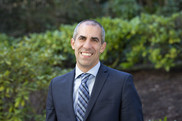 |
|
James Schroeder
Oregon Health Authority director |
Audience: Adult mental health residential providers
OHA has updated over 1,700 Plans of Care (POCs) to apply the July 1, 2022 rate increase as noted on the Behavioral Health Rate Increase page and the OHP Behavioral Health Fee Schedule. This action allows providers to bill and adjust claims for their POCs from July 1 through December 31, 2022, effective today.
Updated EPSDT resources and provider education sessions are now available
- EPSDT Fact Sheets for OHP members are now available in 13 languages at gov/EPSDT
-
Updated CCO Guidance and an accompanying change log were released on December 27, 2022 and sent to CCO contract contacts. These documents and all other EPSDT resources are available at gov/EPSDT
- OHA is providing no-cost education sessions to OHP providers regarding the EPSDT changes. Please share the following information with your provider networks:
Provider education (no-cost):
Implementing Early and Periodic Screening, Diagnostic and Treatment (EPSDT) benefit in Oregon
Contact: Laura Sisulak (Laura.Sisulak@dhsoha.state.or.us).
-
Audience: Clinicians and practice managers serving children and youth that are Oregon Health Plan members.
- Presenters will include the following OHA clinician leaders: Dana Hargunani, MD, MPH, OHA Chief Medical Officer; Dawn Mautner, MD, MS, Medicaid Medical Director; Margaret Cary, MD, MPH, OHP Fee For Service Clinical Director.
-
Session One: January 24, 2023 from 12:00 - 1:00 pm. Overview of the EPSDT policy change and implementation. Register here: https://www.zoomgov.com/meeting/register/vJItdumorT8oH4rMXC81lzetQsxsfNMiHDg
-
Session Two: February 7, 2023 from 12:00 - 1:00pm. Ensuring EPSDT access - documenting medical necessity, prior authorization and related processes for Open Card patients. Register here: https://www.zoomgov.com/meeting/register/vJItc-Copz8oGIcpxF3BQWwG0ahpIrclYPs
- Both sessions will be recorded, and webinar materials will be made available in Spanish.
- Please contact Tom Cogswell (cogswell@dhsoha.state.or.us, 971-304-9642) if you need an accommodation to fully participate in these webinars. Examples of accommodations include American Sign Language (ASL) or language interpretation, and closed captioning.
Additional information may be found at Oregon.gov/EPSDT. Please reach out to EPSDT.Info@odhsoha.oregon.gov with any questions.
Do you have news or a story to share? Submit your content for an upcoming CCO Weekly Update!
There are no CCO vaccinations rates for the week of 01/11/23. Please see the Vaccination Dashboard for the most up-to-date statewide rates.
January 17, 2023
January 18, 2023
January 19, 2023
Please visit the committee and workgroup links below for more information about meetings. You can also view the OHA Public Meeting calendar.
|