|
Because you can still get COVID-19 if you’re vaccinated, some people believe the vaccines don’t work. But the vaccines are, and always have been, highly effective at reducing hospitalizations and deaths. The data overwhelmingly show better health outcomes for people who remain up to date on their vaccinations.
In this blog we look at data for COVID-19 hospitalizations and deaths for people in Oregon and the United States. We compare the health outcomes for people who are not vaccinated with people who are vaccinated.

Before trick-or-treating starts this Halloween, stop by the Hollywood Senior Center in Portland for some spooky and healthy fun!
- Where: 1820 NE 40th, Portland
- When: Monday, Oct. 31, 1 p.m. to 3 p.m.
- What: Vaccines, snacks, karaoke and bingo
- Who: Anyone - walk-ins welcome and costumes encouraged!
The event is free and will offer COVID-19 vaccinations and updated boosters for eligible people 6 months and older, as well as monkeypox (hMPXV) vaccinations. Flu vaccines will be available for those without insurance, but supply is limited. It is safe and convenient to get any combination of these vaccines at the same time.
To find other COVID-19 vaccination events, visit Get Vaccinated Oregon and search for clinics or pharmacies near you.
|
Starting next week, this newsletter will have a new look and feel. The new Oregon Health News will include news and information on a wide range of health topics.
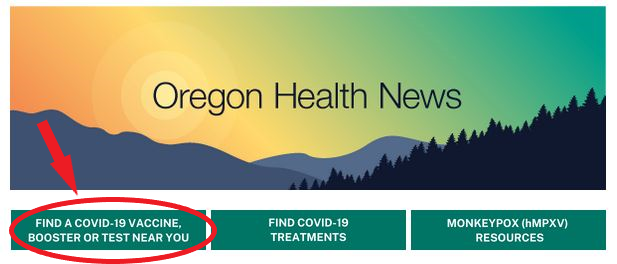
Another change, effective Tuesday, Nov. 1, is our blog listing COVID-19 vaccination and testing clinics will no longer be updated. For up-to-date details on vaccination and testing opportunities near you, use the Get Vaccinated Oregon (GVO) tool.
Beginning with the Nov. 3 issue, this is what you will see at the top of this newsletter. The button circled in red will take you to the GVO tool.
The 2022-2023 fall and winter season will be the first since the COVID-19 pandemic started that most mandated safety precautions, such as masking and showing proof of vaccination to enter indoor spaces, are no longer in place in Oregon.
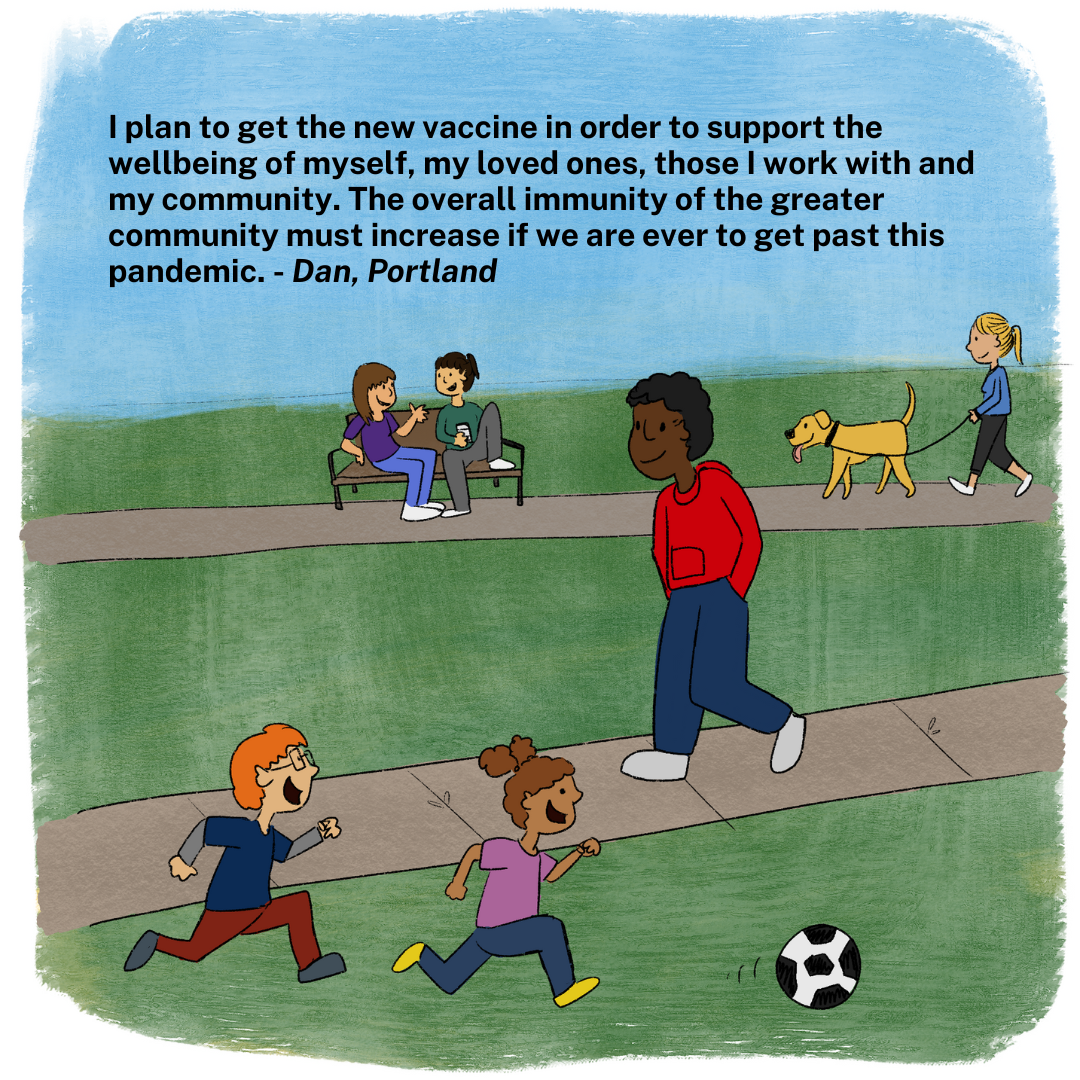
With both flu and COVID-19 cases expected to rise in the coming cold-weather months, what kind of precautions will you be taking? Will you require guests to test negative for COVID-19 before attending an event in your home? Will you wear a mask in indoor gatherings? Will you only spend time with loved ones outdoors? Will you rely on the vaccinations you’ve received to protect you and not take further precautions? Will you rely on the vaccinations you’ve received to protect you and not take further precautions?
If you have a moment, let us know how you plan to navigate COVID-19 this fall and winter. We may share your response in upcoming newsletters. Thank you!
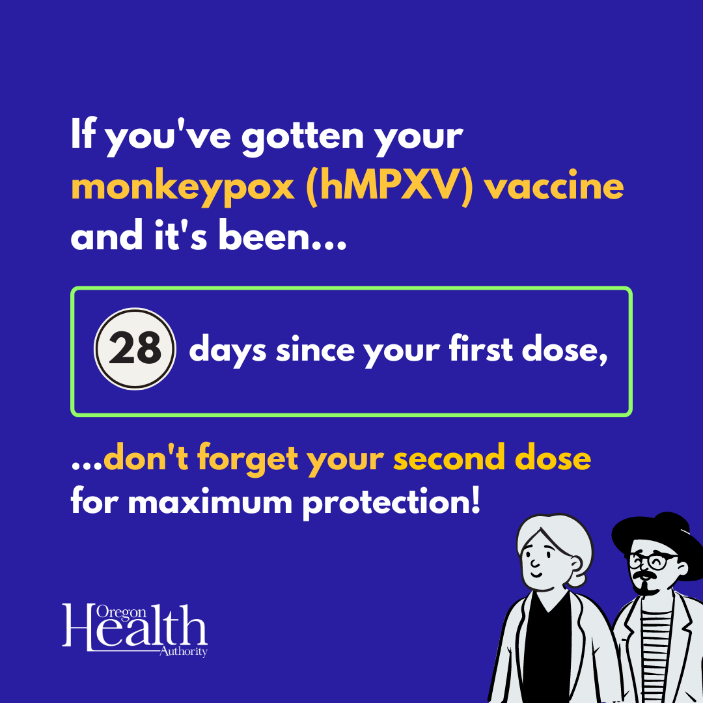
People in Oregon who received an initial dose of the monkeypox (hMPXV) vaccine should get their second dose at least 28 days later to ensure maximum protection.
In September, Oregon Health Authority (OHA) expanded eligibility for the monkeypox vaccine to anyone over 5 months old who meets these two conditions: Has had recent (or anticipates having) direct, skin-to-skin contact with at least one other person, and who knows other people in their social circles or communities who have, or have recently had, monkeypox.
As of Oct. 17, 14,672 doses of the Jynneos vaccine have been given to people in Oregon. That includes 10,278 people who have received at least one dose, of which 4,332 have received both recommended doses.
“That means nearly 6,000 people who received the first dose and are eligible for the second dose have not gotten it yet,” said Tim Menza, M.D., Ph.D., senior health adviser for OHA’s monkeypox response. “Getting both doses is recommended by the Centers for Disease Control and Prevention because it’s the best way to build immunity against this virus.”
To find a monkeypox vaccination clinic near you, check out check out OHA’s website. You can also use this federal locator tool to search by ZIP code.
If you suspect you have monkeypox, call your health care provider right away. If you don’t have a provider, call 2-1-1 for help finding one, or call your local public health authority. Find out more about OHA’s monkeypox response here.
Melissa Sutton, medical director of respiratory viral pathogens, and Adelina Mart from OHA’s Data Analysis & Reporting Team, answered today’s questions. We’ll continue to answer your questions in upcoming newsletters.
Q: Where can I find the county data for the number of COVID-19 cases per week? It was helpful to have that information so I could plan outings, but I can only find a state graph. Thank you. – Anonymous, Oregon
A: “County-level COVID-19 data can be found here, and it is updated every Wednesday. (It’s available at the bottom of this newsletter every Thursday.) You can also access it through OHA’s COVID-19 data dashboards, and clicking on the “Regional and County Data” tab. Once you find the page you want to see frequently, bookmark it and take note how often it gets updated.
“You can also look at COVID-19 case data by ZIP code here, which is updated monthly.”
Q: With prevalence of COVID-19 home testing without reporting, it seems like wastewater testing would be the more reliable method for tracking COVID-19. But not only is wastewater data not being reported widely, it appears monitoring has been discontinued at multiple sites. What’s going on? – David, Beaverton
A: “Wastewater data is a great way to track the spread of disease, including COVID-19. OHA works with water treatment sites around Oregon, as well as engineers at Oregon State University, to test wastewater samples for the virus. Our wastewater surveillance data is updated weekly on Thursdays and can be found here.
“As for the second part of your question, wastewater surveillance participation is voluntary, and we have seen sites drop out of surveillance when they do not have capacity to participate. We encourage them to rejoin as they are able. At any given time, nearly 40 sites are participating.”
If you have a question about COVID-19 or other public health topics, submit your question here. While we are unable to answer every question, we try to address questions of interest to a broad audience. Please understand we are unable to provide specific medical advice for personal medical conditions.

Did someone forward this to you? You can subscribe here.
|