|
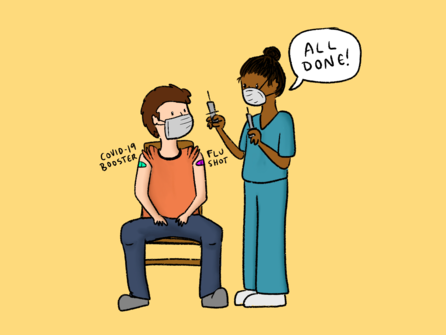
Although you should always get a flu shot, it could be even more important this year. COVID-19 safety precautions helped keep people in Oregon safe from the flu for the last two years, but that also means our natural immunity to the influenza virus has waned. Evidence from the flu season in the southern hemisphere, which experiences winter during our summer, shows a rise in flu cases. Experts anticipate flu cases in the northern hemisphere, including the United States, will follow suit.
Another concern is the potential burden on hospitals if there’s a rise in flu cases at a time when hospitals are treating COVID-19 patients. To help keep yourself and your community safe, we strongly recommend everyone 6 months and older get a flu shot as soon as possible.
It’s also safe and convenient to receive the flu vaccine at the same time you receive your COVID-19 vaccination or booster.

This week, Oregon received federal approval to pilot first-in-the-nation changes to Oregon Health Plan (OHP), the state’s Medicaid program. Under the agreement, Oregon will receive $1.1 billion in federal funds to address inadequate food, housing and other root-cause issues that lead to poor health for people and families struggling to make ends meet.
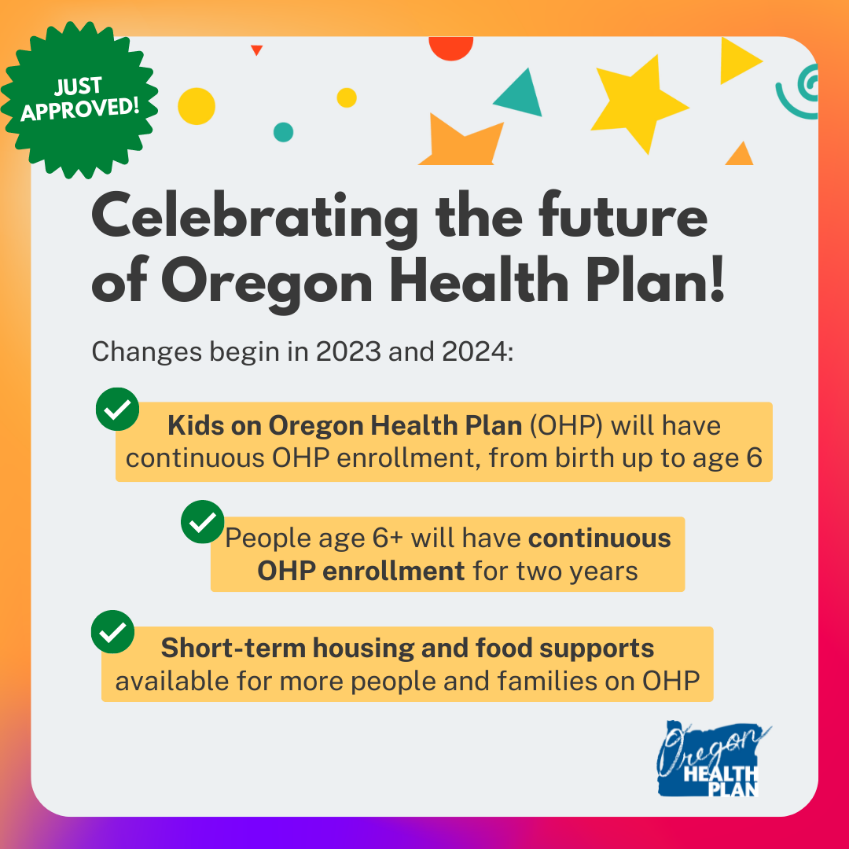
OHP provides comprehensive health coverage to approximately 1.4 million people in Oregon, more than one in three people in the state. This agreement between Oregon and the federal government renews Oregon’s Medicaid waiver for the next five years and provides federal support to implement the changes, including:
-
Extended health coverage for children. Oregon’s children can stay enrolled in Medicaid up to age 6 — preventing gaps in coverage that can cause children to lose access to care in their formative early years.
-
Extended health coverage for people 6 and up. Most people who lose OHP are still eligible, but their coverage lapses because they forgot to return a form or have a change in income. Keeping people enrolled for two years helps people stay connected to health care providers, current on medications and healthy.
-
Funds for health-related social needs. Oregon will expand health-related social needs coverage for people experiencing certain life transitions, including youth in foster care, individuals who are homeless or at risk of homelessness and low-income older adults. This coverage includes food and housing supports such as food boxes, access to fresh fruits and vegetables, temporary rental assistance, housing application assistance and help with rental deposits.
-
Support for high-risk individuals experiencing climate change. Oregon will provide air conditioners, air filters and generators to people with a high-risk clinical need who live in regions experiencing extreme weather events that place their health and safety in jeopardy as declared by the federal government or the governor of Oregon.
Most changes will begin in 2024, although some will start in 2023. To learn more about the changes and other related efforts to transform Oregon’s health system, visit here, or read our press release.
Nearly one in five adults who have had COVID-19 report persistent symptoms, a condition known as long COVID-19. In the last two years, researchers have been studying long COVID to find out why it occurs and how to help those who live with it.
Join a free webinar on Wednesday, Oct. 5, from 1 p.m. to 3 p.m. PST to learn about the symptoms, treatments and advocacy tips for long COVID. Panel experts include:
-
Dr. Aluko Hope, medical director of Oregon Health & Science University’s Long COVID Program
-
Dylan Morgan, manager for employer assistance at the Bureau of Labor and Industries (BOLI)
-
Emily Cooper, legal director for Disability Rights Oregon
The experts will discuss and answer questions about the latest research surrounding long COVID as well as workplace rights for those with long COVID under the Americans with Disabilities Act.
The webinar will offer Spanish translation, live captions/CART and American Sign Language interpretations. If you have questions about long COVID for the experts, submit them in advance here.

The Marshall Islands are nestled in the Pacific Ocean, not far from the equator, and the independent nation’s rich culture will be on full display this Saturday, Oct. 1, in Monmouth.
-
WHEN: Saturday, Oct. 1; 10 a.m. to 6 p.m.
-
WHERE: 120 Main St. E; Monmouth
-
COST: Free
The word “manit” means “culture” in Marshallese. It also stands for Marshallese American Network for Interacting Together (MANIT), the Oregon-based nonprofit hosting Manit Day 2022. The group’s mission is to “support the identity of Marshallese people through education, advocacy and cultural exchange.”
Manit Day 2022 is free and open to all! Activities and performances include Marshallese chants, dances, legendary stories of the islands and its warriors, handicraft weaving and displays, cultural foods and cultural games for children and adults. In addition, community vendors will sell cultural goods, foods and other items related to Marshallese art and culture.
Resources from colleges and universities, employment opportunities, free flu and COVID-19 vaccinations and other health opportunities will also be available (vaccination clinic is open from 10 a.m. until 3 p.m., insurance not required).
For more information about Manit Day 2022, visit MANIT’s website or Facebook page.
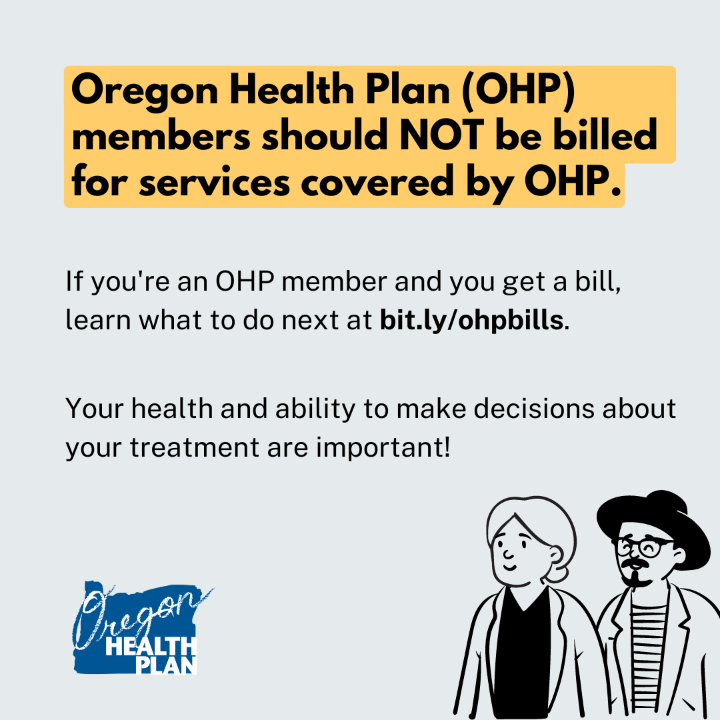
If you’re an Oregon Health Plan (OHP) member and you got a bill in the mail, don’t pay it yet! Keep the bill and learn what you need to do next. OHP members should not pay for services that OHP covers. Visit this webpage for more information.
Additionally, it’s important that OHP members keep their contact information up to date, especially as we prepare for the end of the federal Public Health Emergency (PHE). The PHE temporarily expanded OHP membership eligibility and benefits and has been extended multiple times throughout the pandemic. The current extension ends Oct. 13, although we expect it to be extended for another 90 days.
Update your contact information here.
Dr. Paul Cieslak, OHA senior health advisor and medical director, communicable diseases and immunizations program, OHA’s Office of Recovery and Resilience and Dr. Tim Menza, OHA senior health advisor, answered today’s questions. We’ll continue to answer your questions in upcoming newsletters.
Q: Are there any online support groups or resources for people with underlying conditions who must continue to practice social distancing, masking and avoiding indoor crowds? It's very lonely at times. It would be great to talk to others like us. – Holly, Milwaukie
A: “Thank you for writing, and know that you are not alone. Thousands of people in Oregon live with underlying conditions and are likely feeling the same loneliness. Here are a few resources that might be able to help you.”
- The Safe + Strong Helpline. Call 1-800-923-4357 (available 24/7).
- The Global Healthy Living Foundation offers a free COVID-19 support program for people who have chronic diseases and their families.
- The National Alliance on Mental Illness offers free online support groups and other programs. Here’s a link to its programs in Clackamas County.
-
Peer Galaxy is an online portal to hundreds of online and in-person support groups in Oregon. Check out their calendar of events.
- Community Counseling Solutions offers free phone support from the David Romprey Oregon Warmline, for anyone: 1-800-698-2392 (available daily, 9 a.m. to 11 p.m.).
-
Reach Out Oregon, which provides mental, behavioral and emotional support, has a warm line: 1-833-732-2467, available (Mon. to Fri., noon to 7 p.m.).
Q: Does my childhood smallpox vaccination protect me from monkeypox? – Mary, Eugene
A: “Vaccination against smallpox within the previous 10 years probably provides significant protection against monkeypox. But the immunity wanes over time, so beyond that, one can’t be sure. If you’re at risk for monkeypox, we’d recommend the two-dose JYNNEOS vaccine.”
You’re eligible for a JYNNEOS vaccine if:
- A public health official has informed you that one of your contacts has monkeypox.
- You have had recent close contact with someone with monkeypox.
- You anticipate having, or have had, recent skin-to-skin contact with at least one other person AND you know other people in your community who have had monkeypox.
- You work in a laboratory doing monkeypox virus testing, or if you work in a laboratory and have had an exposure. For example, you examined monkeypox lesions or collected monkeypox specimens without using recommended personal protective equipment.
Q: I have two questions. As an almost 80-year-old who is totally vaccinated and will continue to vaccinate in the fall, but also as someone with asthma, should I continue to mask? I pick up my grandkids after school. Also I’m concerned about polio. Are you monitoring for that? As someone who had the first polio vaccine to be developed, should my husband and I be revaccinated? – Barbara, Tigard
A: “To your first question, COVID-19 continues to be transmitted at high rates, and it’s very likely it’s being spread among kids at your grandkids’ school. Your immunity, even with the boosters, probably waned significantly by a few months after your last booster, so you’re at some risk of getting COVID-19. Masking—especially with an N95 or KN95 mask--will reduce (but not eliminate) your chances of getting COVID-19. If you’re worried about it and willing to wear the mask, we’d recommend that you do so.
“Regarding polio, it is reportable in Oregon, and no cases have been reported here since 1983. We are not monitoring wastewater for polio, as they are apparently doing in New York City. We would not recommend that you receive another polio vaccine unless you plan to travel to a country that is experiencing cases of polio.”
If you have a question about COVID-19 or other public health topics, submit your question here. While we are unable to answer every question, we try to address questions of interest to a broad audience. Please understand we are unable to provide specific medical advice for personal medical conditions."
If you have a question about COVID-19 or other public health topics, submit your question here. While we are unable to answer every question, we try to address questions of interest to a broad audience. Please understand we are unable to provide specific medical advice for personal medical conditions.



Did someone forward this to you? You can subscribe here.
|