|
|
Welcome to the Community Connections Newsletter

|
|
As children across Oregon begin the new school year, it is a reminder that we all have a responsibility to support the health and well-being of the children and families in our communities. When we come together to support children and families and make sure that they are safe and that their basic needs are met, we help them grow and reach their human potential.
Educators, who are mandatory reporters of child abuse and neglect, have a unique opportunity to get to know the children and families they see daily. They are there to share and experience a child’s victories, strengths, and challenges as they learn, grow and interact with friends at school.
As mandatory reporters, when educators have a reason to believe a child is experiencing abuse or neglect, they are required by law to report that concern to the Oregon Child Abuse Hotline by calling 1-855-503-SAFE (7233).
But what should an educator, or other caring adult, do when they see a child and family who is in need or crisis, but do not believe that a child is being abused or neglected? Many families in Oregon are still struggling to meet their basic needs, because of the impacts of COVID-19 and the rising costs of food and housing. These are families that need help getting connected to the resources available in the community, instead of being reported to the Oregon Child Abuse Hotline.
Our data tells us that many people turn to the Oregon Child Abuse Hotline when they want to help and support a child and their family but are not sure how.
This year approximately 42,000, about 45%, of all calls to the Oregon Child Abuse Hotline were not reports of suspected abuse or neglect.
These are calls from educators and other members of our community who recognize that a child and their family might need assistance because they are experiencing poverty, hunger, housing instability, job loss, mental or physical health issues, or other stressful situations.
Often these calls come to us because the callers are not sure where to turn for support.
There are many different resources and supports available in our communities to help children and families meet their needs. Sometimes, the best way to support child and family wellbeing and safety is to help them get connected to the resources they need:
Local supports in your community:
- Dial 2-1-1, or text your zip code to 898-211 to get connected to local food, housing, child care and other supports in your community.
- Find local resources and support by contacting your local Community Action Agency: https://caporegon.org/find-services/
Mental and behavioral health supports
Food support
Government programs and support
- Learn about government programs and community resources for older adults and people with disabilities by contacting the Aging and Disability Resource Connection of Oregon at 1-855-673-2372 or https://adrcoforegon.org.
- Apply for government food, cash, child care assistance and the Oregon Health Plan online at Oregon.gov or by calling 1-800-699-9075.
- Visit the Oregon Department of Human Services COVID-19 help center: https://oregon.gov/dhs/Pages/COVID-19.aspx
Of course, when an educator or other caring adult suspects a child is experiencing abuse or neglect that person should, and may be required by law, to report that concern to the Oregon Child Abuse Hotline by calling 1-855-503-SAFE (7233).
We all want children and families in Oregon to be healthy, safe and happy. Child abuse and neglect is preventable when communities come together to support children and families, and there are many organizations, nonprofits, and people who can help support families and prevent a family’s crisis from becoming a child’s safety issue.
Rebecca Jones Gaston (she/her), Child Welfare Director
|
|
|
The D9 Community Closet (serving Hood River, Wasco, Gilliam, Wheeler and Sherman Counties) came together as a project by Jordan Redbird for the Metro Leadership Cohort 20-21 but began as her vision long before the training. Many families who come to Child Welfare tend to have walls up with the agency due to trauma. The purpose of Jordan's project was to serve families in need but also give a different face to the agency in hopes of breaking down these barriers.
The Community Closet allows anyone to come to ODHS, with or without ODHS services, and receive FREE food, clothing, and household items. We provide fresh produce in a large fridge, fresh bread laid out daily, and a large store of canned goods, snack items, and baking supplies. During the Spring, we have near endless supplies of seed packets for families to use to plant gardens. Our donations come from the Oregon Food Bank and our community. These community members often include the families who were once fearful of ODHS. Families who may have previously had Child Welfare history. They are now donating, calling previous workers to inquire about resources before they reach crisis point, and telling others in the community about how ODHS is changing. This is the Vision for Transformation in action.
A testimonial from one of the Closet's patrons is a US Vet who has been out of work for an extended period of time. He comes to the closet not only for food but also to meet with other families and to trade work skills. He will often help unload products for the Closet and is frequently there to tell a story and lend a hand. He's an individual who served our country and has been devastatingly impacted by lack of access to enough food, even losing 65 pounds in a year. He told Jordan, "This is the only place where I feel human."
The Community Closet is located at 700 Union St, Suite 230, The Dalles, OR 97058 on the second-floor lobby of the Child Welfare offices between 8 a.m. to 5 p.m.
|
|
|
|
Each month, a public report detailing specific measures of progress of the prior month is sent to Governor Kate Brown and posted online. For June, notable progress includes:
- Wait time reduction strategies continue to move toward service level targets in May for Oregon Child Abuse Hotline (ORCAH), with more than 81.7 percent of calls answered in under 5 minutes.
- Child Welfare Equity and Workforce Wellbeing team is working to build partnerships with nonprofit sexual health and wellness organizations, and disability, trans and LGBTQIA2S+ rights organizations to bring learning content and support for the launch of an LGBTQIA2S+ affirming resource parent event.
- Kickoff meetings for District 6 (Douglas County) and District 12 (Morrow County and Umatilla County) Continuous Quality Improvement (CQI) implementation sites will take place in September. There are still seats on the CQI Advisory Committee.
|
|

In 2016 the Every Student Succeeds Act was introduced, establishing requirements aimed at preserving the educational rights and opportunities of students in Foster Care. This created a need for appointed persons in each district ("Foster Points of Contact") who would ensure the protection of these rights and offer other related services. The Oregon Department of Education has supported and enhanced these efforts by providing consistent trainings and professional development opportunities to Points of Contact and by working closely with ODHS Child Welfare to meaningfully improve the progression and development of ODE's Foster Care Program through an equity lens. Our state and district teams view each school year as a new opportunity to build stronger partnerships and think more creatively about how to best achieve collective goals such as increasing graduation rates, encouraging involvement in school activities, and identifying and addressing other unique needs of this student population. ODE and district liaisons' joint efforts and ODHS Child Welfare representatives make these improvements possible. To find out more about the ODE Foster Care Program, contact:
American Industries, Together We Rise has a new scholarship program for current or former foster youth pursuing a trade or vocational certification. The deadline has been extended to September 15th, 2022 at 3 p.m. PST. For information on eligibility requirements or to help a foster youth you know submit an application and build a better future.
If there are any questions, feel free to contact TA@togetherwerise.org.
Since March 2020, My NeighbOR has mobilized Oregonians to meet the essential and unique needs felt by those impacted by foster care. Due to its success, it now operates in every county in Oregon, meeting families' needs every day.
When a need is submitted:
- Our team reviews and shares the request with the local community.
- A community member pledges to meet a request.
- The donor will drop off the item with a local partner.
- A My NeighbOR team member will contact the beneficiaries to notify them their items are ready for pick up.
- Depending on the request, fulfilling a need might be by direct delivery or a gift card.
To learn more, visit: My NeighbOR – Every Child OregonEvery Child Oregon.
As an initiative of Every Child, My NeighbOR partners with ODHS Child Welfare Caseworkers to submit needs on behalf of youth and families.
Individuals and families seeking assistance through My NeighbOR can work with an Every Child affiliate to submit your Needs request. Each affiliate may choose to share the link to submit a request differently. Please connect with your local Every Child County affiliate to find out how to submit a request. You can also ask your caseworker or certifier, and they will be able to submit a request to My NeighbOR on your behalf.
Contact: info@everychildoregon.org
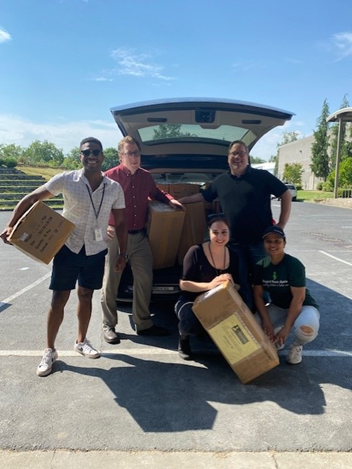
The Project Never Again duffel bag event had another successful year! 3000 duffel bags were provided to across the state to all 16 Child Welfare districts to ensure children’s belongings are not transported in trash bags. Five of the districts helped out by picking up their bags from the delivery site at Sonrise Church and were able to meet and thank the program founder, Seema Steffany. She enjoys providing this gift to the kiddos and looks forward to continued work providing dignity through duffel bags. Keep an eye out for bags to arrive to your offices! Be sure to stock the vehicles so workers have them on hand in case of need.
|
Provider contract opportunities are available! We envision a child welfare system built on our mission, core values, and belief that children do best growing up in a family and their community. We believe communities often already have the wisdom and assets to provide safe, stable and healthy lives for their children. We believe Child Welfare needs to partner, listen and lift-up community voices and their decision-making powers – and we couldn't think of a better community to uplift than the one where we share a connection.
- Request for Applications for In-Home Parent Education and Coaching Services in Jackson County
- Request for Applications for Child Caring Agency (CCA) Proctor Respite Care Services
- Request for Applications for Behavioral Rehabilitation Services (BRS) Placement Services
- Adoption Vendor Attorney Services
Have you seen our Community Engagement webpage? You can also see past issues of this newsletter on the site.
|
|
Suggestions, comments, ideas? Please e-mail us to let us know. |
|
|
|
|