|
Oregon Health Authority (OHA) and partners at community-based organizations (CBOs) are stepping up distribution of air conditioning units to individuals most at risk for heat-related illness, as temperatures soar.
Senate Bill 1536, passed earlier this year, allocated $5 million for the program, which provides free air conditioning units to vulnerable people in Oregon including older adults, homebound individuals and those with medical conditions made worse by high-heat events.
The AC units are going to people who are eligible to receive medical assistance through OHA, Oregon Department of Human Services (ODHS) or Medicare, or who have received any of these services in the past 12 months.
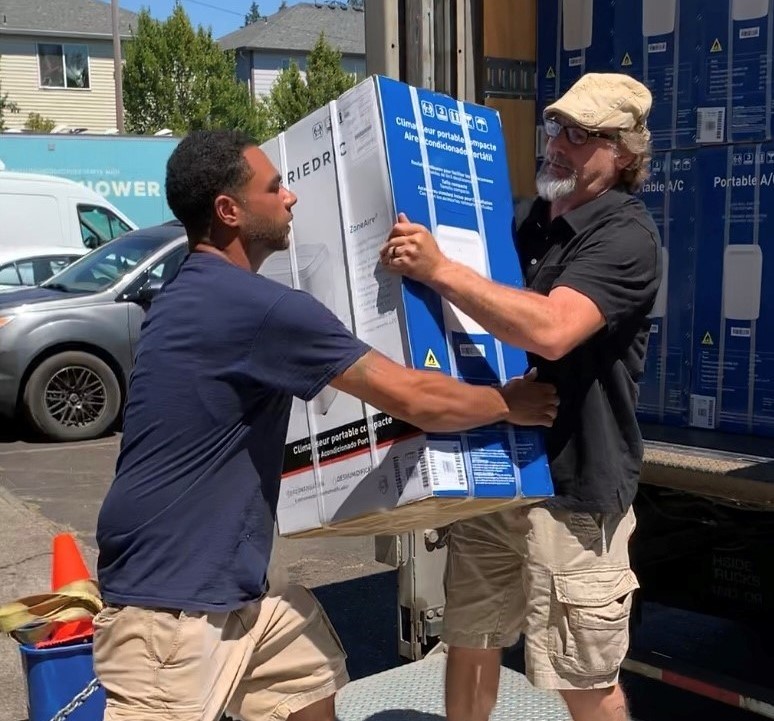
Over the weekend, OHA – with coordination and support from ODHS – delivered about 500 portable AC units with the help of three CBOs: Portland Open Bible Church, Rockwood Community Development Corporation and Somali American Council of Oregon.
OHA is receiving an estimated 3,000 units this summer and has received about 1,000 to date. OHA will work with more CBOs to distribute AC units soon. Coordinated Care Organizations (CCOs) can purchase AC units and help with increased electricity costs for their enrolled OHP members through their flexible services offerings. Members enrolled in a CCO can call member services to inquire about flexible services.

The National Weather Service is forecasting extreme heat in Oregon throughout the week, with temperatures expected to soar above 100 degrees in many parts of the state. Gov. Kate Brown declared a state of emergency in 25 counties effective yesterday through July 31 due to the heat. Read these tips to stay safe and healthy during extreme heat:
Stay cool
- Stay in air-conditioned places when temperatures are high, if possible. To find cooling centers in Oregon, call 211 or visit this website.
- Avoid exposure to the sun from 10 a.m. to 4 p.m., when UV rays are strongest.
- Open windows to allow fresh air to circulate, especially during morning and evening hours, and close shades on west-facing windows during the afternoon hours.
- Use portable electric fans to exhaust hot air from rooms or draw in cooler air.
-
Never leave infants, children or pets in a parked car.
Stay hydrated
- Regardless of your level of activity, drink plenty of fluids, even if you are not thirsty and especially when working outside.
- Avoid alcohol or liquids containing large amounts of sugar.
Stay informed
- Keep up to date on the temperature and heat index when planning your activities so you can find ways to stay cool and hydrated. Visit the National Weather Service’s Watches, Warnings or Advisories for Oregonpage or the Centers for Disease Control and Prevention’s Heat & Health Tracker .
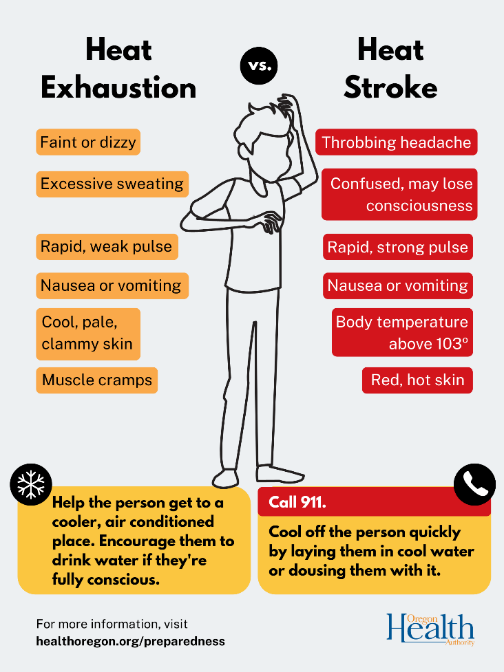
- Learn how to prevent, recognize and treat heat-related illnesses. Know the warning signs of heat stroke, heat exhaustion, heat cramps, sunburn and heat rash, and how to treat and prevent them.
- We realize that running air conditioning during extreme heat has associated costs. If you need assistance with utility bills, call 211 or visit 211’s Utility Assistance webpage.
We also want to reminder workers and employers of a new heat rule, adopted in May at the request of Gov. Brown, that protects Oregon workers, including those whose jobs require them to be outside. Oregon Occupational Safety & Health (OSHA) says workers have a right to a safe and healthy workplace, including the right to raise safety or health concerns free from retaliation. OSHA reminds employers of their obligations to protect workers against the dangers of high heat under this rule.


It’s summertime, and many people are packing their bags for exciting or relaxing destinations. But the COVID-19 pandemic is ongoing, so it’s important to mask up indoors, stay up to date with vaccinations and isolate from others if you test positive or feel ill. Whether you’re driving, flying, taking a train or sailing to your destination, COVID-19 can affect your trip. Learn how to check the COVID-19 situation at your destination, what questions to ask before traveling and how to prepare in case you get sick while away from home.
|
Dr. Paul Cieslak, Oregon Health Authority senior health advisor and medical director, communicable diseases and immunizations program, answered today’s questions. We’ll continue to answer your questions on COVID-19 topics in upcoming newsletters.
Q: My toddler is two shots into the Pfizer series, but the third dose isn’t scheduled until after his first week of daycare. Will the first two shots offer him any protection? If not, is peak immunity considered to be two weeks after the last shot? – Cindy, Clackamas County
A: The two shots your toddler received are likely to offer significant short-term protection. Pfizer’s clinical trial showed that a month after getting the second dose, 97% of toddlers 2–4 years of age had antibodies that could neutralize the virus – although the levels were not as high as in persons vaccinated at 16–25 years of age. The third Pfizer dose in toddlers raised antibody levels to higher than those in persons 16–25 years of age and should maintain protection for longer. Peak immunity likely occurs by two weeks (or sooner) after the final shot in the series for toddlers.
Q: My 4-year-old received his first dose of the Pfizer series exactly three weeks before he tested positive for COVID-19. So glad he had some protection but curious if and when we should finish the final two doses. – Lauren, Sherwood
A: I hope he fared well with his bout of COVID-19! He likely has significant, though imperfect, immunity from his infection, and it will be boosted significantly by another dose of vaccine. But it’s believed that infection can protect someone quite well for up to 90 days, so you can wait that long before getting him the next dose.
Q: If community levels of COVID-19 are high, should ballroom dancers, for example, during a waltz wear a mask when outside since the dancers’ faces are close to each other and are likely talking to each other? – Lee, Beaverton
A: A surgical mask offers some protection against infection from your dancing partner. A bigger risk is being indoors with a lot of dancers – in which case, given current infection rates, it would be very difficult to avoid exposure without a well-fitted N95 or KN95 mask. P.S. -- I think a tango might be riskier! ;-)
If you have questions about topics related to COVID-19, submit your question here. While we are unable to answer every question, we try to address questions of interest to a broad audience. Please understand we are unable to provide specific medical advice for personal medical conditions.
 



Did someone forward this to you? You can subscribe here.
|