COVID-19 can cause a wide range of symptoms, from sore throat and stuffy nose to shortness of breath and brain fog. Although scientists aren’t sure why different people experience vastly different symptoms, they do understand how the virus causes each individual symptom. Read on to learn more about the science behind COVID-19 symptoms.

Parents and caregivers are encouraged to talk to their health care provider or pediatrician about which vaccine is right for their child, or call 211.
The FDA also authorized for emergency use Moderna’s COVID-19 vaccine for children ages 6–17 years. The CDC’s independent advisory committee is slated to meet June 23 to discuss recommendation of this vaccine.
Current COVID-19 vaccine and booster guidance for children and teenagers can be found here.
If you need help finding a location near you to get your child vaccinated, check out Get Vaccinated Oregon and look for sites that carry pediatric vaccines, or call 211. Please note shipments of these new vaccines to providers began yesterday, June 20, and not every provider or clinic will have them in stock immediately.
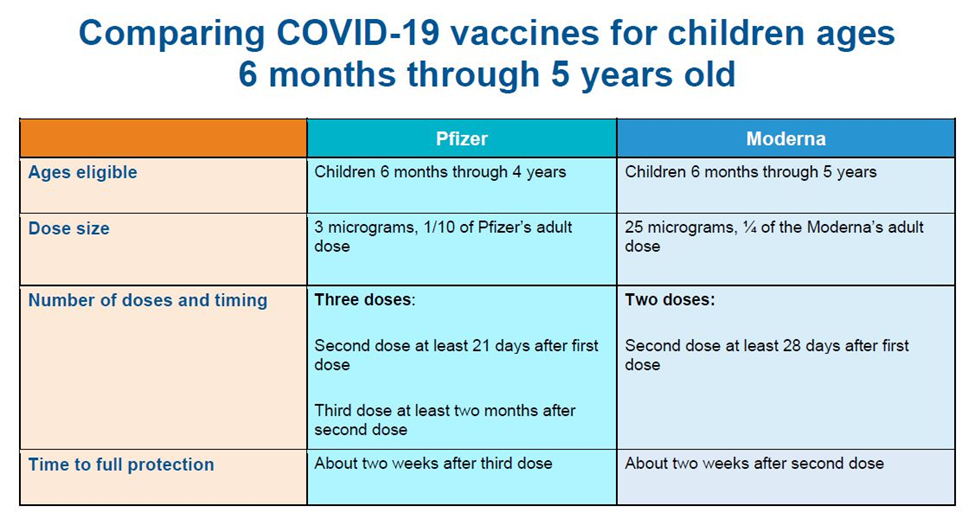
Click the image below for a full comparison of the two new pediatric COVID-19 vaccines.
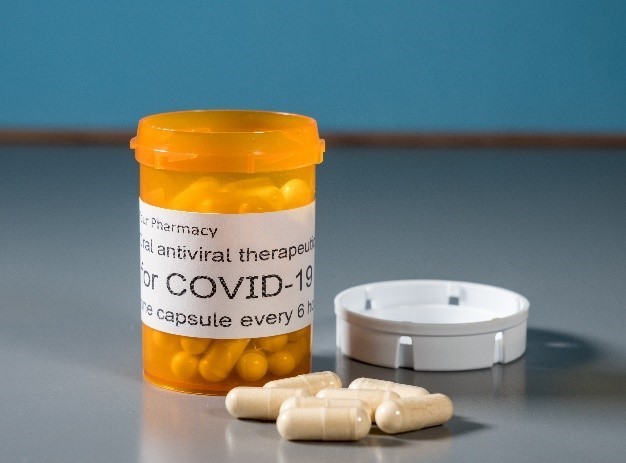
Join a free community-focused COVID-19 webinar – offered in English and Spanish – to learn about COVID-19 treatments. Experts from Oregon Health Authority (OHA) and Oregon Heath & Science University will discuss everything we know about available COVID-19 treatments, such as monoclonal antibodies and antiviral medication, who is eligible for these treatments and how to access them.
Click the links below to join the live webinars:
-
English - Thursday, June 23, 12-1 p.m.
Call in: +1-669-254-5252, Meeting ID: 161 027 9494, Passcode: 133296
-
Spanish - Friday, June 24, 6-7 p.m.
Call in: +1-669-254-5252, Meeting ID: 161 843 3152, Passcode: 226211
There will also be an opportunity to ask questions. An ASL interpreter will be present, and closed captioning will be provided. Both webinars will be recorded and posted to the OHA website here.
Dr. Paul Cieslak, medical director for communicable diseases and immunizations at Oregon Health Authority, answered today’s questions. We’ll continue to answer your questions on COVID-19 topics in upcoming newsletters.
Q: We have been waiting for such a long time for a vaccine for the under 5 age group. It has finally arrived and the numbers are beyond disappointing. If a child within 2-5 years old takes the Moderna vaccine they have, at best, 37% efficacy. Pfizer is even lower. We would be sending our child out into the world barely protected. It is a gut punch to parents who want to protect their children and have already felt left behind by the world. How is this an acceptable efficacy rate? – Becky, Medford
A: “The data that you cite demonstrate relatively low protection against infection with COVID-19. However, experts believe that the vaccines are likely to be much better at preventing hospitalization of children this age due to COVID-19. The Pfizer vaccine has shown 68% effectiveness in preventing COVID-19 hospitalization in children ages 5-11 years and 78% effectiveness in preventing the multisystem inflammatory syndrome in children (MIS-C) of this age. Because younger children have good immune responses to the vaccines in the doses given, the advisory committees for the U.S. Food and Drug Administration and Centers for Disease Control and Prevention (CDC) concluded that the vaccines were likely to offer them similar protection against hospitalization and MIS-C.”
Q: I'm confused by use of the terms "1st and 2nd boosters." Am I to assume that to have a booster you must first have the vaccine? First and second "boosters" would then be the second and third vaccines. I am a healthy 70-year-old male. My 70-year-old wife is high-risk with Crohn's Disease and Ulcerative Colitis. We both received the Johnson & Johnson vaccine followed by a Moderna booster. We will be traveling the next three months. Should we be looking at getting another booster before we leave? – David, Roseburg
A: “’Boosters’ refer to doses of vaccine given after a ‘primary series’ of the vaccine. The primary series of either mRNA vaccine (Pfizer or Moderna) consists of two doses—or three if you’re immune compromised. In the case of Johnson & Johnson, however, the primary series is just one dose, and people with compromised immune systems are recommended an ‘additional dose’ (not a booster) of either Pfizer or Moderna. As your wife is high risk, the Moderna booster she received is considered her additional dose, and she is eligible for two boosters after that—the first one three months after her additional dose, and the second one four months later. Being that you are a healthy male, the Moderna booster you received is your first booster, and you are eligible for a second booster at least four months after receiving your first. If these amounts of time have elapsed since you received your Moderna shot, we recommend that you get boosted before traveling. For guidance on the timing of all vaccines and boosters for which you and your wife are eligible, check out these CDC pages for the general population and those with compromised immune systems.”
If you have questions about topics related to COVID-19, submit your question here. While we are unable to answer every question, we try to address questions that may be of interest to a broader audience. Please understand we are unable to provide specific medical advice for personal medical conditions.


Did someone forward this to you? You can subscribe here.
|