|
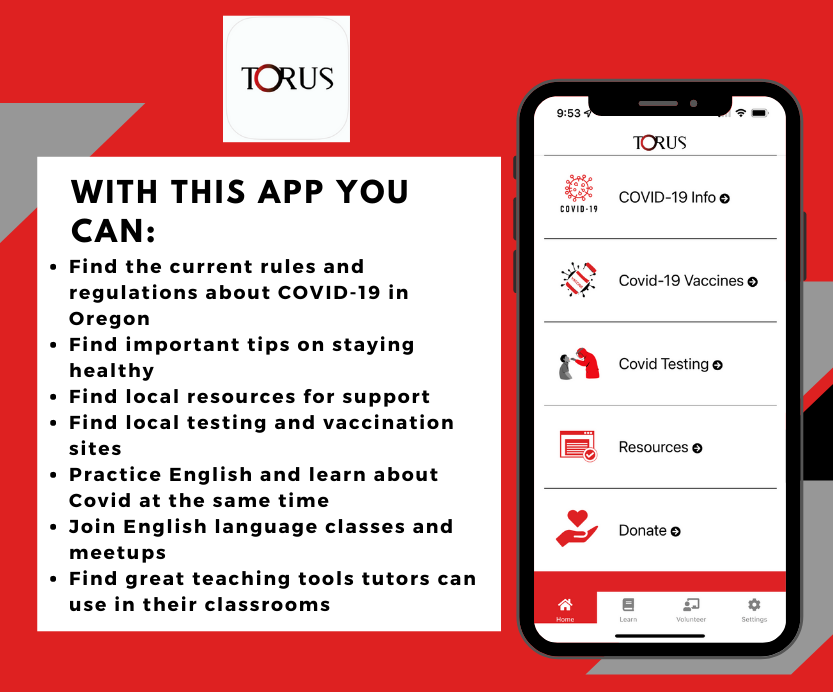
A new app, created by the Portland non-profit Torus, aims to help some English language learners, specifically refugees, find COVID-19 information in their native languages. The Torus App was developed by Afghanistan-born Ramin Tokhi, whose first language is Dari (a Persian dialect). In 2020 Tokhi founded Torus to provide “a sense of belonging to a community for immigrants and refugees” through its language programs. Read on to learn more about The Torus App and how it helps users not only find information on COVID-19, but to learn English as well.

Today, April 28, Moderna submitted a request to the U.S. Food and Drug Administration (FDA) for emergency use authorization for its COVID-19 vaccine for children ages 6 months through 5 years. The FDA will review the data in the coming weeks. Currently, this age group is the only one not eligible for any COVID-19 vaccine.
If authorized, the two-doses of the vaccine series would be administered about a month apart. Moderna reported that in clinical trial, the vaccine offered 37-51% protection against COVID-19 infection.
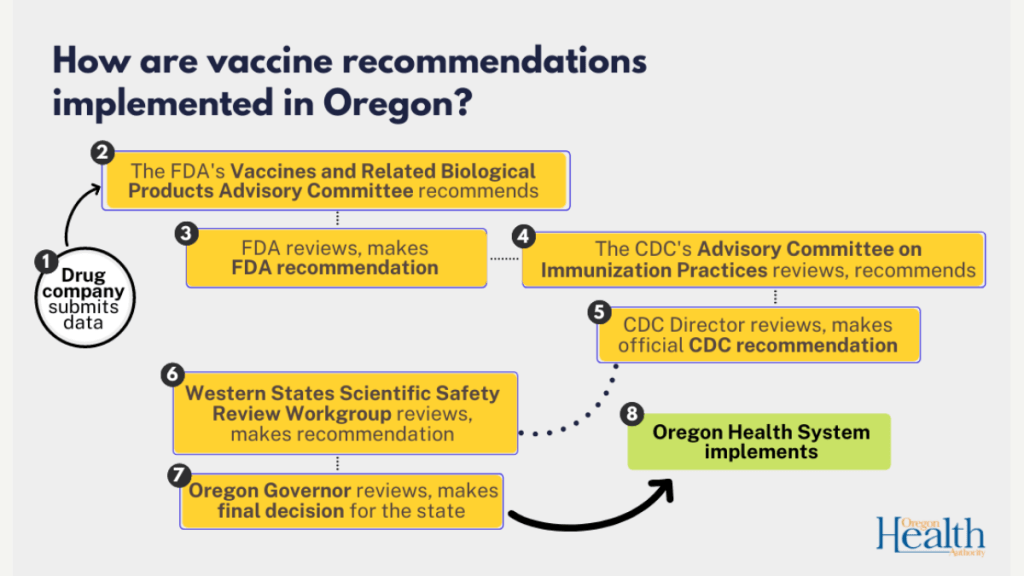
Before the vaccine is authorized, the data must be reviewed by several groups, a process that can take weeks. This is the same process that all COVID-19 vaccines have gone through during the pandemic.
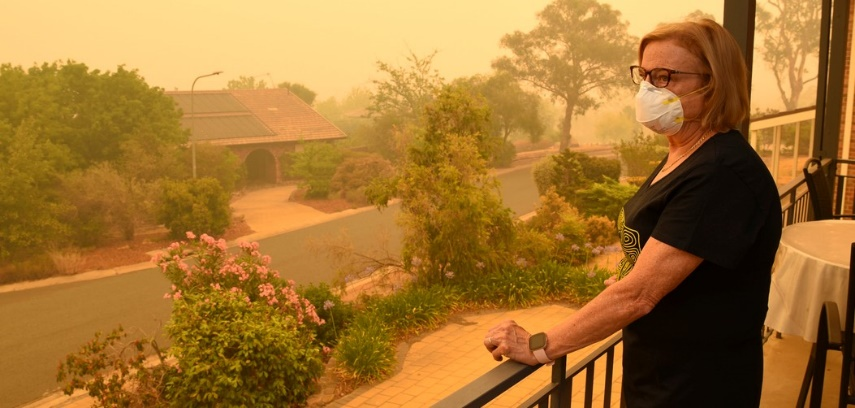
Join experts from Oregon Health Authority (OHA) and the Oregon Department of Environmental Quality (DEQ) to learn about how to protect yourself and those around you from wildfire smoke.
Speakers will talk about smoke impacts on human health, how to access important air quality information and how to differentiate between air quality levels. They will also discuss steps you can take now to prepare for the upcoming wildfire season, which typically begins in June but can start as early as mid-May.
“Emergency situations are stressful. By having a plan and knowing where to get information and resources – being proactive now, instead of reactive – you can lessen that stress and reduce your risk of smoke exposure,” said Carrie Berger, fire program manager at OSU’s Forestry and National Resources Fire Extension program.
Speakers include Jamie Bash, a risk communication analyst at OHA and Margaret Miller, an air quality planner and forester at DEQ. The webinar will be recorded and posted online here. Closed captioning will also be provided.
Join a free Zoom webinar – offered in both English and Spanish – to learn about COVID-19 treatments. Experts from Oregon Health Authority (OHA) will go over everything we know about available COVID-19 treatments, such as monoclonal antibodies and antivirals.
Click the links below to join the live webinars:
COVID-19 experts and health care providers will discuss what treatments are available, how to get them, how much they cost and more.
There will also be an opportunity to ask questions. An ASL interpreter will be present, and closed captioning will be provided. Both webinars will be recorded and posted to the OHA website here.
Dr. Paul Cieslak, Oregon Health Authority senior health advisor and medical director, communicable diseases and immunizations program, answered today’s questions. We’ll continue to answer your questions on COVID-19 topics in upcoming newsletters.
Q: When will we have Omicron specific vaccines? – Dirk, Salem
A: “This is difficult to answer. Although some vaccine manufacturers have indicated that they are studying such vaccines, none have yet applied to the Food and Drug Administration (FDA) to authorize their use.”
Q: When do you expect vaccines for children 6 months - 5 years will be available? – Erin, Sprinfield
A: “Unfortunately we can’t say for sure. But today, April 28, 2022, Moderna filed for FDA authorization for use of its vaccine in children ages 6 months through 5 years (71 months). Additionally, on December 17, 2021, Pfizer announced that they would be evaluating a third primary-series dose in their study of COVID-19 vaccines in this age group. (The study is being conducted in the United States, Finland, Poland, and Spain.) On February 1, 2022, Pfizer initiated a ‘rolling submission’ of its data to the FDA; but on February 11, the FDA requested additional information regarding Pfizer’s ongoing evaluation. And in a statement released this week, Pfizer says that they ‘expect to share data from the ongoing study in children 6 months to under 5 years of age later this [2nd] quarter.’ The best we can say is, given the length of the approval process, a COVID-19 vaccine for this age group is probably at least a couple months away.”
Q: I’ve read about “immunity exhaustion.” With that in mind, if my first two vaccinations and first booster were all Moderna, does it matter if my second booster is also Moderna? Would the Moderna or Pfizer be more effective for the second booster? – Alison, Eagle Point
A: “Either vaccine is recommended, but some data have suggested that after getting one of the two mRNA vaccines, a dose of the other vaccine may boost antibody levels higher than another dose of the original vaccine.”
Q: What's the difference, if any, between the 1st COVID-19 booster and the 2nd one? – Spencer, Eugene
A: “There is no difference in the shots themselves. For the Pfizer vaccine, both first and second boosters are 30-microgram doses (the same as for the primary-series shots). For the Moderna vaccine, both the first and second boosters are 50-microgram doses (half the dose of the primary-series shots). Note, though, that the first booster is recommended for most people five months after the second dose of the primary series. The second booster is available to people age 50 and older, as well as those age 12 and older who are moderately or severely immunocompromised four months after the first booster.”
      Did someone forward this to you? You can subscribe here.
|