Dec. 1, 2021

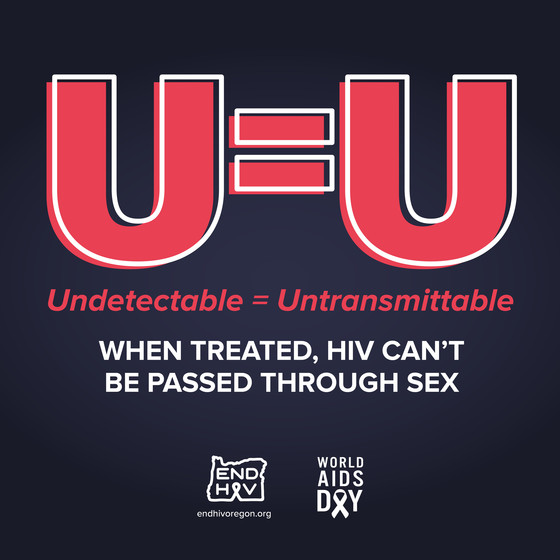
World AIDS Day has been observed annually on Dec. 1 since 1988 to remember the more than 35 million people who have died from HIV-related illnesses, to advocate for those living with HIV and to raise awareness to prevent the spread of the virus.
“In the fifth full year since beginning End HIV Oregon in December 2016, statewide partners continue to bring HIV/Sexually Transmitted Infection testing to communities in need, expand access to prevention services like PrEP, and ensure high-quality treatment for people infected with HIV,” said Rachel Banks, public health director for Oregon Health Authority.
Read the full story on our blog.
The Centers for Disease Control and Prevention (CDC) now recommends booster doses for immunocompromised people who have received a third dose of Pfizer or Moderna.
-
The booster dose should be given six months after the third dose of Pfizer or Moderna and would constitute a fourth dose.
-
The Moderna booster dose is half the strength of the primary doses.
-
Everyone who received a Johnson & Johnson vaccine should get a booster dose of any one of the three authorized vaccines two months after the initial vaccination.
You may have seen stories in the media about the Oregon Health Authority developing a voluntary digital vaccine verification tool. Here are a few things to know about the tool:
It’s completely voluntary. The digital vaccine record, called OR Verify, will provide people vaccinated in Oregon with an electronic way to access their own personal COVID-19 vaccination record and share their vaccination status with businesses that ask for proof of verification.
Many businesses and venues now require proof of vaccination for entry. This tool will give people a convenient option, rather than using their paper record. Many health systems have developed their own digital solutions, so their patients have a simple and convenient way to show proof of vaccination.
Oregon’s tool is modeled on a similar optional tool used in Washington and California. Oregon is currently testing its voluntary verification tool with communities disproportionally impacted by the COVID-19 virus to gather consumer feedback that will ensure the tool is accessible and convenient for everyone in Oregon.
Oregon Health Authority anticipates making its voluntary tool available for free for anyone in Oregon who chooses to use it in the spring of 2022.
OHA’s COVID-19 Weekly Report released today shows a decrease in daily cases, hospitalizations and deaths.
OHA reported 4,276 new cases of COVID-19 during the week of Monday, Nov. 22, through Sunday, Nov. 28. That is a 25% decrease from the previous week.
There were 95,882 tests for COVID-19 for the week of Nov. 21 through Nov. 27. The percentage of positive tests declined slightly to 5.6%, from 6% the previous week.
There were 226 new COVID-19 hospitalizations, down from 268 last week — a 16% drop.
There were 125 reported COVID-19-related deaths, down from 214 reported the previous week, as epidemiologists reviewed a backlog of suspected COVID-19 related deaths by matching death certificates to previously reported cases.
Today’s COVID-19 Weekly Outbreak Report shows 54 active COVID-19 outbreaks in senior living communities and congregate living settings, with three or more confirmed cases and one or more COVID-19 related deaths.
We want to keep you informed about COVID-19 in Oregon. Data are provisional and change frequently.
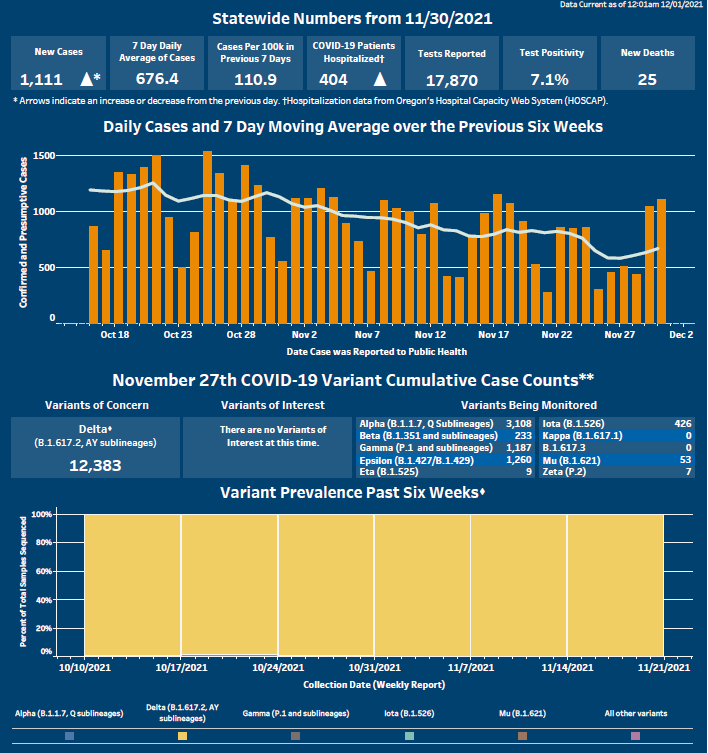
• Samples for 534,068 tests have been reported positive.
• Samples for 7,560,497 tests have been reported negative.
COVID-19 hospitalizations
The number of hospitalized patients with COVID-19 across Oregon is 404, which represents no change from yesterday. There are 92 COVID-19 patients in intensive care unit (ICU) beds, which is two fewer than yesterday.
There are 49 available adult ICU beds out of 691 total (7% availability) and 270 available adult non-ICU beds out of 4,108 (7% availability).
The total number of patients in hospital beds may fluctuate between report times. The numbers do not reflect admissions per day, nor the length of hospital stay. Staffing limitations are not captured in this data and may further limit bed capacity.
Note: Please do not visit an emergency department for COVID-19 testing, unless you require emergency care for your symptoms.
Emergency departments in Oregon are under significant strain. You can find a test here.
If you have a medical condition that doesn’t require emergency care, contact your provider. An urgent care center may also help you get the care you need and will save emergency departments from added strain.
Today, OHA reported that 25,659 new doses of COVID-19 vaccinations were added to the state immunization registry on Nov. 30. Of that total, 14,324 were initial doses, 1,947 were second doses and 10,174 were third doses and booster doses. The remaining 11,335 were administered on previous days but were entered into the vaccine registry on Nov. 30.
The seven-day running average is now 12,208 doses per day.
Oregon has now administered 3,534,286 doses of Pfizer Comirnaty, 70,261 doses of Pfizer pediatric, 2,267,258 doses of Moderna and 244,207 doses of Johnson & Johnson COVID-19 vaccines.
As of today, 2,950,723 people have had at least one dose of a COVID-19 vaccine and 2,662,164 people have completed a COVID-19 vaccine series.
These data are preliminary and subject to change. Updated vaccination data are provided on Oregon’s COVID-19 data dashboards and have been updated today.
Cases and COVID-19 deaths
The new confirmed and presumptive COVID-19 cases reported today are in the following counties: Baker (10), Benton (9), Clackamas (90), Clatsop (9), Columbia (29), Coos (29), Crook (23), Curry (5), Deschutes (82), Douglas (64), Hood River (8), Jackson (75), Jefferson (6), Josephine (55), Klamath (19), Lake (2), Lane (67), Lincoln (17), Linn (72), Malheur (3), Marion (100), Morrow (3), Multnomah (141), Polk (36), Tillamook (4), Umatilla (9), Union (5), Wallowa (3), Wasco (9), Washington (102), and Yamhill (25).
Note: More information about the cases and deaths will be provided in an updated news release.
To learn more about the COVID-19 vaccine situation in Oregon, visit our webpage (English or Spanish), which has a breakdown of distribution and other information.
Did someone forward this to you? You can subscribe here.
|