 December 3, 2020
Effective today, when the “freeze” ends, Oregon will begin using its new risk and protection framework. Here are the county risk levels:
- Lower risk: Gilliam, Sherman, Wallowa, Wheeler
- Moderate risk: Harney, Tillamook
- High risk: Benton, Clatsop, Coos, Curry, Lincoln
- Extreme risk: 25 counties
See the sector risk level guidance chart or coronavirus.oregon.gov for more information.


The Families First Coronavirus Response Act is scheduled to end December 31, 2020. The FFCRA provided for Emergency Paid Sick Leave (CV) and Family and Medical Leave-Child Care, including both FMLA protection and pay (CXT). Employees will not be permitted to use Emergency Paid Sick Leave (CV) or Paid Family and Medical Leave-Child Care (CXT) starting January 1, 2021.
In 2021, eligible employees who take leave to care for their child during school and daycare closures due to COVID-19 may be eligible to have their leave protected under OFLA Sick Child. This leave is not a paid leave, but only protection under OFLA. An employee will need to meet the OFLA eligibility requirements on January 1, 2021 by having been employed for a minimum of 180 days and having worked a minimum of 642.75 hours from July 1, 2020 to December 31, 2020.
Unprotected paid and unpaid leave is also available as outlined in Scenario 1 on the Guide for Leave-Related Absences due to COVID-19.
If you have specific questions please contact the ODHS FMLA/OFLA Unit at FMLA-OFLA.faxes@dhsoha.state.or.us or (503) 945-5646.
|
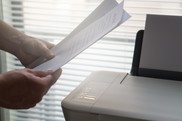
IT security and home printers
With a majority of ODHS and OHA staff currently working from home, there are increased security risks to the agency network and systems.
Personal home printers are particularly vulnerable to common print security risks such as:
- The wi-fi connection increases the risk for hackers to access state data or systems.
- Unsecured printers can provide cybercriminals with access to other agency devices.
- Social security numbers, customer data, and confidential documents are regularly stored in printer caches. Left unguarded, this info is easy pickings for hackers.
For these and other reasons, privately owned devices are not allowed to be connected to state networks, computers (including remotely used computers) or other equipment. All hardware attached to state systems must be appropriately configured, protected, and monitored so it will not compromise state information assets.
By state policy, employees must use state-issued devices to access agency systems and data, including printing.
But what if you need to print documents as part of your job? If you need to print from home:
- Request a state-issued printer from your supervisor or manager.
- Also request a USB cable to connect the printer directly to the computer.
In addition, you cannot toss documents printed at home into your garbage or recycling. Documents may contain confidential information like client data.
ODHS/OHA policy requires that hard-copy documents be cross-cut shredded. Other methods include securely transporting confidential documents to the office and depositing them in the secure, locked shredding barrels.
If you have questions, please talk to your manager.
Reference: DAS policy 50.050.01 Working Remotely
|
The Oregon Health Authority (OHA) is expanding its community COVID-19 testing events throughout the state and needs volunteers to help, especially in Malheur and Josephine Counties. Potential volunteers can see the roles and sign up here.
Personal Protection Equipment is available to all event workers regardless of role. Onsite, just-in-time training will be provided to anyone who needs it for their assigned role. Event workers can prepare in advance by reviewing the resources provided below prior to the event.
The health of our employees is a top priority. Staff at affected offices are always notified as soon as possible by Human Resources and local management of any potential exposure to COVID-19. Others may also want to get this information emailed to them. Staff can subscribe here to receive email notifications. A master list of offices with a potential COVID-19 exposure and notification letters can be found on the OWL.
|