|
Dear foster parents and relative caregivers:
Spring is here and legislative session is in full swing. In February I presented at the Joint Ways and Means Subcommittee on Human Services. If you would like to see my presentation, click here. There are exciting initiatives that we are waiting to see what will happen in this session, including regional trainers to provide just in time training to you, expansion of the KEEP program, and building a robust foster family retention and recruitment team. Session ends June 30, 2019 and we will have a better understanding of our budget and the support services we will be putting in place for caregivers.
May is National Foster Care month and I am in such awe of the dedication and love you provide to children and youth in our foster care system. Thank you for showing up, and for opening your hearts and your homes to these very special children. You are changing lives every day!
With gratitude,
Marilyn

Greg Westbrooks is our Foster Care and Youth Transitions Manager. He has been in this role for the past four months but Greg is not new to state government. He started working for the state as a placement worker for Child Welfare in the early 80’s and most recently as the Director of the River Bend Transitional Facility and a Regional Field Supervisor with Oregon Youth Authority (OYA).
“I love working with people I respect and I respect those that work to make a positive difference in lives of children and families.” Greg said.
Greg has many future plans for supporting caregivers including the design and delivery of foster parent training, implementation of staff positions focused on retention of foster families, and a statewide recruitment plan.
Greg shared his quote to live by. “Everyone you meet is fighting a battle you know nothing about. Be Kind. Always.” said Robin Williams.
|
Fishing and Shell Fish Licenses for Foster Youth
Did you know that foster youth, ages 12 to 17 are eligible for a free fishing and shell fish licenses? Fishing is a fun and important activity for many children. If you are interested in obtaining a fish or shell fish license for a foster youth, please contact the youth’s caseworker.
Did you know that foster youth, ages 12 to 17 are eligible for a free fishing and shell fish licenses? Fishing is a fun and important activity for many children. If you are interested in obtaining a fish or shell fish license for a foster youth, please contact the youth’s caseworker.
State Park Camping and Day Use
The sun is shining and it’s that time to get back out and enjoy the beauty of Oregon outdoors! Oregon State Parks and Recreation Department (OPRD) provides a Special Access Pass allowing free camping and day-use parking at State Parks for foster, guardian and adoptive parents and their children when eligible children are present. Visit the OPRD Special Access Pass web page to review eligibility requirements and learn how to apply.
The sun is shining and it’s that time to get back out and enjoy the beauty of Oregon outdoors! Oregon State Parks and Recreation Department (OPRD) provides a Special Access Pass allowing free camping and day-use parking at State Parks for foster, guardian and adoptive parents and their children when eligible children are present. Visit the OPRD Special Access Pass web page to review eligibility requirements and learn how to apply.
Adoption Assistance/Guardianship Assistance Reminder
The Post Adoptions and Guardianship Unit (PA/G Unit) thanks caregivers for being an essential and greatly valued member of the team. The PA/G unit are a family’s points of contact once permanent plans are in place. They can help Guardians and Adoptive families with medical or guardianship/adoption assistance. Please reach out to your assigned coordinator or their support staff if you have any updates or changes the PA/G Unit should know about. Contact information is posted and updated regularly on their website.
The newest additions to PA/G unit are support staff Julie Lerum and Amanda Goffin. Both have been greeted with open arms as they joined in a time of need. Thank you caregivers for all that you do!
The Post Adoptions and Guardianship Unit (PA/G Unit) thanks caregivers for being an essential and greatly valued member of the team. The PA/G unit are a family’s points of contact once permanent plans are in place. They can help Guardians and Adoptive families with medical or guardianship/adoption assistance. Please reach out to your assigned coordinator or their support staff if you have any updates or changes the PA/G Unit should know about. Contact information is posted and updated regularly on their website.
The newest additions to PA/G unit are support staff Julie Lerum and Amanda Goffin. Both have been greeted with open arms as they joined in a time of need. Thank you caregivers for all that you do!
Need a night out?
Foster Parents’ Night Out (FPNO) is a unique program that provides consistent monthly respite to DHS foster parents. Schedules vary from site to site, but in general, occur once each month for about 3 to 4 hours. All children in the foster parents household can attend. Children participate in various games and other activities, have snacks and dinner! Current FPNO sites are primarily faith based, but the program is growing into three models:
• Faith Community Based: The FPNO site is hosted at a church or faith community site and is staffed primarily by volunteers who attend the host church or faith community.
• Faith Community Hosted: The FPNO site is hosted by a church or faith community, but is open to the volunteers from the community, regardless of faith affiliation or attendance.
• Community Partner Hosted: The FPNO site is hosted by a community partner and is staffed by volunteers from the community.
FPNO is currently in Benton, Clackamas, Columbia, Coos, Josephine, Lane, Marion, Multnomah, Washington and Yamhill counties.
To participate in a local FPNO activity contact your certifier for information.
WIC is available to foster families!
Did you know as a certified foster parent or certified relative caregiver you are eligible for WIC if you are caring for a child under the age of 5?
What is WIC?
The Women, Infants, and Children (WIC) Program is a nutrition program that helps support healthy growth for infants and children up to age 5 years. You get an electronic benefit (EBT) card to purchase healthy foods, and when needed, WIC will refer you to health care and other community services. Nutrition counselors offer encouragement and guidance, helping you put your family’s health first.

How do I know if the child I am caring for is eligible?
The child must:
1. Live in Oregon
2. Be under 5 years of age
3. Be considered the legal responsibility of the state (foster children only)
Call your local WIC agency to schedule an appointment. You can find this number by: going to www.healthoregon.org/wic; by calling 211; or by texting “health” to 898211.
|
48 years in the making!
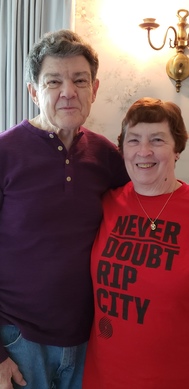
Meet Mary and Ray – coming up on their 48th year of fostering for Child Welfare! Together they have fostered, adopted, completed guardianships and permanently cared for over 550 children. Many of these children have had highly specialized medical needs such as feeding tubes, oxygen tanks, and tracheostomies. Mary started their fostering career after she finished nursing school and began working with newborns. She had two children of her own but had “baby fever” and wanted to help infants in her community. After initially having an infant placed in their home, they were asked to take in a teen. Over the years, they have cared for all different age groups but are often known for caring for medically fragile infants.
|
Mary and Ray’s certifier Rebekah nominated this couple because “[They are] a stellar advocate for the kids in [their] home, supports kids going home to family and will mentor bio/adoptive parents as they learn how to care for higher-medical needs kids.” Mary and Ray have a knack for helping children to thrive in their home and get the care they need. And, Mary and Ray still keep in touch with many of the children they have cared for who have been adopted.
What’s their secret you may ask? Loving what they do and making time for self-care. Mary and Ray’s self-care includes a weekend off to Cannon Beach where they can rest and reboot. When asked what Mary would share with other caregivers, she shared “There’s nothing more important and rewarding than making a difference in a child’s life. I am 77 years old and I get to do that everyday!”
Mary and Ray- From the Foster Care Program we want to thank you for your continued love and commitment that you share with the children in your home! We sincerely appreciate you!
Do you have a stellar foster parent or relative caregiver you think we should spotlight? Email us at FosterFamily.Supports@dhsoha.state.or.us and we will connect with you.
|
|
 |
211 Hires New Foster Parent Support Coordinator
211info offers 24/7 support to foster parents in times of crisis and offers general behavioral/parenting information and community resources, including child care. 211info is a nonprofit organization funded by state and municipal contracts, foundations, United Way, donations and community partners in Oregon and Southwest Washington.

211info’s current Foster Program Coordinator, Don Sheets, has about 22 years experience foster parenting. After retiring from the United States Air Force as a Master Sergeant, Don moved to Portland to attend school and earned a MA in Pastoral Studies from Multnomah Biblical Seminary. Don and his wife began foster parenting in college, first as DHS Foster Parents and then later as therapeutic foster parents.
We believe that foster parents deserve 24/7 support. We know that, although rewarding, the first few weeks when a child is placed in a home can be challenging, and like with any parenting ventures, the challenges don’t stop there
|
OFPA Corner

Every May foster parents are recognized during National Foster Care Month. I want to acknowledge, recognize and thank foster parents this month in honor of National Volunteer Month. The impact and influence of foster parents however short the stay, can last a lifetime.
OFPA continues to advocate for issues affecting foster parents during this legislative including the governor’s budget bill, the ombudsman, the ILP program, Family First, and the proposed Income Tax Credit. Legislators are becoming more aware of both the importance and the need to support volunteer foster parents. Interested in foster care legislative issues? Contact Jessica L. Lloyd-Rogers, President, OFPA at Jessica.lloyd.rogers@gmail.com or text Jessica at 541-294-2899.
|
Blog: Posted on September 3, 2018 by Sara
As a foster and adoptive mother, we are no strangers to bedtime and the art of navigating it with new placements. Here are a few tips and tricks we have learned over the years that make bedtime with your new family member just a little bit easier.
#1 Lower your expectations
This may seem like common sense, but I’m amazed at how many people expect their new children to be able to fall right into a bedtime routine. If your child is coming straight from a home where they may have experienced neglect or trauma, they may have never even gone through a bedtime routine before. When our youngest son came to us as a toddler, the first few days the bedtime process took 3+ hours a night. I would just be prepared to spend a lot of time at the beginning investing into your new child and building trust and trying to let the little things go.
#2 Night lights
When a new child comes to us, we make sure their room is very well lit, and that the hallway to the bathroom is as well. We keep nightlight throughout our house so they don’t get nervous in the middle of the night.

#3 Food and Water
If your child has food insecurity issues (which the majority of kids in care have to some extent) a really easy way to calm their nerves is by placing a basket of food by their bed the first couple weeks they’re with you. Our oldest son still keeps a few granola bars in his room, years later, but never eats them. He just likes knowing they’re there.
#4 Audio books
With kids of all ages, I ask if they want to listen to an audio book while they fall asleep. Many kids who come into foster care previously lived in homes where it could be really noisy at night (people coming and going, grownups yelling, etc.) It can feel unnerving to them to go from that to a completely silent house. I’ve found that audiobooks with an hour long timer on them can really help lull them to sleep.
#5 Sensory objects
I give younger kids a few bedtime sensory objects to play with while they listen to the audiobook in bed. Our youngest son loves those sequin pillows that you can draw designs in, and he also likes to play with a squeezey toy. This allows him to use his muscles and focus on something other than thrashing around in bed and can be very calming.
#6 Weighted Blankets
If you’re still fostering, you need to check your licensing rules before introducing weighted blankets. But for adoptive families, these can be life savers for sensory seeking kids at bedtime. I would highly recommend investing in one if you have a child who can be restless in the evenings.
#7 Keep checking in
With new children, after they’re in bed and all set up with their audiobook, I tell them I will come back and check in on them in two minutes. Then I do. Then I tell them I’ll come back and check on them in 5 minutes, then 10 minutes, etc. I do this until they fall asleep. It’s an easy way to build attachment and trust with your new child.
|
Tax Information
Earned Income Tax Credit

You could be eligible for up to $6,000 or more in tax refund when you claim the Earned Income Tax Credit and Child Tax Refund/Credit
The Earned Income Tax Credit, EITC or EIC, is a benefit for working people with low to moderate income. To qualify, you must meet certain requirements and file a tax return, even if you do not owe any tax or are not required to file. EITC reduces the amount of tax you owe and may give you a refund.
|
|