|
Quarterly Newsletter | Spring 2025 - vol. 3
Welcome to the Oregon Agile Community of Practice (OACP)! We’re a passionate and dynamic collective committed to driving agility, innovation, and human-centered design (HCD) throughout Oregon’s public sector. As public servants, we recognize the critical responsibility we have in delivering reliable, accessible services to every Oregonian. By embracing Agile, HCD, and innovative practices we are transforming the way we work—making our state more responsive, equitable, and efficient.
|
|
|
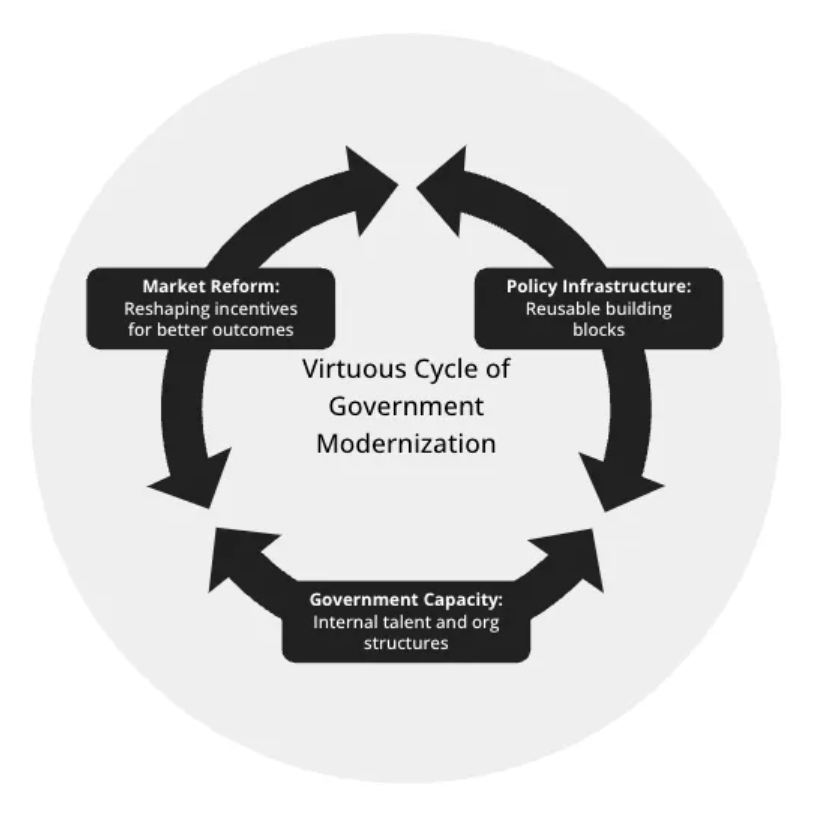
In her latest article, “GovTech Reckoning: A Framework for Government Modernization,” Joy Bonaguro (expert generalist and former CDO for the State of California) offers reflection on why previous GovTech reform efforts—such as small digital service teams, civic tech organizations, and boutique civic tech vendors—have failed to achieve systemic change or lasting transformation. Rather than focusing on piecemeal changes, Bonaguro proposes a broader, more strategic approach built on three core drivers, all supported by a dynamic ecosystem and diverse funding streams.
Why a Strategic Framework?
Recent developments—like the dismantling of federal digital service teams (US Digital Services and 18F)—have underscored the risks of relying on the current civic tech playbook. Bonaguro advocates for a cohesive, scalable plan that withstands political shifts and budget fluctuations across local, state, and federal levels.
The Virtuous Cycle: Three Core Drivers
-
Policy Infrastructure. Bonaguro emphasizes the need for standardized templates, legislation, and data-sharing agreements, so that jurisdictions don’t have to reinvent the wheel. Aligned policies help break down barriers to collaboration and minimize redundant or duplicative efforts.
-
Government Capacity. Agencies can’t sustain meaningful innovation without internal expertise. Building robust digital, data, and design teams—and investing in ongoing professional development—is critical for defining user needs, effectively managing vendors, and maintaining systems in-house.
-
Market Reform. Bonaguro calls for market incentives that encourage more mission-driven technology vendors, leveling the playing field traditionally dominated by large system integrators. Tools like “public product organizations,” impact investments, and updated procurement rules can reshape how technology is procured and delivered, increasing both competition and quality.
Ecosystem Support & Complementary Funding
Universities, nonprofits, trade groups, and fellowship programs—collectively referred to as “ecosystem support”—play a key role in sharing knowledge, establishing talent pipelines, and advocating for policy improvements. Bonaguro also stresses the importance of complementary funding from three main sources:
-
Strategic Philanthropy to de-risk and prove out new concepts,
-
Government Investment for scaling modernization efforts, and
-
Private Capital for fueling innovative, mission-aligned vendors.
By working in tandem, these funding streams can spark system-wide change far greater than the sum of their parts.
Looking Beyond the Status Quo
Bonaguro invites readers to help refine this “virtuous cycle” and join in shaping a more holistic GovTech strategy—one that addresses every step from policy to implementation. Let’s use this moment to rethink the status quo and champion ideas that scale. Explore Bonaguro’s full article, share your insights, and bring fresh perspectives on how these strategies might work within your agencies or communities.
|
|
Stay Connected...
Stay connected with the Oregon Agile Community of Practice (OACP) by following us on LinkedIn for the latest insights, resources, and updates on Agile practices in the public sector. Let’s continue to foster innovation and collaboration across our teams!
|
|
Agile Procurement Tips & Tricks
Procuring technology can be challenging in government, especially when juggling complex regulations, tight budgets, and evolving user needs. Inspired by industry best practices (including insights from the 18F Derisking Guide), these practical tips highlight ways to make your procurement process more agile, user-focused, and ultimately more successful.
-
Start Small & Incremental
- Tip: Break large projects into smaller, manageable chunks (modular contracting).
- Benefit: Helps you test vendor capabilities early, adapt quickly, and reduce the risk of committing resources to solutions that may not deliver the desired value.
-
Define the Problem, Not the Solution
- Tip: Emphasize the problem you need solved instead of prescribing a specific solution.
- Benefit: Vendors can propose creative, tailored approaches, avoiding premature lock-in and ensuring flexibility as user needs evolve.
-
Focus on Outcomes & User Needs
- Tip: Use outcome-based metrics and measurable benefits (like improved user satisfaction or reduced processing times) rather than rigid feature lists.
- Benefit: Ensures each project phase is driven by tangible benefits for end-users, encouraging iterative improvements based on real-world feedback.
-
Embrace Iterative Contracting
- Tip: Adopt short contract periods or phased deliverables instead of large, multi-year procurements.
- Benefit: Reduces upfront risk, allows you to evaluate vendor performance at each stage, and facilitates continuous improvement.
-
Prioritize Collaborative Vendor Relationships
- Tip: Seek vendors who share progress openly—through user research findings, code repositories, and regular updates.
- Benefit: Fosters trust, supports quick issue resolution, and enables knowledge transfer, reducing long-term dependency on external partners.
-
Establish a Strong Feedback Loop
- Tip: Conduct frequent reviews, demos, and stakeholder check-ins throughout the project lifecycle.
- Benefit: Identifies potential issues early, keeps the project aligned with user expectations, and prevents costly rework late in the process.
-
Incorporate Modern, Plain-Language Documents
- Tip: Keep RFPs and SOWs (Statements of Work) simple and user-focused.
- Benefit: Vendors clearly understand your needs, which speeds up the bidding process and reduces confusion.
-
Grow Internal Capacity
- Tip: Assemble a knowledgeable internal team—product managers, technical leads, user experience specialists—to oversee procurements and guide vendors.
- Benefit: Enables realistic scoping, ensures effective vendor management, and preserves institutional knowledge once contracts end.
Agile procurement practices help government teams reduce risk, deliver real value sooner, and respond effectively to evolving user needs. By adopting strategies like modular contracting, outcome-based metrics, and transparent vendor relationships, you’ll not only streamline the procurement process but also pave the way for more sustainable, user-focused technology solutions.
|
|
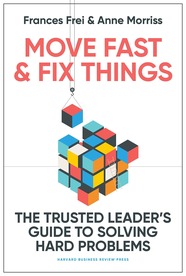
Frances Frei and Ann Morriss’s recent book speaks directly to leaders navigating rapid change—making it a natural fit with the agile mindset, where continuous learning, experimentation, and trust are key to progress. In Move Fast and Fix Things, Frei and Morriss show how to diagnose issues quickly, build genuine trust, and empower teams to iterate solutions without getting stuck in endless planning cycles.
A major theme of the book is the strategic importance of trust: Frei and Morriss argue that without it, fast-paced innovation can lead to chaos rather than meaningful impact (i.e., “moving fast and breaking things”). By weaving in clear communication, transparent decision-making, and personal accountability, the authors provide a roadmap for fostering the psychological safety and collaboration that underpin agile processes. Their focus on delivering results in short increments—while staying adaptable to new information—mirrors the iterative approach at the heart of agile methodologies.
For those interested in diving deeper into the topic of trust, be sure to watch Frances Frei’s TED Talk, “How to Build (and Rebuild) Trust.” It expands on the lessons in the book, offering additional insights on how to create the right conditions for teams to move quickly, fix problems, and maintain the credibility that keeps everyone engaged.
If you’re a leader striving to cultivate agility in both mindset and method, Move Fast and Fix Things offers a pragmatic, trust-centered approach to solving difficult challenges—without sacrificing the speed or innovation that today’s environment demands.
|
|
|
Making Tech Procurement Easier: A Tool to Improve Government Solicitations
Tuesday, April 15, 2025 |11:00 am (PST)
In this workshop, we’ll share a simple but powerful idea: adding a one-page “summary sheet” to technology solicitations. This evidence-based approach helps government teams clearly communicate what they’re looking for — and helps vendors quickly understand whether the opportunity is a good fit.
|
|
 |
|
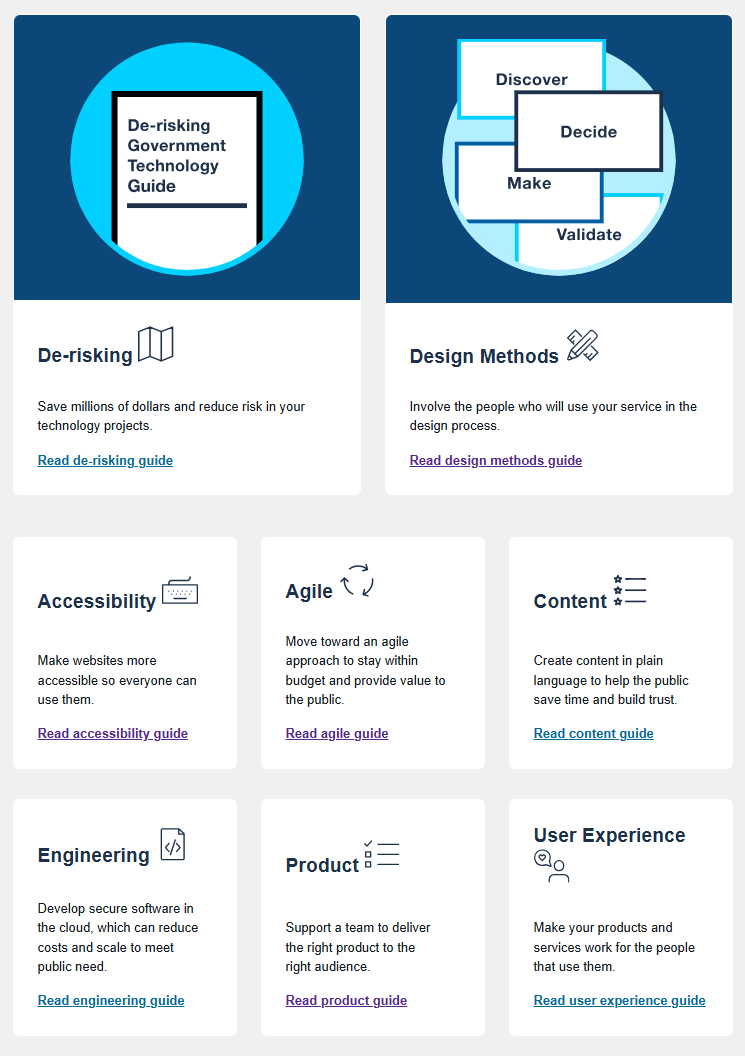
ALT 18F | Guides: Principles and Standards that Shape Our Work
The ALT 18F Guides are a curated collection of practical resources originally developed by 18F under the Federal General Services Administration (GSA), designed to help government teams deliver modern, user-centered digital services. These guides cover key topics like agile methodologies, human-centered design, accessibility, content strategy, and procurement, offering best practices and actionable advice tailored specifically for public sector innovation. [Despite 11+ years of successful digital delivery, generating millions in savings, and being a “gold standard” of civic technology, 18F and its employees were summarily terminated on March 1, 2025 at midnight, having been deemed “non-critical.”]
|
|
|
|
|
|