|
Quarterly Newsletter | Winter 2025 - vol. 2
Welcome to the Oregon Agile Community of Practice (OACP)! We’re a passionate and dynamic collective committed to driving agility, innovation, and human-centered design (HCD) throughout Oregon’s public sector. As public servants, we recognize the critical responsibility we have in delivering reliable, accessible services to every Oregonian. By embracing Agile, HCD, and innovative practices we are transforming the way we work—making our state more responsive, equitable, and efficient.
|
|
|
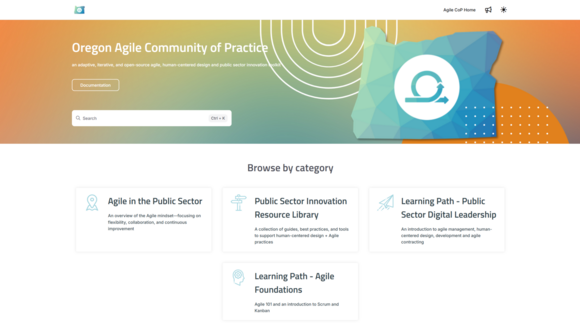
We’re excited to launch our Agile + HCD Toolkit, a living open-source library of practical resources, tools, and training resources designed to help you build a more efficient, citizen-centric public sector. Visit our Agile in the Public Sector page for an overview of how Agile adapts to government environments. Discover best practices, common pitfalls, and lessons learned from agencies that have successfully embraced iterative, user-focused approaches.
Featured Learning Paths
-
Agile Foundations. This learning path builds on the foundational work of Digital.Gov, 18F, and features Alan Atlas and Alan Brouliette. They provide an introduction to the agile mindset, and an introduction to foundational Agile practices, including Scrum and Kanban.
-
Software Development, Procurement, and Management Fundamentals. This learning path builds on a training series from 18F, featuring Lindsay Young, Sheel Shaw, Janel Yamashiro, Greg Walker, and Randy Hart for the Federal HHS, Office of Child Care. It equips you with critical knowledge and skills to lead digital transformation by embracing Agile methodologies, user-centered design, and modern software development practices.
Start exploring and apply what you learn to your projects. Share your successes, insights, and any adaptations you make, so we can continue advancing agile, innovative, and equitable government services—together.
|
|
Stay Connected...
Stay connected with the Oregon Agile Community of Practice (OACP) by following us on LinkedIn for the latest insights, resources, and updates on Agile practices in the public sector. Let’s continue to foster innovation and collaboration across our teams!
|
|
EIS Agile Oversight
In late 2023, EIS launched an initiative to refine the Stage Gate Model and oversight requirements for projects employing agile delivery and adaptive project management. This work supports the 2023–2026 EIS Strategic Framework by promoting emerging best practices, accelerating value delivery, and emphasizing iterative, human-centered approaches. Over the past year, EIS conducted an agile scan and gap analysis, refined the Joint Stage Gate Model, piloted oversight methods on active agile projects, and partnered with the Oregon Project Management Advisory Board (OPMAB) to establish this Community of Practice.
EIS learned that most agencies use a hybrid model, often starting with traditional or predictive methods and shifting to agile after vendor selection. Often relying on vendor-driven frameworks, as in-house agile experience is typically limited, which can undermine product ownership and key agile ceremonies. Common challenges include inadequate backlog management, “hybrid” approaches that don’t fully embrace agile practices, and contracts not designed to support iterative delivery.
To address these issues, EIS developed an agile-oriented Reviewed Artifacts Form (RAF), recognizing that artifacts evolve over time rather than remaining static (or "fixed and final"). EIS also developed incremental gating for Stage Gate 3A/3B endorsements, tied to an agency’s overall agile maturity. Additionally, EIS introduced two new evaluation tools: 1) the Agency Agile Maturity Evaluation, launching in February 2025 to assess an organization’s readiness and roles, and 2) the Project Agile Readiness Evaluation, guiding teams toward the right project management approach and identifying potential gaps or risks.
These new forms and processes will go into effect on February 1, 2025, with updated guidance posted on the EIS Project Portfolio Performance (P3) website. EIS will also be working with agencies to complete their first Agency Agile Maturity Evaluation. As these new practices are introduced, EIS and the Legislative Fiscal Office will continue to collaborate and periodically assess and update the Joint Stage Gate Oversight Model—adjusting as necessary. If you have questions, you are encouraged to contact your Assistant State CIO, Senior IT Portfolio Manager, or Oversight Analyst. Together, we’re creating a more agile, innovative, and people-centered public sector—delivering real value, one iteration at a time.
|
|
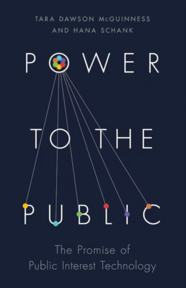
Looking for fresh ideas on how to tackle policy problems with a human-centered lens? Power to the Public: The Promise of Public Interest Technology by Tara Dawson McGuinness and Hana Schank offers a powerful framework—founded on Design, Data, and Delivery—to help governments create more inclusive, effective services.
Here’s what the authors’ framework covers:
-
Design. Putting people at the center of policy-making. For instance, the nonprofit Civilla made Michigan’s 1,200-question benefits application visible to agency leadership by simulating the real user experience.
-
Data. Using real-time data to identify solutions, define success metrics, and continually measure impact.
-
Delivery. Piloting solutions on a smaller scale before rolling them out broadly, ensuring better outcomes through iterative learning.
This practical approach is relevant for policy leaders, service designers, and civic technologists alike. Often, the most transformative solutions come from focusing on the human side of government services. If you’re eager to make public programs more responsive and equitable, Power to the Public is an excellent resource to add to your reading list.
|
|
|
Transform Service Delivery with Human-Centered Design | with Anthro-Tech
Thursday, Nov 21, 2024 | 2:00 p.m.
775 Summer Street NE, Salem, OR 97301
Thank you to Anthro-Tech for delivering an engaging Human-Centered Design workshop on November 21. Suzanne Boyd (Founder and CEO) shared powerful examples of how small, iterative steps drive efficiency and customer satisfaction. Through hands-on exercises, participants explored ways to gather feedback, tailor services, and foster trust.
A special thanks to all attendees for your enthusiasm and insightful questions. Your participation made this event a success, and we’re excited to apply these ideas to create more user-focused, innovative government solutions.
|
|
|
|
|