August 2025
In This Issue:

Welcome back, Oklahoma educators! As a new school year begins, I am inspired by the incredible momentum we have built together for computer science (CS) education. Over the past year, schools across the state have taken important steps to expand CS opportunities—and the results are already making a difference for students.
The legislative requirement for computer science remains in place:
High Schools:
“Beginning in the 2024–2025 school year, all public high schools and public charter high schools in this state shall offer a minimum of one computer science course to students” (70 O.S. § 11-103.6m).
Middle and Elementary Schools:
“Beginning in the 2024–2025 school year, all public middle and elementary schools and public charter middle and elementary schools in this state shall offer instruction aligned to the Oklahoma Academic Standards for Computer Science” (70 O.S. § 11-103.6m).
As artificial intelligence and emerging technologies continue to reshape the world, computer science education is more important than ever. It equips students with critical thinking, problem-solving, and creativity skills—skills they will need no matter their future path.
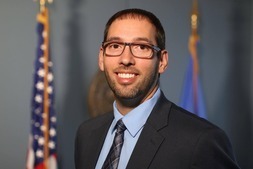
I am here to help you make CS meaningful and sustainable in your classrooms and schools. Whether you need guidance on implementing standards, integrating CS into other subjects, or developing a standalone course, I’m just an email away - Jeremy.Maker@sde.ok.gov. You can also click here to schedule a video conference with me.
Let’s keep building a future where every Oklahoma student has the opportunity to thrive in our increasingly digital world.
|
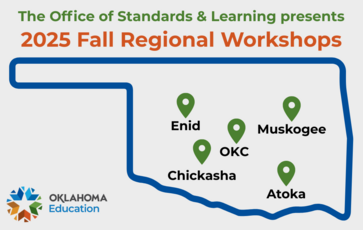 |
Elementary STEM Subjects
Join the Oklahoma State Department of Education’s STEM Team to learn more about Elementary STEM subjects! All registered educators will participate in each of the following sessions:
Computer Science: In this session, elementary educators will discover age-appropriate pedagogical strategies for integrating computer science into other subjects. Guided by the Oklahoma Academic Standards for Computer Science, participants will explore hands-on activities that spark curiosity, nurture creativity and collaboration, and help students develop essential computational thinking skills.
Mathematics: Explore practical, engaging strategies for building strong foundations in number sense across the elementary grades. Through hands-on use of manipulatives, number talks, and visual models, teachers will learn how to help students develop a deep understanding of numbers, operations, and flexible thinking. From early skills like subitizing and place value to more advanced concepts like mental math and reasoning with the four operations, this session will provide adaptable tools to support all learners.
Science and Engineering: Discover how elementary science can spark wonder, curiosity, and critical thinking in your students! Educators will dive into powerful strategies to strengthen K–8 students’ scientific writing skills. Explore how to seamlessly integrate scientific literacy by using the scientific method, inquiry-based learning, and rich scientific vocabulary. Learn effective ways to assess student writing and foster a classroom culture where ideas flow clearly and confidently. Walk away with practical tools and fresh inspiration to cultivate a generation of clear-thinking, strong-communicating young scientists.
Time: 9:00 a.m. - 3:00 p.m. (lunch on your own)
Secondary Computer Science
Enhance your computer science instruction with engaging, research-based teaching strategies. This session explores effective pedagogical approaches tailored for middle and high school educators. Learn practical ways to support student engagement, problem-solving, and collaboration in computer science classrooms.
Time: 9:00 a.m. - 10:30 a.m.
Join Jeremy Maker, Project Director of Computer Science, for an evening virtual meet-up designed to connect PK–12 educators who teach or integrate computer science. These informal, collaborative sessions are your space to meet fellow CS educators from across the state, share ideas, swap resources, and ask questions — no prep required!
Each month will feature a guiding topic to spark discussion while leaving plenty of room for open sharing. Come ready to listen, contribute, and leave with fresh inspiration for your classroom.
Dates:
- September 16 – 6:00 p.m.
Topic: Tips for a Successful Computer Science School Year
- October 21 – 6:00 p.m.
Topic: TBD
- November 17 – 6:00 p.m.
Topic: TBD
Click here to register for one or more sessions.
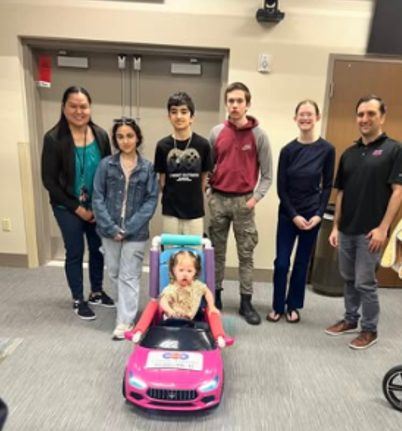
At Dove Virtual Academy (DVA), computer science is not just about coding—it is about changing lives. Under the leadership of computer science teachers Mr. Mammadov and Ms. John, students from DVA’s middle and high school computer science and engineering clubs have taken on an extraordinary challenge through the Go Baby Go program, a national initiative that creates custom ride-on cars for young children with limited mobility.
This year, DVA students partnered with Bethany Children’s Health Center to design and modify vehicles that meet each child’s unique needs. The process was a master class in real-world computer science and engineering:
-
Decomposition – breaking the complex task into manageable steps.
-
Component Selection – choosing the right parts, from steering wheel buttons to specialized sensors for head movement.
-
Programming & Circuitry – using Raspberry Pi technology, voice recognition, and wiring skills to create adaptive controls.
-
Design Iterations – testing, refining, and improving the vehicles to meet strict project timelines.
The students’ work demonstrates the full design process, from vision to testing, while integrating advanced concepts such as assistive technology, sensor integration, and mobility engineering. Beyond the technical skills, the project fostered creativity, teamwork, empathy, and a deep sense of community service.
Principal Oz shared, “Our students have not only learned valuable engineering and programming skills, but they’ve also seen firsthand how technology can transform lives. It’s been inspiring to watch them innovate with compassion.”
From helping children move independently to creating accessibility solutions for pets, these students are proving that computer science education can make a tangible difference. Their success is a reminder that when young people are given the tools, guidance, and vision, they can change the world—one custom ride-on car at a time.
For more information about this program you can go to DVA website: www.dovevirtual.org.
____________________
Invitation to Spotlight Your Work
Do you have a lesson or activity you’d like to spotlight? Or know someone in your district whose work deserves recognition? Feel free to email me (Jeremy.Maker@sde.ok.gov)! I’d love to highlight more incredible work from our Oklahoma educators in future newsletters.
|