|

Spring brings a renewed sense of energy, growth, and excitement to early childhood classrooms. As the days grow longer and the world around us bursts into color, we see the same vibrant spirit reflected in our young learners. This season of renewal reminds us of the joy of discovery, the power of curiosity, and the endless possibilities that come with each child's learning journey.
However, alongside this sense of renewal, spring also brings the anticipation of assessments and the pressures that come with measuring student growth. As educators, we balance the excitement of progress with the realities of evaluation, ensuring that each child feels supported, encouraged, and celebrated for their unique strengths.
As you navigate this season, take a moment to embrace the joy of your students’ small victories, the warmth of their enthusiasm, and the reminder that learning is a journey, not just a destination. Your dedication and passion create the foundation for their success, and your impact reaches far beyond the classroom. Thank you for all you do to inspire, nurture, and guide our youngest learners. Wishing you a season filled with growth, joy, and the reassurance that your work is truly making a difference.
|
|
|
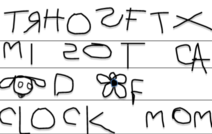
This month we continue our journey through the stages of writing development as we explore the Emergent Stage, also called the Letter-Like Forms Stage. As we all know, young children’s journey into writing begins long before they can spell words or form sentences. The Emergent Stage is a critical period when children explore the mechanics of written expression. Understanding this stage can help educators and families support young learners as they develop foundational literacy skills. During this stage, children experiment with making marks on paper that might resemble letters but may not yet present actual words. These marks might include:
- Scribbles that evolve into shapes and symbols
- Random strings of letter-like formations
- Attempts to mimic the alphabet, sometimes mixing letters and invented symbols
Children at this stage begin to grasp the idea that writing carries meaning, even if their marks do not yet correspond to specific words or sounds.
Why Is This Stage Important?
The Emergent or Letter-Like Forms Stage is a foundational step in literacy development. It supports:
-
Fine motor skills – Strengthening hand muscles for writing
-
Concepts of print – Understanding that written symbols convey meaning
-
Letter recognition – Beginning to differentiate between symbols and actual letters
-
Early phonemic awareness – Connecting sounds to the marks they make
Encouraging children during this stage fosters confidence and prepares them for more structured writing experiences.
How Can Educators and Families Support This Stage?
-
Provide Opportunities for Writing – Offer various writing tools (crayons, markers, chalk) and surfaces (paper, dry-erase boards, sand trays) to encourage exploration.
-
Model Writing Behaviors – Demonstrate writing through interactive activities, such as making shopping lists or labeling drawings.
-
Celebrate All Writing Attempts – Praise children’s efforts to reinforce their confidence and interest in writing.
-
Encourage Storytelling – Ask children to describe their drawings and marks, reinforcing the connection between spoken and written language.
-
Introduce Letter Recognition – Play games or sing songs that highlight letters and their sounds, gradually building awareness.
By recognizing and supporting the Emergent or Letter-Like Forms Stage, teachers lay the groundwork for confident, capable young writers. Early encouragement and meaningful writing experiences can inspire a lifelong love for literacy, which is ultimately the goal!
|
|
|
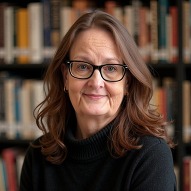
Dr. Regina Hein, Project Manager for Gifted and Talented and Advanced Placement at OSDE, has an undeniable influence and leadership in gifted education. With over 30 years of teaching experience in Oklahoma and Texas, her passion for supporting gifted learners has significantly shaped her career. She collaborates closely with educators, administrators, and policymakers to expand opportunities for gifted students, enhance program implementation, and ensure advanced learning experiences throughout the state.
As the Conference Chair for the Oklahoma Association for the Gifted, Creative, and Talented (OAGCT), she is pivotal in advancing gifted education. Her active involvement and leadership in organizing professional development events, networking opportunities, and initiatives that advance gifted education are commendable. Dr. Hein contributes significantly to advocacy efforts, policy discussions, and educator support as a dedicated educator and advocate.
Dr. Hein's academic background reflects a deep commitment to lifelong learning. She earned a Bachelor's degree in Liberal Arts from the University of Central Oklahoma and a Master's in Educational Administration, Curriculum, and Supervision from the University of North Texas. Her pursuit of excellence continued with a Ph.D. in Educational Studies from the University of Oklahoma, where her research focused on Women in Educational leadership and what motivated them to persist.
Her extensive teaching experience includes working in gifted education at every level, from pre-kindergarten to undergraduates, where she has taught and mentored students, developed curriculum, and fostered innovative learning environments. Dr. Hein's teaching in Oklahoma and Texas has given her a broad perspective on gifted education policies, instructional strategies, and program development, inspiring others to follow in her footsteps.
Beyond her professional life, she is a native Oklahoman, a mother of two grown children, and a proud Gigi to Blakely and Grayson. Dr. Hein's deep-rooted connections to family and education drive her passion for creating meaningful learning experiences for future generations.
|
|
|
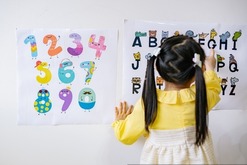
Identifying and nurturing young, gifted children is a journey of discovery, crucial to ensuring they receive the appropriate challenges and support to reach their full potential. Giftedness can manifest in various ways, such as advanced language skills, curiosity, problem-solving abilities, and an early love for learning. Below are some practical strategies for recognizing and supporting young, gifted learners.
Identifying Gifted Young Children
1. Observation and Documentation—Teachers and parents should note early indicators such as rapid learning, strong memory, advanced vocabulary, and deep curiosity. Keeping anecdotal records can help track patterns in a child’s development.
2. Informal Assessments – Screening tools such as checklists and behavior rating scales can help educators recognize gifted characteristics. Early childhood educators can also use creative and open-ended tasks to gauge advanced thinking.
3. Parental Input – Parents are often the first to notice gifted traits in their children. Their observations and insights are invaluable in the identification process. Open communication between parents and educators can provide a deeper understanding of a child’s interests and abilities, making parents feel valued and integral to the process.
4. Performance-Based Evidence – Gifted children may demonstrate exceptional abilities in problem-solving, storytelling, drawing, or constructing complex structures. Providing opportunities for self-directed exploration can reveal hidden talents.
Supporting Gifted Young Learners
1. Encourage Curiosity - Provide a stimulating environment with open-ended materials, books, and hands-on activities to fuel children's natural curiosity and problem-solving skills.
2. Offer Choice and Challenge - Allow children to explore topics of interest at a deeper level and introduce activities that promote higher-level thinking, such as logic puzzles, storytelling prompts, and creative play.
3. Flexible Learning Opportunities - Gifted children often learn faster. Providing opportunities for acceleration, such as early reading programs or advanced problem-solving tasks, helps keep them engaged.
4. Encourage Peer Interaction - Gifted children benefit from interactions with intellectual peers. Playgroups, enrichment programs, and multi-age learning opportunities can provide social and cognitive stimulation.
5. Support Emotional Development - Gifted children, like all children, need emotional support. They may experience heightened sensitivity or perfectionism. Teaching resilience and problem-solving strategies is crucial in helping them navigate challenges. This aspect of support is just as important as academic stimulation, making parents and educators feel empathetic and understanding.
6. Foster a Love for Learning – Rather than focusing solely on achievement, encourage exploration, creativity, and intrinsic motivation. Celebrate effort and curiosity to instill a lifelong love of learning.
Early identification and appropriate support can significantly affect a young gifted child’s development. By creating a stimulating, flexible, and supportive environment, parents and educators can help these children thrive academically and emotionally.
If you have any questions please reach out to Dr. Regina Hein, Project Manager for Gifted & Talented and Advanced Placement.
|
|
|
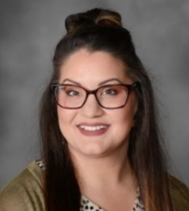
This month, we shine the spotlight on Sarah Ricks, a dedicated pre-k teacher at John D. Moeller Primary School in the Snyder School District. With a Master of Science degree in Curriculum and Instruction, a Phonological Awareness certification from Orton Gillingham/IMSE, and a certificate of mastery in LETRS, Sarah is deeply committed to fostering early literacy. She has led multiple professional development sessions at the school and district levels and was a participant in the OSDE First Class Teacher Mentorship Program in 2023. Currently, she is working toward National Board Certification, further demonstrating her dedication to excellence in education. Now in her fifth year of teaching, Sarah has spent two years in kindergarten and three years in pre-k. She was nominated for this recognition by her teaching partner, Sheila Treadwell, and her principal, Jiminy Latham, both of whom had glowing praise for her teaching abilities and impact on students.
Mrs. Latham describes Sarah as an invaluable asset to John D. Moeller Primary School:
"With her advanced education and expertise, our dear Mrs. Ricks is a true blessing to our school. She excels in differentiated instruction, multisensory learning, and cross-curricular teaching. Her classroom management approach encourages natural consequences and play-based exploration, fostering both social and academic growth in all students."
Mrs. Treadwell recalls her first meeting with Sarah at a National Board Information session:
"From the moment I spoke with her, I knew she was a teacher who needed to pursue National Board Certification in Early Childhood. When a pre-k position opened in our district, she applied and has since become an incredible addition to our team. She also tutors students twice a week after school, ensuring they get the extra support they need. Every day, she brings engaging, hands-on activities to her classroom, crafting theme-based learning experiences that spark curiosity and meet the various needs of her students. She is a rock star, shining in her classroom every single day."
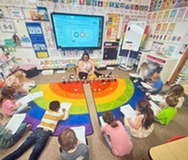
Sarah’s classroom is a vibrant, play-based learning environment where students engage in meaningful, hands-on experiences. Rooted in Oklahoma Academic Standards and research-based strategies, her approach blends student interests with structured learning objectives, creating immersive, cross-curricular experiences.
One of her favorite thematic units takes students on a journey through space. Her classroom transforms into a NASA training center, complete with:
🚀 A space shuttle tunnel
🛰️ An obstacle course for astronaut training
🌍 A station for sampling freeze-dried space food
🛠️ A building center where students construct their own space shuttles
🖥️ Virtual trips to the space station
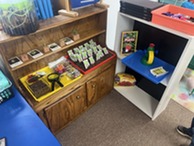
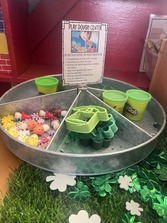
Sarah also creatively incorporates academic concepts into play. For example, when teaching graphing and size comparisons, she provides students with handmade asteroid rocks (crafted from aluminum foil). The children then sort, categorize, and graph their findings, bringing math to life in a tangible way. Her classroom centers evolve based on student interests. Currently, her students are enjoying a discovery center filled with plants, real seeds, dirt, a microscope, and plant specimens to examine. Meanwhile, in the writing center, children express their creativity by designing flower landscapes with stickers, drawing, and gluing various materials.
Recognizing that some of her students love Minecraft, she recently introduced a set of connecting Minecraft blocks to inspire creativity and fine motor skill development. "It is a joy to see them create new builds and develop fine motor skills. I love seeing students enjoy learning, and I strive to foster an environment where there is something that interests each child," she says.
Sarah is passionate about continuously improving her practice and actively seeks out new resources to enhance her teaching. She draws inspiration from educators such as Jackie Kopps (Pocket of Preschool), Jess (Preschool Vibes), Reading Rockets, and Heidi Songs.
In her words: "I love to think alongside the quote: 'It is not just play; they are learning skills for life.'”
Thank you, Sarah Ricks, for your dedication to early childhood education. Your passion, creativity, and commitment to student success make a profound impact every day. Congratulations on being in this month’s Educator Spotlight!
|
|
|
 |
|
You might be an Oklahoman if you have a cabinet full of these assorted cups that you've collected from various restaurants across the state! Kindergarten teacher, Kara Lewis, from Anadarko's Sunset Elementary has been making great use of these cups in her block/building center for many years. They hold up really well and are much sturdier than Solo cups, which is what many teachers typically use. And the kids love building with them! So clean out your cabinets and ask your friends to do the same, then let your students have some fun! |
|
|
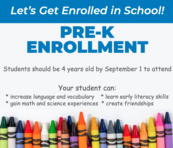
Many districts across the state will soon be opening enrollment for 2025-26 PreK students. Don't try to reinvent the wheel! OSDE has already created a set of tools with informational documents, forms, guides, and social media tips to make your school's enrollment process smoother and easier! Check out our updated Let's Get Ready for School Toolkit. |
|
 |
|
|
|
The Oklahoma State Department of Education (OSDE) has unveiled a in hopes of improving accessibility, streamlining communication, and providing a more user-friendly platform for students, educators, and parents. The website offers easier access to resources, updates, and important information, making it simpler to navigate and stay informed about educational initiatives, policies, and programs.
To access OSDE's early childhood webpages, you can use the search box in the upper right hand corner on the main page and enter "early childhood." You can also access the pages by clicking on the following:
- Resources>Educators>Early Childhood & Family Education, or
- Services>Standards and Learning>Early Childhood Education
Be sure to bookmark the early childhood pages for quick access!
|
|
 |
|
The Oklahoma State Department of Education is offering a series of training sessions on Artificial Intelligence (AI) during the spring semester. These virtual sessions are designed to help educators understand how to effectively integrate AI into their teaching practices and classroom activities. Each event focuses on practical strategies and tools that can enhance learning experiences. Each session will run from 6:00-7:00 PM. To participate, you can register for individual sessions using the links provided below. Contact Dr. Karen Leonard with any questions you might have.
There are three opportunities left:
|
|
|
|
Early Childhood Contact Information
Have ideas or celebrations for the OK Early Childhood newsletter? Reach out and let us know! We would be happy to share pertinent information, professional development opportunities, celebrations, and more.
|
|
 |
|
Rori Hodges, Early Childhood Specialist, Office of Standards and Learning
Email: rori.hodges@sde.ok.gov
Phone: 405-522-0755
|
|
|
|
Yvonne Rossiter, Early Childhood Specialist, Office of Standards and Learning
Email: yvonne.rossiter@sde.ok.gov
Phone: 405-521-3950
|
|
 |
|
|
 |
|
Megan Withers, Project Manager, Early Childhood, Office of Special Education Services
Email: megan.withers@sde.ok.gov
Phone: 405-522-5168
|
|
|
|
Sharon Morgan, Program Director, Standards and Learning, Office of Standards and Learning
Email: sharon.morgan@sde.ok.gov
Phone: 405-321-3034
|
|
 |
|
|
Connect to Professional Learning
|
|
Did someone forward this newsletter to you?
Don't miss out on future newsletters!
Subscribe today.
|
|
|
|
|