January 2025
Contents:
The Standards of Accreditation for Oklahoma Schools outline numerous expectations for school libraries and library media specialists. The Staff responsibilities section on page 2, part (c) states:
"The media center, materials/equipment, and personnel shall be available to students
and staff throughout the school day and throughout the school year. The media
facility and staff should be used specifically to assist students and teachers in
becoming effective users of ideas and information and to meet the instructional
needs of the staff and students. The library media specialist (librarian) shall not be
used as a substitute teacher or to replace a teacher in the classroom."
These expectations raise a number of questions:
- How do you partner with teachers on lessons?
- Do you have a method for teachers to use to sign up to visit the library with their students?
- How do you determine the instructional needs of the staff and students of your school?
- In addition to books, what equipment do you have in the library for students and staff?
- Does your library stay remain open during lunch?
- When and how do you take a lunch break?
- Are you ever asked to cover a class, and if so, do you explain how your role is to remain in the library as a resource to all?
The OSDE website has a new URL (https://oklahoma.gov/education.html) and has been overhauled to have a similar design as other state agencies. Take some time to explore the pages, including Library Media. Can't find what you are looking for? Email me at Jason.Stephenson@sde.ok.gov, and I will help you.
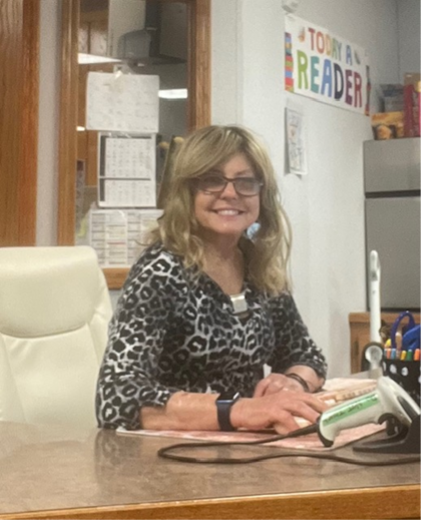
Tucked away in Johnston County in southern Oklahoma, the library of the month is Wapanucka. Like some rural school libraries, Wapanucka serves all of its PK-grade 12 students in one location with different areas of the library targeting certain student populations and genres.
The media specialist is Amy Smith who shares this advice to fellow librarians: "It is important to be flexible and stay in tune with what your patrons’ interests are. Have a sense of humor and be excited every day about the library. The excitement will spill over to the students."
Amy kindly described some of the programming and triumphs at Wapanucka.
|
How do you structure the library's layout?
"On paper we are two separate schools, but our pre-K through 12th classrooms are housed in one building. Our district’s library strives to accommodate all our students equally. To celebrate our unity, the library sponsors an annual school-wide theme. This year our theme is The American Frontier of the 1800s. When the students arrived in August, all students were greeted by decorated doors, bulletin boards, and walls depicting the Old West."
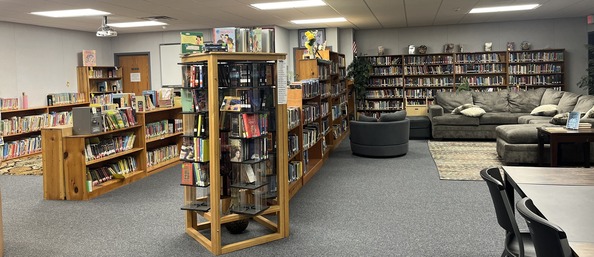 "In our library, a double-sided row of bookcases is the suggested boundary between elementary and general fiction books. Series that would interest students in middle school are placed on either side. 7th-12th grade traffic goes into the elementary side due to the series books while upper elementary students may travel to the general fiction. No one thinks anything about where other students are shopping. Non-fiction is easily accessible for all grades on the opposite side."
For high school students, Amy adds, "We have books identified as Upper Grade which contain more mature subject matter and are only available to high school students."
 |
|
Self Check-in
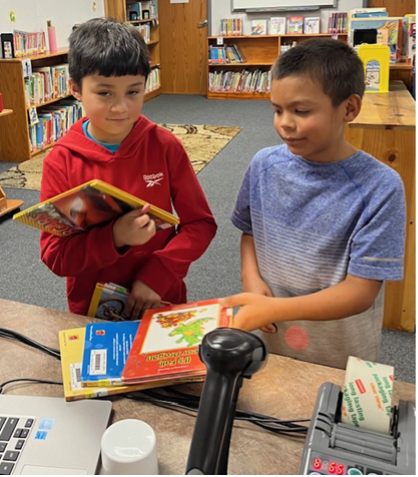
"With a small staff, it can be overwhelming at times to keep up with the traffic. Last year we started experimenting with self-check-in. The students scan their books when returning them and place them back on the shelf. We are doing this from kindergarten through high school. I was skeptical, but it is working well. A staff member will continue to check the books out. I have been impressed with how well even the littles can reshelve their books. They help each other, and if they find a book in the wrong place, they are eager to let us know."
|
Trends & Schedules
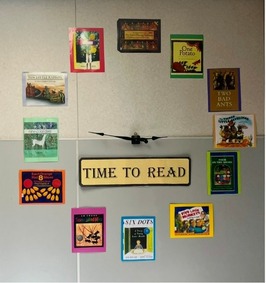
"An effective librarian should remain flexible and stay in tune with the needs and interests of the patrons. My first few years as a librarian, students only wanted to read about vampires. Graphic novels are most common on the want list this year. Students and teachers may add to our want list to be reviewed for future book orders."
Amy's schedule is somewhat flexible. She reports, "In addition to an open schedule, each class has a weekly one-hour library period reserved. Their teacher chooses how that time will be utilized. Students may relax on the couch while reading for enjoyment or be given extra time to browse. At times, we read to the students. Even high school students enjoy being read to."
|
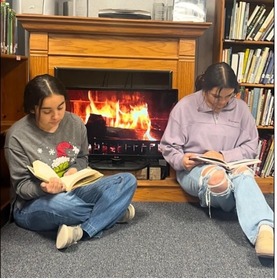
Favorite Event
"My favorite event was the weeklong Hunger Games Festival. Classes 7th–12th brought canned goods to donate to the local food bank. They accumulated points based on the number of cans each class brought. Points would also be awarded for the events on the final day. At the end of the week, we met in the gym. Each elementary class was assigned an upper grade to cheer for. If their team won, they would each receive a soft drink. The competitions were based on The Hunger Games. We built a cornucopia out of nets. Players tried to kick the ball into the net (like soccer); each class sent representatives to compete in a Hunger Games trivia competition. We included a race in the games. There was also a fashion show where each team had to dress their model using newspapers and tape. It was very exciting, and we had to buy many copies of The Hunger Games to keep up with the demand."
|
New Initiative
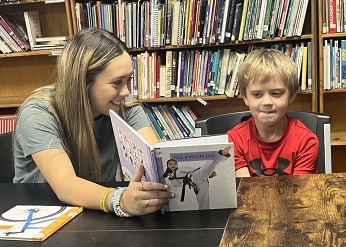
"This year we are focusing on reading for the love of reading. Older students take turns with younger students to read with each other. Younger and older look forward to this."
|
|
 |
Thank you, Amy, for finding ways to leverage the possibilities of a combined school library!
|