November 2024
OSDE and Cognia are seeking educators to join a passage review and bias meeting in preparation for the 2026 OSTP assessment. This meeting will focus on reviewing the new passages being developed for the upcoming assessment year to ensure they align with OSTP standards and expectations.
The meeting dates are scheduled for February 3, 2025, for grades 3-5 and February 4, 2025, for grades 6-8. Meetings will be held virtually from 8:00 am-5:00 pm. (You can join in your pajamas!)
Your input is valued, and we hope you will apply to participate in this important step in the development of the ELA Assessment. If you are interested in applying to attend this meeting, please complete the application in the Google form linked below. Seats are limited.
Application Form
Using Social Studies to Enhance Reading Comprehension for Elementary Students
My colleague Brenda Beymer-Chapman and I recently traveled across the state to share strategies for using Social Studies content to enhance student reading comprehension. Here are some presentation highlights, and the slides are linked below for your review.
Similarities between Social Studies and ELA Practices
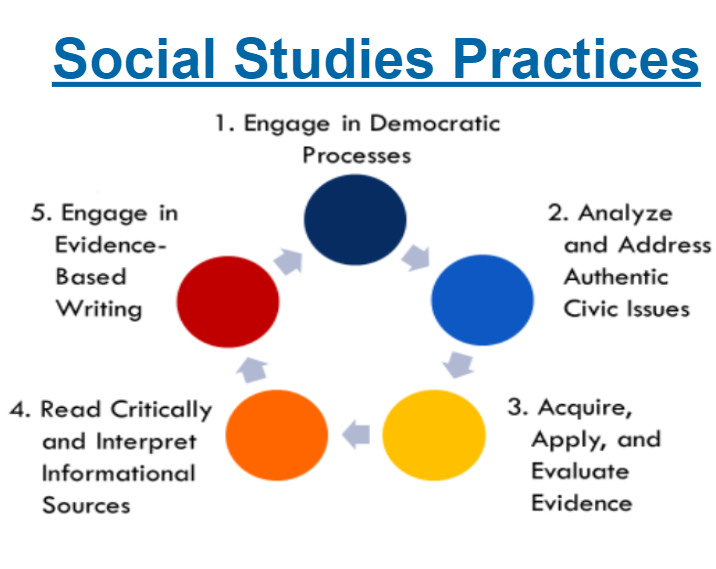
The Oklahoma State Standards for Social Studies include five practices. Three of the five social studies practices are directly aligned with reading and writing standards in ELA.
Practice 3 highlights tools to master basic social studies concepts, enabling students to acquire and apply content understanding through skills such as creating timelines, analyzing cause and effect, and making inferences.
Practice 4 focuses on reading critically and interpreting information sources. Students will analyze and interpret primary and secondary sources related to key social studies concepts.
Practice 5 emphasizes engaging in evidence-based writing, where students express their understanding of social studies concepts, ideas, and content.
Theoretical Models of Reading
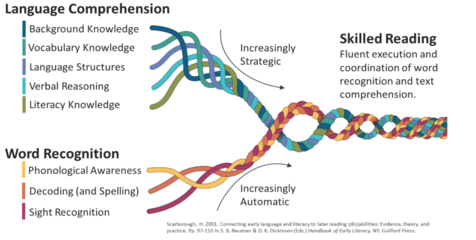
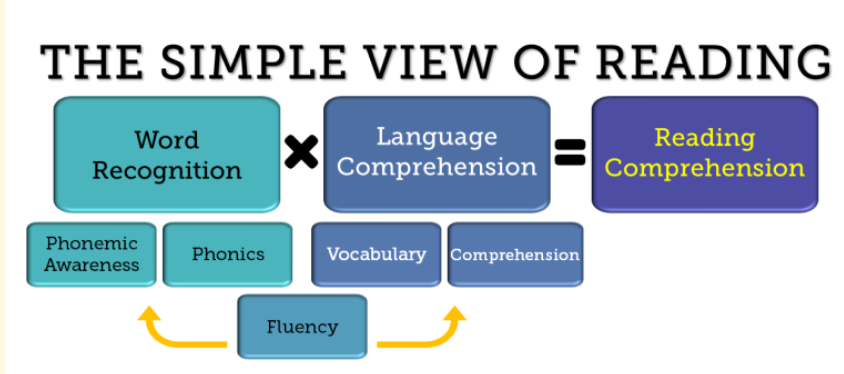
A look at the Simple View of Reading and Scarborough's Reading Rope helped to deepen the understanding of how word recognition and language comprehension work together to create skilled readers.
What does research say?
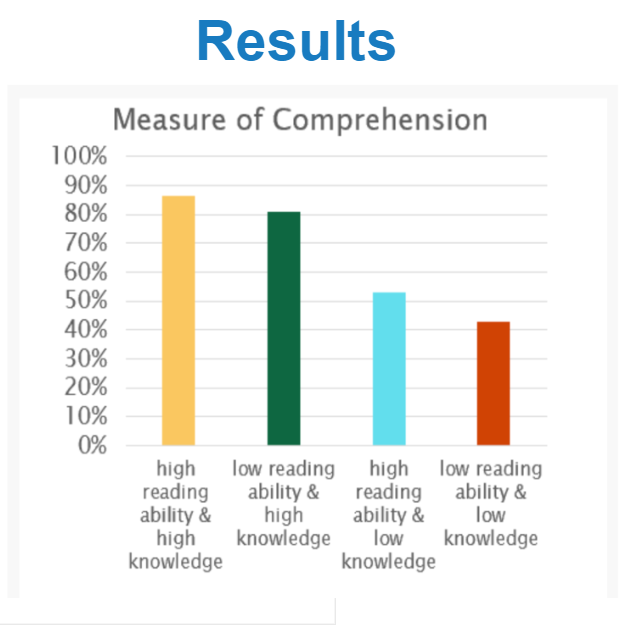
Knowledge matters. The more educators build knowledge across a range of topics, the more likely students will be able to comprehend future passages with similar vocabulary and themes. Students with a strong understanding of a subject area will demonstrate higher comprehension, even if they are lower-level readers.
Building Background Knowledge
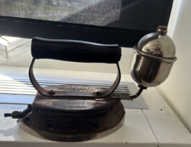
There are many effective ways to incorporate social studies content in the classroom. Strategies like cropping images, analyzing artifacts, listening to historical music, interactive read-alouds, museum walks, writing activities, and using stations or text sets can improve students' understanding. These methods deepen content knowledge and build background information, helping students engage more meaningfully with the texts they read.
Image: Depression era iron
|
Best Practices in Reading Comprehension
Key comprehension strategies should be explicitly taught before, during, and after reading to help students navigate texts effectively. The linked slide deck highlights several strategies to enhance comprehension. Understanding the difference between a strategy and an activity also helps teachers plan more effective instruction.
|
Framework Resources
Time was spent navigating the Social Studies and ELA frameworks. Watch the linked video for guidance on the Social Studies Frameworks.
Fall Regional Links:
Social Studies Framework Landing Page
ELA Framework Homepage
Fall Regional Presentation
 |
|
Celebrating Readers and Crafting Writers
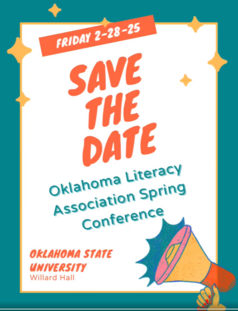
The OKLA Conference is planned for Friday, February 28, 2025, at OSU. The Keynote speaker is Helen Perkins, ILA president and OSU Alum! Our Oklahoma Author is 4th grade superstar Sammy D Wallace III, author of The No Sleep Curse and I Slept in my Bed Last Night!
|
Earlier this year, the Oklahoma State Department of Education (OSDE) released guidance on the use of artificial intelligence (AI) in schools. This guide provides recommendations for Oklahoma school districts, aiming to explore the potential applications of AI in educational settings.
Guidance and Considerations for Using Artificial Intelligence in Oklahoma K-12 Schools
As AI continues to evolve and improve through user interactions, the guide outlines best practices for implementing it safely and effectively in the classroom. One particularly helpful resource included is the AI Acceptable Use Scale (see below), which can be used as is or modified to meet the specific needs of your classroom.
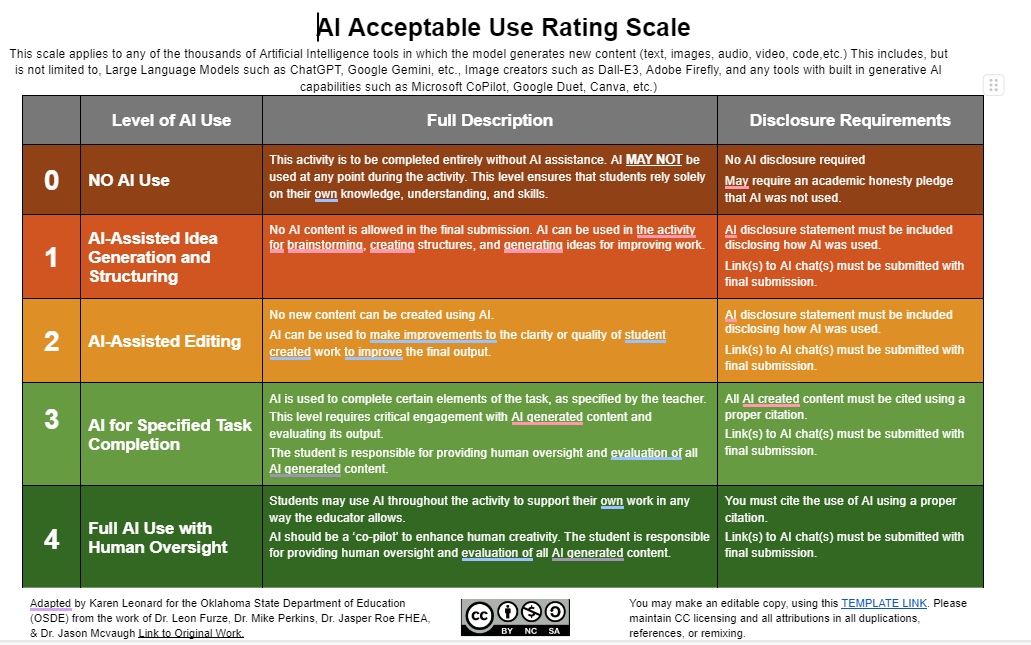 Download a copy for your use.
The ELA Framework page offers many resources to guide instruction and planning. This month, we are highlighting the Writing Resources.
Since writing is an important component of English language arts, the framework includes resources intended to help teachers empower students to revise and edit their work through reflection and conversation.
The Writing Resources include the following titles:
- Student-Friendly Revision Checklist
- Editing Checklist
- Teacher Feedback Examples
- Peer Feedback Lessons
Student-Friendly Revision Checklist
Students can use these writing checklists to ensure they have addressed all of the components outlined in each writing mode addressed in the Oklahoma Academic Standards for their grade level. Teachers can personalize some of the requirements to help students with revision.

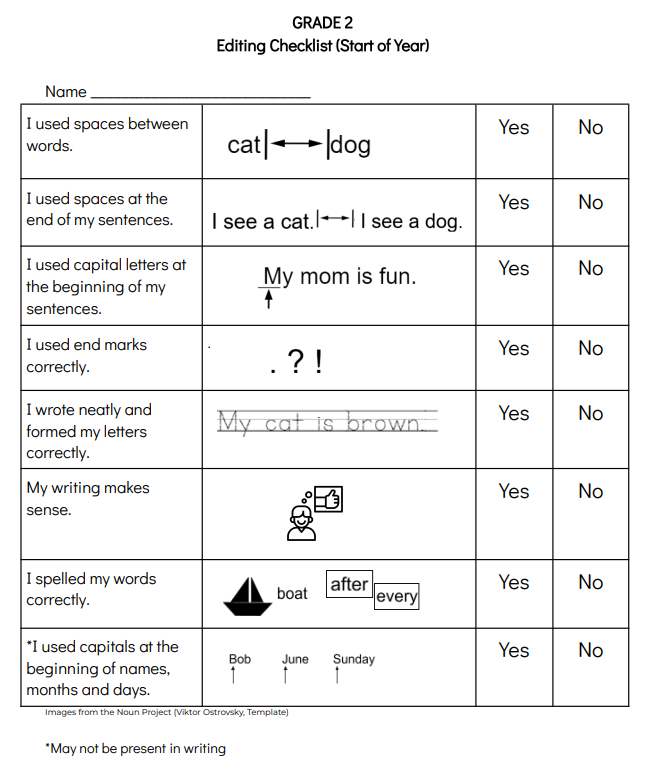
Editing Checklist:
Students can use these checklists to determine if they have followed all of the expectations for grammar and mechanics in their writing. The beginning-of-the-year checklist is based on rules from previous grades. The middle-of-the-year checklist can be used once students have learned the required expectations for their current grade.
Teacher Feedback Examples
Teachers showcase how to provide various kinds of helpful feedback on student writing through examples from each grade band. Each student essay is paired with a specific type of teacher feedback.
Click here to see a second-grade video conference.
Peer Feedback Lesson
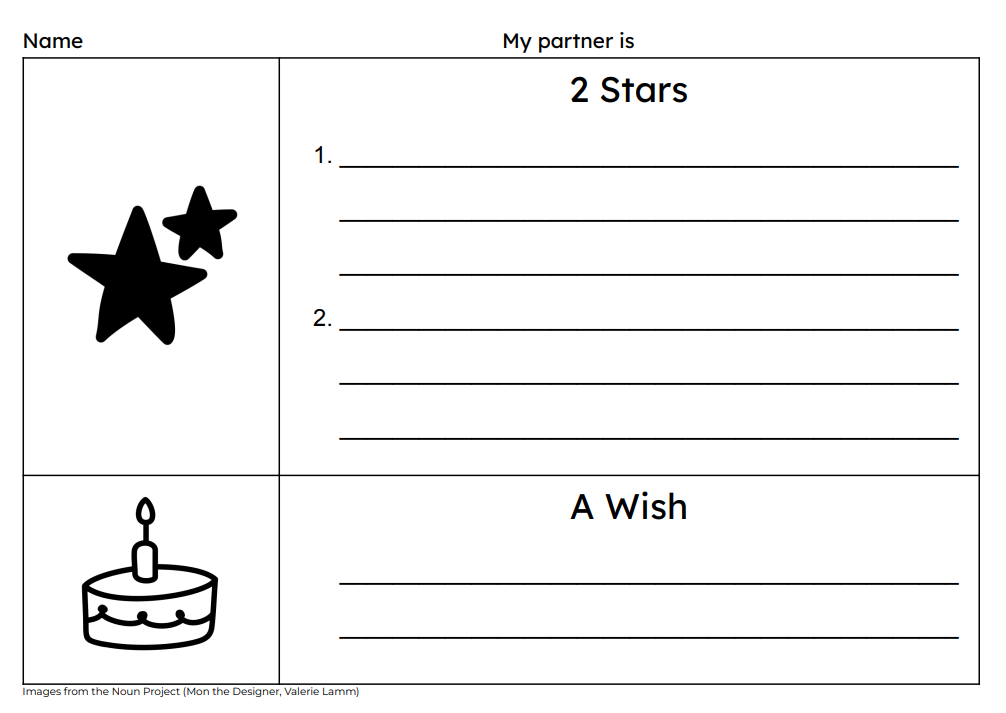
Teachers can use this resource to introduce students on how to provide feedback to one another about their writing. The lesson plan outlines the steps, the slideshow supplements the lesson, and the handout is intended for students to use in groups once they have completed the lesson. See the lower elementary handout below.
 The Science of Reading: The Importance of Background Knowledge
Over the last two months, we have explored the word recognition portion of the Simple View of Reading. This month’s focus is on the language comprehension side of the equation.
An important part of language comprehension is background knowledge, which is the information and experiences a reader brings to a text. This knowledge helps readers understand what they are reading and allows them to make connections.
Students come to us with varying levels of background knowledge, so as teachers, we must build that knowledge before reading a text to help ensure students can deepen their understanding. This can be done by building vocabulary, reading related texts, sharing artifacts, and participating in hands-on experiences that create the content knowledge students need to comprehend text.
While our curriculum often includes activities to activate prior knowledge, some students may first need opportunities to develop the background necessary to connect what they know with the text.
Here are some ideas for building knowledge:
- Book Talks
- Content area centers/theme centers
- Text Sets
- Videos
- Artifacts
- Music related to the topic
- Photographs
- Personal stories
Olympians and Paralympians Unit
Jamie Claborn, 5th grade teacher, from Indiahoma Public Schools shared this unit of study.
Overview: Over the first nine weeks, my class engaged in a comprehensive unit called "Olympians," blending standards across various subjects. We focused on both Olympians and Paralympians, emphasizing research, creativity, and empathy.
Art and Presentation:
-
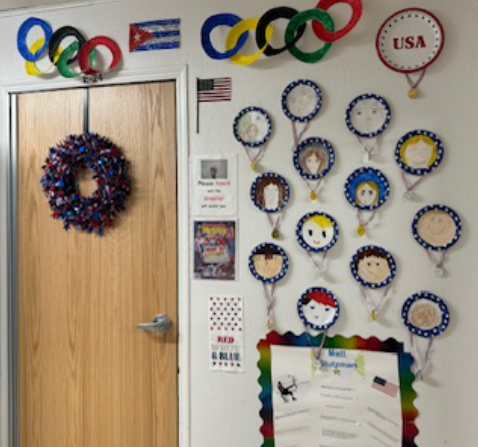
Self-Portraits: Students created self-portraits using supplies from the dollar store, glued them onto blue starry paper plates, and made Olympic medals.
-
Research Projects: Students selected an Olympian and researched their country, flag, sport, personal achievements, and math connections to their sport. Presentations included homemade videos, commercials, and other creative formats.
-
Paralympians: We mirrored this process for Paralympians, adding their personal stories about becoming an athlete.
Physical Education: During indoor recess, students participated in activities like Sit Down Volleyball and blind baseball, using crutches and ropes to simulate disabilities. This fostered empathy by highlighting the challenges faced by athletes with disabilities.
Social Studies: Students explored countries, flags, and traditions associated with the Olympics, using globes to locate countries.
Math Connections: We incorporated measurements relevant to sports:
-
Time: Races
-
Length: Shot put, discus, long jump
-
Height: Long jump
-
Weight: Weightlifting
-
Volume: Filling pools and water bottles
Character Building: We integrated the 36 Life Principles of Great Expectations, focusing on traits like perseverance, integrity, and resilience throughout the unit.
Culminating Olympic Ceremony: To conclude, we held an Olympic Ceremony with LED torches, medals for academic achievements, and a patriotic reception featuring red, white, and blue treats.
Tips:
- Save self-portraits for gifts or holiday decorations.
- Repurpose for Veteran's Day or elections by swapping medals for flags.
Note: Despite challenges in our rural community, my commitment to teaching and creating engaging units remains strong after 37 years.
|