In this issue:
Applications Now Open!
The National Youth Science Academy (NYSAcademy) provides STEM-focused programs for students all across the country and around the world. The NYSAacdemy's flagship program is the National Youth Science Camp (NYSCamp), a four-week, residential STEM camp in the mountains of West Virginia that combines some of the brightest students in the country with top-notch scientists for lectures and outdoor adventures.
The NYSCamp is a program designed to honor and challenge current Juniors (Grade 11) and Seniors (Grade 12). Typically, two delegates are selected to attend camp from each state and the District of Columbia. Housing, meals, transportation, and supplies are provided to participants at no cost to the student or their family.
The 2024 National Youth Science Camp (NYSCamp) will be held June 29 to July 20, 2024. You can nominate a student, share the application page with students, or explore the website for more details. The deadline to submit an application is Thursday, February 29, 2024. Students selected to attend the NYSCamp as Oklahoma's delegates will be notified by Friday, March 15, 2024.
|
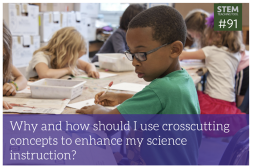
The crosscutting concepts (CCC) are a key component of three-dimensional learning, but many educators and educational leaders remain unclear about their use in science instruction. The CCCs are thinking tools that have applications across the sciences. They include:
- Patterns
- Systems and System Models
- Cause and Effect
- Scale, Proportion, and Quantity
- Energy and Matter
- Structure and Function
- Stability and Change
Clarity on their instructional use is essential as the CCCs promote integrated understanding and are necessary for a coherent and scientifically-based understanding of the universe. To learn more about why this matters, check out the STEM Teaching Tool: "Why and how should I use crosscutting concepts to enhance my science instruction?". This two-page brief includes additional links to research and resources in the "Things to Consider" and "Recommended Actions" sections, as well as reflection questions for educators and school leaders.
|

Unpacking the Oklahoma Academic Standards for Science
Need a little support with understanding the Oklahoma Academic Standards for Science? Check out the brand new online course, Unpacking the Oklahoma Academic Standards for Science! This is a free course hosted on the OSDE Connect platform (see below for more details) and assists educators with understanding the different components of the Oklahoma Academic Standards for Science (OAS-S), including the three dimensions (science and engineering practices, disciplinary core ideas, and crosscutting concepts).
This course should take about 20 minutes to complete and there is a 5-question quiz at the end. Educators may want to take notes on a printed example of a standard. Links to an example standard for this purpose are provided in the course overview.
Upon completion of this course, educators earn a 1/2 professional development credit.
The Redesigned PD on Your Plan Courses
Science PD on Your Plan is a collection of courses designed to assist educators with professional development around implementation of the OAS-S. These bite-sized courses can be utilized by individual teachers during their planning period or by groups of educators in professional learning communities.
PD on Your Plan courses were first developed in 2016 and "Unpacking the Oklahoma Academic Standards for Science" is the first course redesigned for this collection. Future courses will include, but are not limited to, individually exploring each dimension of the standards, examining high-quality instructional routines and strategies, developing 3-dimensional assessments (formative and summative), and evaluating high quality instructional materials. Announcements of new courses will be published in the OKSci Newsletter and on social media.
What is OSDE Connect?
To meet some of Oklahoma educators' professional development needs, the Oklahoma State Department of Education (OSDE) developed its own professional learning platform, OSDE Connect. OSDE Connect provides opportunities for educators to earn professional learning hours when it is most convenient for them. OSDE Connect is housed in Canvas and although many districts use this platform, educators will need to create a separate account from their school to access OSDE Connect courses. Once an account is created, a confirmation email will be sent to that educator and will need to be acknowledged before being able to access OSDE Connect.
If there are any questions please contact Heather.Johnston@sde.ok.gov, Project Manager for Science and Engineering, or Karen.Leonard@sde.ok.gov, Project Manager for Educational Technology.
|
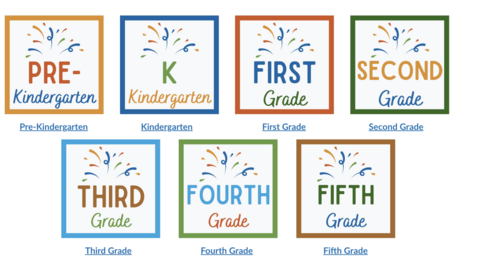 |
The Oklahoma State Department of Education (OSDE) has created a centralized Elementary Education Resources Database. This online resources database streamlines access to materials by directly linking content area standards, frameworks, and family guides for each grade level, making it easier for elementary educators and administrators to locate relevant content in one convenient location.
This database is located in OSDE Connect (see previous section for more information).
If you have questions or need assistance, please contact Karen.Leondard@sde.ok.gov.

The OSDE is hosting two virtual learning sessions this spring! All virtual sessions are hosted on Thursday afternoons via the Teams platform, and each session will be 45 minutes long. While sessions are not recorded, materials will be shared via the OKSci Newsletter.
Check out the details below for more information about each upcoming session. We hope to see you there!
-
Session 1: Preparing for the April 8, 2024, Total Solar Eclipse
-
Description: Did you know that SE Oklahoma is in the path of totality for the next total solar eclipse? This means that all of Oklahoma will have a great view of the moon passing between the Sun and Earth! In this session, we will discuss the science behind a total solar eclipse event and resources to engage every student in learning about and viewing the eclipse, even if your class doesn't typically study Earth and space science.
-
Elementary (PK-5) Option: Thursday, January 25 at 4:00 p.m., Register here for the elementary session
-
Secondary (6-12) Option: Thursday, January 25 at 5:15 p.m., Register here for the secondary session
-
Session 2: Addressing Student Knowledge Gaps and Planning for Next Year
-
Description: Students entering our classrooms have varying science learning experiences that can make teaching on-level content a challenge. This session will explore how using formative assessments and the Science Learning Progressions can assist educators with integrating missing skills and content students need for on-level learning, rather than front loading information at the beginning of the year or adding additional units to the curriculum. We'll also examine how the Science Learning Progressions can be used by teacher teams to better understand the skills and content that come before and after their grade level and/or subject area.
Registered attendees will receive an email with a session link one day before the meeting. If there are any questions, please contact Heather.Johnston@sde.ok.gov.
|
The OSDE Elementary Project Managers are hosting an Elementary Ed Chat on Monday, January 22, 2024. There will be two session options to accommodate educator schedules.
-
Topic: Universal Design for Learning - Meeting the Needs of All Learners
-
Description: Discover how the Universal Design for Learning (UDL) can be used to anticipate and plan learning experiences that are designed for all learners.
-
Date: Monday, January 22, 2024
DNA Day Essay Contest
The American Society of Human Genetics (ASHG) is celebrating National DNA Day (April 25) through the Annual DNA Day Essay Contest. DNA Day commemorates the completion of the Human Genome Project in April 2003 and the discovery of the double helix of DNA in 1953.
This contest is open to students in Grades 9-12 and asks students to examine, question, and reflect on important concepts in genetics. Essays are expected to be well-reasoned arguments that indicate a deep understanding of scientific concepts related to the essay question. They are evaluated by ASHG members through three rounds of scoring.
To learn more about the DNA Day Essay Contest download this flier or visit the Annual DNA Day Essay Contest webpage. Submissions will be accepted from early January 2024 through early March 2024.
|
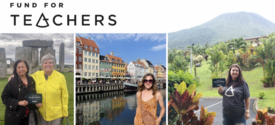
Self-Designed Learning Grants for Teachers
Imagine what can happen when teachers are able to pursue learning opportunities that align with their passions and teaching philosophies. When teachers reignite their love of learning, students come alive!
Fund for Teachers fellowships offer customized learning experiences for teachers anywhere in the world during the summer months. Individual teachers can apply for up to $5,000 and teams of two or more may apply for up to $10,000 in grand funds. To learn more about this opportunity, visit the Fund for Teachers webpage. Applications are due January 18, 2024.
|
New NAEP Science Assessment Framework
The updated 2028 National Assessment of Educational Progress (NAEP) Science Assessment Framework describes the knowledge and skills students should be able to demonstrate in physical, life, and Earth and space sciences in grades 4, 8, and 12. The updates reflect the most current science information and practices, and keep pace with the evolving field of K-12 science instruction and assessment.
To learn more about the new NAEP Science Assessment Framework or to review the 2019 NAEP Science Assessment Data, use the links below.
|
New Study: PreK-12 STEM Education Innovations
Navigating our increasingly technological world and harnessing advances in science and technology to address local and global challenges require a population that understands the STEM disciplines. National investments in PreK-12 STEM education have led to innovative programs, technologies, and practices with research documenting their effectiveness. To capitalize on these investments, it is important to take stock of what is required to sustain successful initiatives and to scale or adapt them to increase uptake.
This study will review the literature and identify research gaps on factors that impede or facilitate widespread implementation of these initiatives at local, regional, and national levels. Educators can listen in on the "public hearings" portions of committee meetings and keep up with the study's findings using this link.
|
|