|
Hello, Science Educators!
As we return to another school year, districts across the state are developing responses to the COVID-19 pandemic. I am sure many of you feel a great deal of uncertainty and may be overwhelmed. Some science teachers will be working virtually, some will be asked to teach in person and online, and some will be returning to their buildings to work.
Give yourself and others grace as you prepare to return to school. Science education is about learning while doing and when something doesn't work, we revise and try again. Let's apply that thinking to this school year. Remember, you already know a lot about teaching, regardless of the delivery method, platform, or schedule! We are in this together - for support, collaboration, and community - and, together, we'll make it through this unknown time!
-Heather
Fostering a strong classroom community is a critical piece of student learning, whether it's in person or virtual. Research shows that two prerequisites to effective teaching and learning are prioritizing student well-being and connection. While the current COVID-19 environment might make some of the traditional team building activities unsafe, here are some ideas that can still help you build relationships with your students.
Introductions and Check-Ins
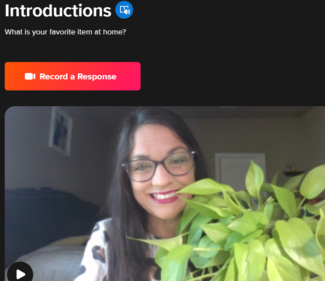
Learning about the personalities of your students, students learning about each other, and students learning about you can be difficult in a socially distanced classroom (whether in person or virtual). Your classroom can still get-to-know each other by using digital tools. For example, create a Flipgrid introduction video, where students respond to a question with their own video. I created this Flipgrid example for a virtual meeting with teachers. I ask the question, "What's your favorite item at home?" - I'd love to see some responses!
Don't want to use videos? Then try out Google slides! Assign each student a slide and ask them to upload images that represent who they are, what they love, etc. You can also use Google slides as "check-in" activities at the beginning of in-person or virtual class, like this slides example of the Thumbs Up/Thumbs Down game.
When thinking of topics for discussion remember to be sensitive to potential questions that might cause undue stress as, according to the National Child Traumatic Stress Network, approximately 25% of American children will experience at least one traumatic event by the age of 16, and there is a chance that many of our students had a summer they would like to forget. So instead of asking, "How was your summer?" ask "What are you looking forward to in ___ grade/this class?" "What is a goal I can help you with this year?" or "What is something you would like me to know about you?"
Whether you use videos or slides, students can view their classmates' responses to begin making connections with each other outside of content.
Establishing Collaborative Norms
Engaging students in the development of classroom norms helps create student buy-in by collaboratively creating an agreement on how they will treat one another. This is often done in person as ideas can be shared and agreed upon during classroom discussions. In a virtual setting, tech tools, such as Jamboard, can be utilized to not only develop and share ideas, but the norms can also be easily revisited by the class to evaluate areas of strength and improvement throughout the year. Check out these resources for classroom norms and classroom culture.
Partnering with Families
This past spring, we saw how vital parent support can be in ensuring students remain engaged with their learning. As school reopens, we have an opportunity to invite family members to actively partner in their child's education. Check out this resource on supporting equitable home-based science teaching and learning. There are several tables in this resource that provide examples of what family roles in learning can look like and how to leverage these roles to support student learning experiences. All parents have the capacity to support their children's learning, so let's build authentic partnerships that can ultimately lead to significant gains in student achievement.
However you are going back to school this year - whether in person, blended, or virtual - we know the year will look different than in past years. Let's take advantage of this opportunity to build stronger, more collaborative learning environments that support and engage all students in the wonder of science.
|
The Oklahoma State Department of Education (OSDE) has released new, more in-depth guidance for teachers of science at all levels, with sections on standards and pacing, effective instructional routines, considerations for in-person, blended and distance learning, classroom assessment, social and emotional well-being, equity and inclusion, connection and integration with other disciplines and safety considerations.
The OSDE has also released a document called Launching Instruction with Digital Tools to support educators and school administrators as they plan for various instructional delivery models for the 2020-21 school year. This guidance document includes sections on selecting the appropriate digital tools and implementing with care, creating clear and effective communication strategies, building and maintaining a community with digital tools, empowering student choice through digital tools, digital tool guides and tutorials, and ongoing support for instruction.
Join the Oklahoma State Department of Education's Science Team and other science educators from across the state for collaboration and learning opportunities during our monthly virtual meetings! Dates and times were based on feedback from educators in our #OKSci Facebook group - if you haven't already, be sure to join our conversations there!
All Science Educators
Do you teach science? This meeting is for you! We'll be covering topics from the Return to Learn: Launching Instruction for Secondary Science document, and the order of these topics will be based on your feedback on this survey.
- When: 2nd Wednesday of each month, from 4:30-5:30 p.m.
- Next Meeting: Wednesday, September 9th
- Register Here to Attend
New Science Educators Cohort
Are you new to teaching science, a new teacher, or want a refresher on what 3-dimensional science teaching and learning means? This meeting is for you! We will be covering topics around PK-12 instructional practices for integrating the disciplinary core ideas, crosscutting concepts, and science and engineering practices.
- When: 4th Wednesday of each month, from 4:30-5:30 p.m.
- Next Meeting: Wednesday, September 23rd
- Register Here to Attend
Elementary Educators (meetings are not science-specific)
We also have monthly meetings for elementary teachers, that include information from all subject areas. These meetings will be covering topics from the Return to Learn: Launching Instruction guidance documents for elementary (see links in the section above). Zoom information for both of these meetings will be sent out via this newsletter in September.
-
Grades 1-2 monthly virtual meetings are held on the 4th Tuesday of each month, 4:30-5:30 p.m. The next meeting is Tuesday, September 22nd.
-
Grades 3-5 monthly virtual meetings are held on the 3rd Tuesday of each month, 4:30-5:30 p.m. The next meeting is Tuesday, September 15th.

To support districts and teachers as they implement shifts associated with the new Oklahoma Academic Standards for Science (OAS-S) we have compiled a document called the OAS-Science Implementation Toolkit. This toolkit is designed to house all current resources available for implementation support, including recorded webinars, presentation slide decks, middle school science-specific resources, distance learning resources, professional development opportunities, free and open instructional resources, and so much more! This resource is updated monthly so be sure to save the link and revisit throughout the year.
|
Science Opportunities
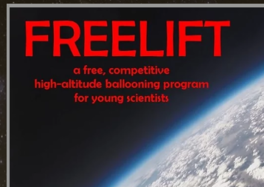
Spaceweather.com and Earth to Sky Calculus are partnering together to launch student experiments into the stratosphere using a high-altitude balloon! This program is called FREELIFT and is open to everyone (all grade-levels, all schools). Students submit 1-page proposals for high-altitude research and the best proposal each month wins the trip to the stratosphere. To find out more information visit the Earth to Sky FREELIFT webpage.
|
Blended and Distance Learning
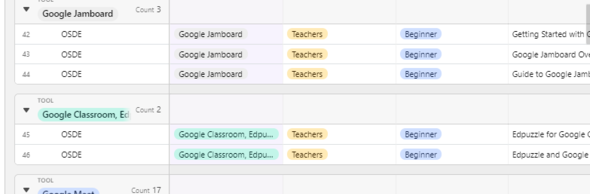 This year many districts are utilizing a new learning management system (LMS) or are asking teachers to integrate technology tools into their lessons. Did you know that the OSDE has an Educational Digital Tool Tutorial Database?! There are tutorials for Canvas, Google, Pear Deck, Edpuzzle, Seesaw, Flipgrid, and many more! Tutorials can even be sorted into user (teacher, students, parents) and level of user (beginner, intermediate, advanced) bundles. This is a great resource if you are looking for how-to videos on any of these tools.
Equity and Inclusion
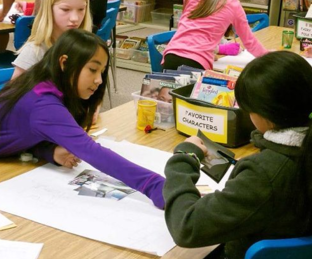
Creating a classroom that fosters trusting and caring relationships, opening up opportunities for all students to learn, can be tricky. The STEM Teaching Tool on "How to Build an Equitable Learning Community in Your Science Classroom" describes a range of classroom activities designed to cultivate classroom communities that welcome and support all students. This includes get-to-know-you games, ideas on bridging learning between school and students' everyday lives, and resources that explore student perceptions on science identities.
|
|