|
As I reflect back on the last year, I think about the hundreds, if not thousands, of teachers I met. I feel blessed to have such a great network of teachers to learn from and grow with in Oklahoma. One major event that sticks out in my mind is EngageOK in July. Several of you shared with me the amazing things happening in your science classrooms. I left each day of EngageOK more inspired than the last because of the teachers that I met. I was inspired by the conversations we had about using science phenomena in the classroom, the ideas that were shared on why a high-quality formative assessment is necessary to know what students are thinking, and why it is important to make sure the STEM lessons used in the classroom have a strong foundation in the math and science standards. I look forward to working with you all this school year to further these ideas.
Are you new to science teaching or need a refresher on the Oklahoma Academic Standards for Science? Join us this school year, 2018-2019, as we look at the Shifts in Science through a series of webinars! See the schedule below:
-
Webinar #1 - Overview of Standards, Science Frameworks, Resources, and Groups, September 18, 2018 @ 4 pm
-
Webinar #2 - Shifts in Science Instruction, November 13, 2018 @ 4 pm
-
Webinar #3 - Shifts in Science Assessment, January 15, 2019 @ 4 pm
-
Webinar #4 - Shifts in How to Use Data, March 4, 2019 @ 4 pm
New to Zoom? Zoom is a virtual conference platform which may require a download. You can also call in to the meetings which does not require a download.
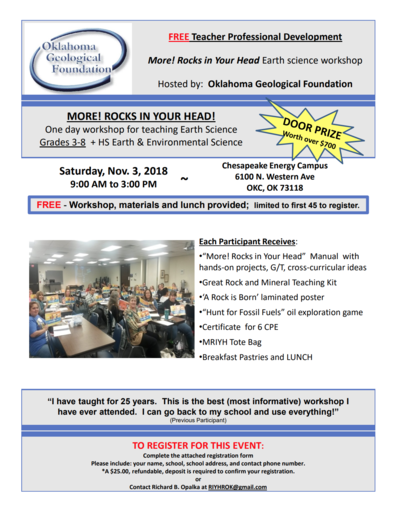
More! Rocks in Your Head! Earth Science Workshop
Join the Oklahoma Geological Foundation for this FREE teacher professional development opportunity!
This one day workshop on November 3, 2018, is for 3rd-8th grade teachers and HS Earth and Environmental Science teachers.
Space is limited to 45 teachers, so contact Richard Opalka (RIYHROK@gmail.com) to register.
|
 Aviation Design Challenge
The General Aviation Manufacturers Association (GAMA) hosts an annual competition to promote STEM skills in U.S. high school students through aviation curriculum and a virtual fly-off.
The competition is open to the first 150 high schools that enter. The competition is free – GAMA provides a curriculum and software through a partnership with Fly to Learn and X-Plane. The winning team receives an all-expenses-paid trip to experience general aviation manufacturing firsthand.
Interested educators can learn more about the Aviation Design Challenge and register on this website: http://bit.ly/2idxzkF
|
FREE SCHOOL CHEMICAL DISPOSAL!
Are you in a new school or new classroom this year? Are you a science teacher who just found a stash of outdated or unusable chemicals and don't know what to do with them? Even if you have been in the same classroom for years and the problem has only magnified, the Oklahoma Department of Environmental Quality (DEQ) can help!
The DEQ is currently accepting applications for the School Chemical Disposal Program which removes unused, outdated, and potentially dangerous chemicals from school laboratories across the state at NO CHARGE to the school. The goal of the program is to create a safer laboratory environment in Oklahoma schools and prevent any chemical disasters.
For questions about the program please contact:
Katrina Pollard at (405) 702-5112 or by email katrina.pollard@deq.ok.gov
or Trenton Wilhelm at (405) 702-5108 or by email trenton.wilhelm@deq.ok.gov
 Opportunities provided by Flight Night and the Tulsa Regional STEM Alliance!
Flight Night Classroom Grant
Apply for the Flight Night Classroom grant! The deadline is September 21. Grants typically range in size from $750 - $1500.
Application link: http://tulsastem.org/flight-night-classroom-grant/
Flight Night Back to School STEM Expo
Bring your middle school students to our Flight Night Back to School STEM Expo on Friday, September 14: 10 am -1pm and 2 pm - 5 pm. This event is part country fair, part science fair, and part career fair all mixed into one spectacular event with more than 50 exhibitors waiting to engage and inspire your students regarding STEM careers available here in Green Country. Transportation and lunches are provided.
Registration link: http://tulsastem.org/stem-expo/
|
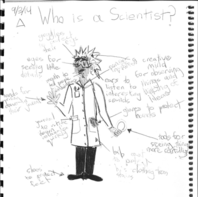 Keeping a notebook can help your students think and act like scientists and support instruction aligned to the Oklahoma Academic Standards for Science. One of the benefits of science notebooks is the bond students develop with them. If a student cares about their notebook, they are more likely to care about the science thinking that goes into it.
From setting up a science notebook to purposeful student reflections and ideas for investigations, this website has a slew of ideas and best practices as well as lesson plans for science notebooking!
In this lesson, students peruse sample pages from the notebooks of many different scientists. They look at notebooks from scientists their own age, from high-school scientists, from science teachers, and from field scientists dating back to 1905. They consider the ways in which scientists have used notebooks over the last several hundred years, and start to think about how they’ll use their notebook.
How are you using notebooks in your science classroom? We would love to feature Oklahoma notebooks at each level (elementary, middle, high) in the next newsletter! Send in your pictures to Megan.Cannon@sde.ok.gov
|
Each month we will take a deep dive into one science & engineering practice (SEP) and one crosscutting concept (CCC). There will be resources and examples of how to implement these two dimensions into the science classroom. This first month, we will develop a deeper understanding of what these two dimensions actually mean. There will also be links to documents used each month as we look deeper into specific SEPs and CCCs.
Science & Engineering Practices - What Scientists Do
The Science and Engineering Practices describe the major practices that scientists employ as they investigate and build models and theories about the world and a key set of engineering practices that engineers use as they design and build systems. The term “practice” is used instead of the term “process” to emphasize that scientists and engineers use skill and knowledge simultaneously, not in isolation.
There are eight science and engineering practices:
1. Ask questions and define problems
2. Develop and use models
3. Plan and conduct investigations
4. Analyze and interpret data
5. Use mathematical and computational thinking
6. Construct explanations and design solutions
7. Engage in scientific argument from evidence
8. Obtain, evaluate, and communicate information
Integrating Science Practices Into Assessment Tasks
What do the Science & Engineering Practices look like at different grade levels?
Crosscutting Concepts - How Scientists Think
Crosscutting concepts (CCCs) are central to robust and applicable science understanding. CCCs are not more concepts, facts, or definitions for students to learn. Rather, they are ways of understanding scientific concepts as they relate to real-world phenomena. Thus they should not be taught in isolation, but continually developed in conjunction with disciplinary core ideas (DCIs) and SEPs as students explore, explain, and make sense of phenomena at increasing levels of sophistication within units, across units, and across grades.
There are seven crosscutting concepts:
1. Patterns
2. Cause and Effect: Mechanisms and explanations
3. Scale, Proportion, and Quantity
4. Systems and System Models
5. Energy and Matter: Flows, cycles, and conservation
6. Structure and Function
7. Stability and Change
Prompts for Integrating Crosscutting Concepts Into Assessment and Instruction
What do the Crosscutting Concepts look like at different grade levels?
Each month we will take a closer look at a STEM Teaching Tool (STT)! The STEM Teaching Tools site has tools that can help you teach science, technology, engineering, and math (STEM). STT are currently focused on supporting the teaching of three-dimensional science standards. Each tool is focused on a specific issue and leverages the best knowledge from research and practice.
 Why Do We Need to Teach Science in Elementary School?
Practice Brief #43 takes a deeper look at why it is important for students in elementary school to experience science on a daily basis. There are sections on Things to Consider, Attending to Equity, and Recommended Actions You Can Take. According to research, "only 20% of K-3 students and 35% of students in grades 4-6 have access to daily science instruction", however, "students in elementary school are deeply interested in science, and rate it higher than any other subject."
"Our future depends on a public that can use science for personal decision-making and to participate in... discussions related to science. Though we have... goals for science education, science is often pushed to the side—particularly at the elementary school level. There are multiple reasons for science to be a core part of elementary school learning. It can support: (a) development of a knowledgeable citizenry, (b) meaningful learning of language and mathematics, (c) wonderment about how the natural world works, and (d) preparation for STEM-related careers."
|
|