|
Greetings Science Educators!
I hope the start of your school year is going well! There are
several things to share in this week's science message, including a special
announcement!
|
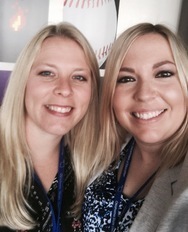
Please join me in welcoming Megan Cannon as the new Director of
Science and Engineering Education. Megan has taught both elementary and middle
school at Sapulpa Public Schools and initiated several STEM programs during her
time there. Megan served as a Framework Writer for the Oklahoma Science
Framework Project for two years and is a graduate from the OKSci Leadership
program. She obtained a bachelor's degree in Elementary Education and a
master’s degree in Science Education from Northeastern State University.
We are thrilled to welcome Megan to the Curriculum and
Instruction Office at the Oklahoma State Department of Education.
You can contact Megan at:
Megan.Cannon@sde.ok.gov
/ 405-522-3524
|
|
 |
Physical Sciences Requirement for 2019 Graduates:
Students completing the college preparatory/work ready
curriculum requirements for graduation must adhere to the following:
- Of the three units or sets of
competencies of laboratory science required for students completing the
college preparatory/work ready curriculum, one must be a life science
meeting the standards for Biology 1, one must be a physical science(s) meeting the standards for Physical Science, Chemistry or Physics and one
must be from the domains of physical science, life science or earth and
space science with content and rigor above Biology.
For more information:
<<Download the Science Graduation Requirement FAQ document here>>
Course Code Changes:
In
an effort to streamline subject codes and provide stronger guidance to
districts, the Oklahoma State Department of Education made a few subject code
changes for high school science that may impact your local subject coding
policies for the 2017-2018 school year.
For more information:
<<Download the Science Course Code Guidance document here>>
High School Science Assessment Shifts and Blueprint:
The
high school science assessment will be shifting from a 10th grade
End-of-Instruction Biology assessment to an 11th grade comprehensive exam
consisting of 50% of questions aligned to the Biology standards and 50% of the
questions aligned to concepts common across Physical Science, Chemistry and
Physics standards.
The blueprints for the grade 11 science content assessment are provided in the link below.
<<Download the Grade 11 Science Content Assessment Blueprint here >>
You can also find the grade 5 and grade 8 science assessment blueprints through the following link.
<< Download the Grade 5 and 8 Science Assessment Blueprints here >>
We’ve
received a few questions regarding the shifts with the high school science assessment and hope to provide clarity
through a few responses here and a more detailed FAQ document and conference call to be hosted later this month.
Q1: Can we offer an 11th grade Biology/Physical Science
course that will count as one of the three science graduation requirements for
students?
A1: No. If a student is
taking an 11th grade course that is designed to cover content and standards of
courses already taken by the student, the course should be considered a science
remediation course. Science remediation courses are categorized as elective credits
and not as science credit. If you have further questions about this, please
contact me at Tiffany.Neill@sde.ok.gov or 405-522-3521. We want to ensure
that all students are enrolled in courses properly structured to meet science
credit requirements for graduation and Oklahoma’s Promise and that districts
are not confused in anyway by this requirement.
Q2: Do all students have to take Physical Science to be
prepared for the new 11th grade science assessment?
A2: The 11th grade science content assessment will
be comprehensive and consist of 50% of questions aligned to the Biology
standards and 50% of the questions aligned to concepts common across Chemistry,
Physics or Physical Standards standards.
During
a recent conference call, several educators shared course pathway options
provided to their students to meet their high school science graduation
requirements and prepare them for the 11th grade science assessment. You can
view the course pathways options discussed on the call on this Google Document. You will notice that some of the course pathways do not include students taking Physical Science.
High School Science Assessment Changes and Blueprints Conference Call:
Date and Time: August 22nd at 4:00 p.m.
Conference Call Information: Number (605) 475-4700; PIN: 687599#
Meeting Document: Document Link
EngageOK
It
was wonderful seeing so many educators at EngageOK this year! I’m providing
links to each of the science related presentations below. Each of the
presentations provides links to additional resources and allows you to utilize
them in professional development you or your district may be doing prior to the
school year beginning.
Eliciting Student Thinking Presentations:
These presentations are aimed
at providing teachers with formative assessment strategies and resources that
align to the science and engineering practices found in the Oklahoma Academic
Standards for Science.
<<Download the Eliciting Student Thinking Through Student Explanations for Phenomenon presentation here>>
<<Download the Eliciting Student Thinking Through Student Generated Models presentation here>>
Using Artifacts of Student Thinking Presentation:
This presentation provides an alternative method for analyzing student thinking exhibited through the formative assessment strategies explored in the Eliciting Student Thinking presentations.
<<Download the Using Artifacts of Student Thinking to Make Instructional Decisions presentation here>>
STEM Frameworks Presentation:
This presentation provides a framework that teachers, schools and districts can utilize to better understand STEM.
<<Download the STEM Frameworks and Design Principles presentation here>>
STEM Teaching Tools
If
you are looking for some great professional development resources to utilize in
back-to-school PD, in science department meetings or grade-level meetings,
check out a new series of resources by STEM Teaching Tools known as PD
Playlists.
Worth Reading
STEM Teaching Tools Brief: How to define meaningful learning objectives for
science investigation
National Academies of Science: Seeing Students Learn Science: Integrating
Assessment and Instruction in the Classroom
|