|
OKLAHOMA CITY (Oct. 27, 2016) – Science scores on
the 2015 National Assessment of Educational Progress (NAEP), released today, show Oklahoma making some of the largest gains in the nation in narrowing performance gaps.
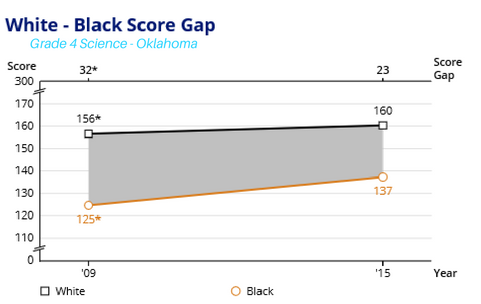
In fourth-grade science, the white-black performance gap decreased
nine points, from 32 in 2009 to 23 in 2015. Oklahoma’s fourth-grade black
students had the second-largest gain in science scores, behind only Tennessee.
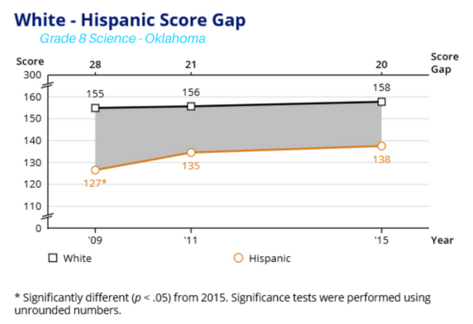
In eighth-grade science, the white-Hispanic performance gap
decreased eight points, from 28 in 2009 to 20 in 2015. Oklahoma’s eighth-grade Hispanic
students had the third-largest gain in science scores, behind Utah and South
Carolina.
State Superintendent of Public Instruction Joy Hofmeister said
the results indicate Oklahoma is moving in the right direction and there is reason to celebrate.
“We are committed to achieving academic excellence for all, and narrowing performance gaps among student groups is an important indicator that we are making real progress toward meeting that goal. The fact that Oklahoma has made some of the largest improvements in the
nation means the extra work our schools are putting in is working.”
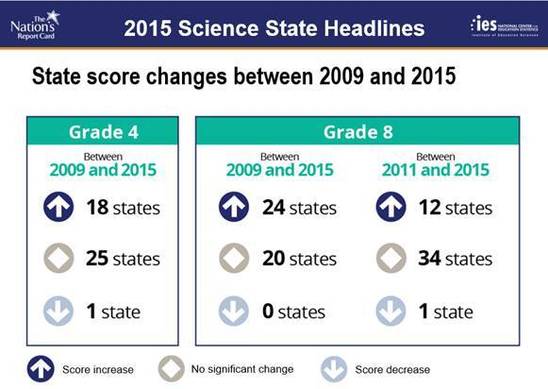
In fourth-grade science, Oklahoma was among 18
states/jurisdictions to see growth. In 2015, the average score of fourth-grade
students in Oklahoma was 153, up from 148 in 2009 and consistent with the national average of 153.
In eighth-grade science, Oklahoma was among 24
states/jurisdictions to see growth. In 2015, the average score of eighth-grade
students in Oklahoma was 151, up from 146 in 2009. Despite the growth, Oklahoma eighth-graders still fell below
the national average of 153.
 NAEP scores indicate that 34 percent of Oklahoma fourth-graders who
took the test scored at or above proficient level. This was less than the
national average of 37 percent.
Twenty-eight percent of Oklahoma eighth-graders scored at or
above NAEP proficient levels, below the national average of 33 percent.
Oklahoma adopted new science standards in 2014 that are aligned to NAEP and emphasize critical
thinking and problem solving.
“Science educators are working extremely hard across the
state," said Hofmeister. “In Oklahoma, there has been a shift in the way science is taught, and educators are
putting in extra hours to make a difference in student outcomes. We are
improving science education in Oklahoma thanks to dedicated teachers and
businesses who are prioritizing and supporting STEM education in their
communities.”
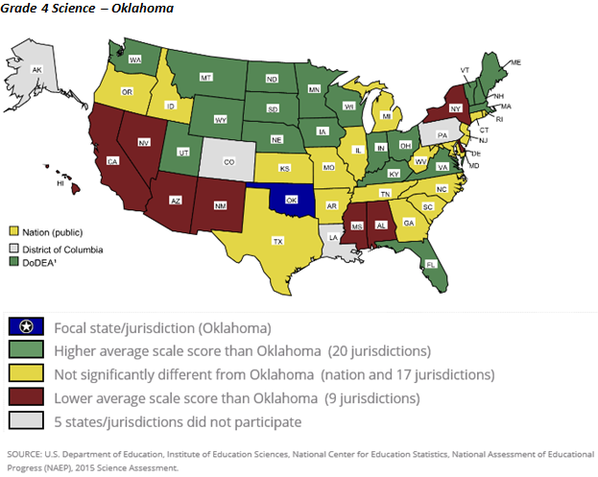
*Compared to the nation, Oklahoma is:
- above 9 states, not significantly different from 17 states
and below 20 states in fourth-grade science
- above 5 states, not significantly different from 12 states
and below 29 states in eighth-grade science
*numbers represent states and jurisdictions, including
the District of Columbia and Department of Defense schools
Oklahoma is one of only three states, including Hawaii and
Mississippi, to show gains in five of the six areas NAEP assessed in 2015.
“There is no reason we cannot strive to
improve in all six areas," said Hofmeister. "My call to action is that Oklahoma score in
the top half of the country in all NAEP assessments. While we have narrowed performance gaps, I am confident we can do better in our overall scores.”
NAEP is the largest national
representative and continuing assessment of what students in the United States
know and can do in various subject areas. The science assessment is comprised of three content
areas: physical science, Earth and space sciences, and life science.
Full results for the
nation and states are available online.
Math and reading results, released in October 2015, are available here.
Superintendent Hofmeister was recently named to the CCSSO Policy Task Force charged with providing state feedback and recommendations to the National Assessment Governing Board on policy areas and projects related to NAEP. Members are chosen based on expertise and interest in assessment and geographic representation of the nation.
###
|