|
History Alive: President Thomas Jefferson and America250
|
|
|
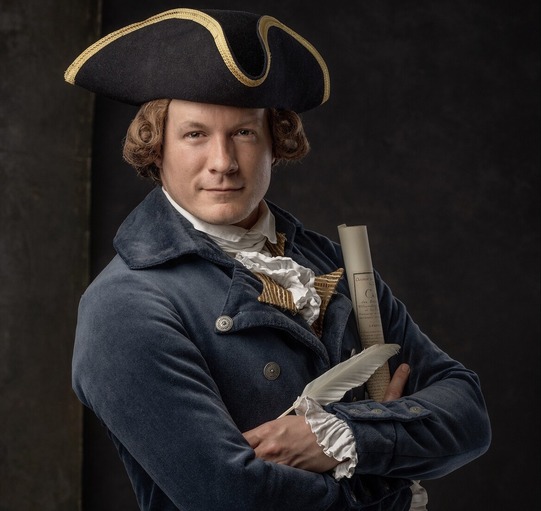
To mark the 250th anniversary of the Declaration of Independence, Colonial Williamsburg’s Thomas Jefferson interpreter Kurt Smith will take the stage in two separate evening performances at the Oklahoma History Center on Monday, March 2, and again on Tuesday, March 3. Both performances will take place at 6 p.m.
Portraying Jefferson is Kurt Smith, a dynamic storyteller and historian. Known for his in-depth knowledge of early American history, Smith brings the founding era to life. Thomas Jefferson—author of the Declaration of Independence—also served as minister to France and was the first US Secretary of State under President Washington. In addition, he was the second elected governor of Virginia and became the third president of the United States.
Tickets are $10 for Oklahoma Historical Society members and $20 for the general public. Tickets can be purchased online through the Museum Store, by phone at 405-522-0765 or at the door on the evening of the event.
|
|
This program is part of By the People: Conversations Beyond 250, which is a series of community-driven programs created by humanities councils across the United States, its territories, and the District of Columbia in collaboration with local partners. Together, these programs explore 250 years of the nation’s cultural life and imagine its shared future. The initiative was developed by the Federation of State Humanities Councils and the Smithsonian Center for Folklife and Cultural Heritage as a complement to the 2026 Smithsonian Folklife Festival. |
|
This program is funded in part by Oklahoma Humanities (OH) and the National Endowment for the Humanities (NEH). Any views, findings, conclusions or recommendations expressed in the program do not necessarily represent those of OH or NEH. |
|
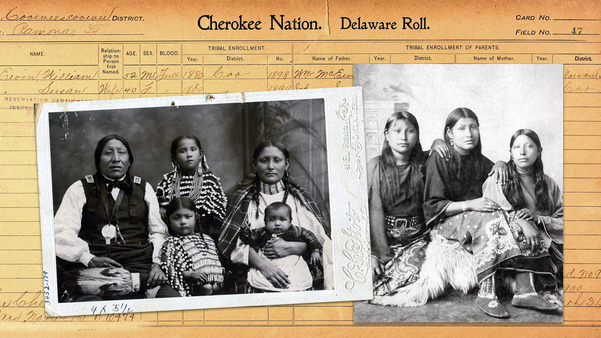
Lunch and Learn: Finding your Native Roots: The Dawes Rolls |
|
OETA's The American Revolution screening and panel |
|
|
LIVE EPISODE:
Oklahoma’s Favorite Son, Will Rogers
|
|
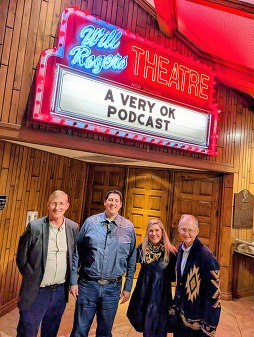
The latest episode of A Very OK Podcast was recorded live at the Will Rogers Memorial Museum in Claremore!
Listen to learn more about Will Rogers’ life and career from growing up on his family’s ranch in the Cherokee Nation to dining with kings and presidents. A born showman, he took his uncanny talent with a rope to the world’s greatest stages and then translated that success to the silver screen in Hollywood. His homespun humor and political commentary captured the world’s attention and made him a beloved figure.
Our guests on this episode are Tad Jones, director of the Will Rogers Memorial Museum, and Jennifer Rogers, Will’s great-granddaughter.
|
|
|
Kilgen Theatre Organ performance featuring the silent film Safety Last (1923) with Brett Miller |
|
|
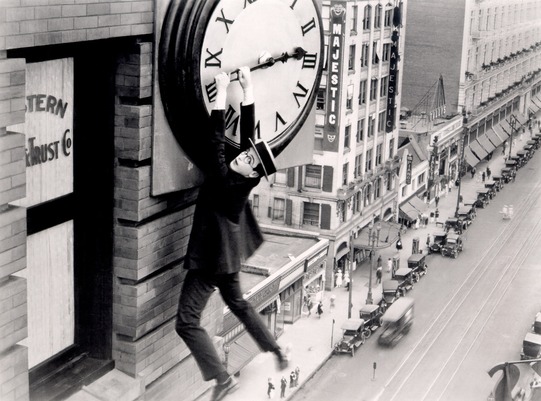
On Monday, February 23, from 7 to 8:30 p.m., a Kilgen Theatre Organ performance will be held in the Devon Great Hall at the Oklahoma History Center featuring organist Brett Miller accompanying the Harold Lloyd silent film Safety Last (1923). The film is best known for a stunt that made cinematic history, in which Lloyd is filmed hanging precariously from the hands of a large clock above downtown Los Angeles. Tickets are $10 for Oklahoma Historical Society members and $20 for the general public and are available by calling 405-522-0765.
|
|
Cherokee Strip Historical Society Annual Meeting and Oklahoma Rough Riders program |
|
|
The Cherokee Strip Museum and Rose Hill School is pleased to invite members and the public to its annual meeting and historical program “Oklahoma Rough Riders: Remembering the Spanish-American War,” presented by Jay Eby, historian and Rough Riders expert. The program will take place on Tuesday, March 3, following the Cherokee Strip Historical Society's annual meeting at the First Bank Event Center in Perry. The talk will be presented by Jay Eby, is a Perry native who founded a Rough Riders reenactment group in Arizona and appeared in a History Channel reenactment. Copies of the book Oklahoma Rough Riders: Billy McGinty’s Own Story (2008), co-written by longtime CSHS lifetime member Albert Stehno, will be available for purchase.
For more information, please contact the Cherokee Strip Historical Society at 580-336-2405 or by email at director@cherokee-strip-museum.org.
|
|
Living History Education Day |
|
|
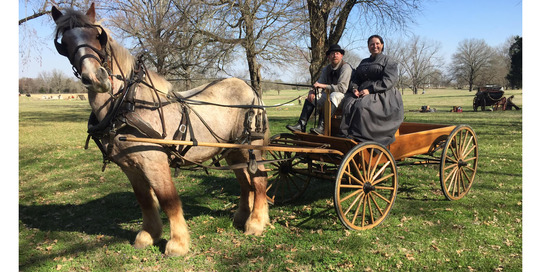
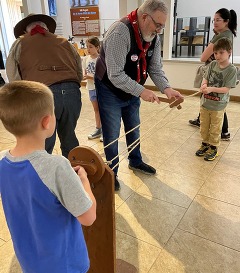
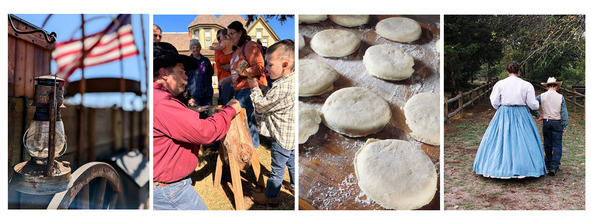
The Fort Towson Historic Site will host a full day of of educational experiences on Thursday, March 5, when the site will bring history to life with a FREE Living History Education Day. It will teach what life was like at Fort Towson more than 180 years ago, offering multiple learning experiences about life at the military outpost during the 1840s, when it served as a vital resupply point for soldiers headed south to engage in the Mexican-American War.
Groups need to register before the event. For more information about the events or to register for Living History Education Day, call 580-236-0537 or email fttowson@history.ok.gov. The Fort Towson Historic Site is located at 896 N. 4375 Rd. in Fort Towson.
|
|
|
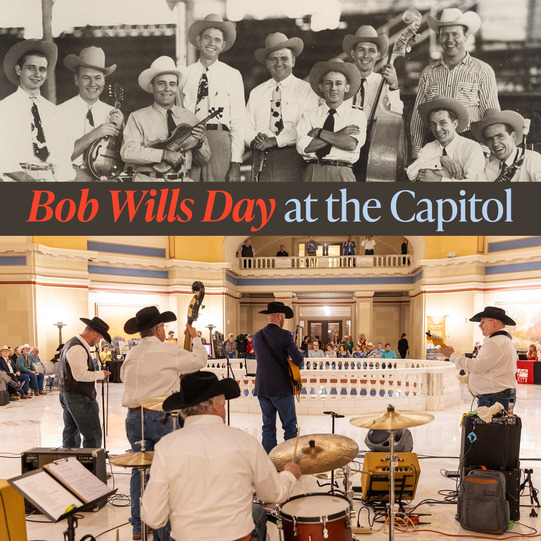
Join in a special celebration of the “King of Western Swing,” Bob Wills, as the Oklahoma Historical Society and the Oklahoma Arts Council come together for a fun-filled day on Monday, March 9! Swing by the Capitol’s second-floor rotunda from 10 a.m. to 4:15 p.m. on Bob Wills Day at the Capitol to hear great live music performances. The event will honor the life and legacy of this iconic musician, songwriter, and bandleader.
Bob Wills Day at the Capitol commemorates the life and legacy of the “King of Western Swing,” born March 6, 1905, who helped popularize the music genre during the 1930s and 1940s. Wills’ band, the Texas Playboys, had a daily program on the Tulsa radio outlet KVOO and were regular performers at the venerable Cain’s Ballroom.
|
|
Spring Break Activities at the History Center
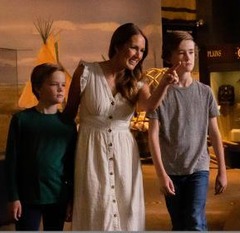
Looking for the perfect spring break activities for your family this season? Visit the Oklahoma History Center Museum (OHCM) to experience Smithsonian-quality exhibits that bring to life the voices and visions of Oklahoma with hands-on exploration and learning.
From March 16 to 20, set your own pace in the OHCM galleries and enjoy make-and-take crafts, scavenger hunts, and other activities added to the museum space.
All activities will be included with regular admission.
|
|
Will Rogers Spring Break Sign-ups
Spend afternoons during spring break at the Will Rogers Memorial Museum. Events are planned every day from March 16 to 20 between 1 and 3 p.m. to keep kids learning, with plenty of entertainment during their school break. Each activity is based on a specific aspect of Will Rogers’ extraordinary life, ranging from his time as a cowboy to his passion for aviation.
All children under 17 are admitted free of charge during spring break, thanks to a donation by Win and Kay Ingersoll.
|
|
2026 People with Disabilities Awareness Day
On Tuesday, March 10, from 12:00 p.m. to 4:30 p.m., the Oklahoma Department of Rehabilitation Services will host the 2026 People with Disabilities Awareness Day event at the Oklahoma History Center.
The day is dedicated to raising awareness and celebrating the abilities of people with disabilities in 2026. The public is invited to come together to learn, share experiences, and celebrate the strength and resilience of the disability community.
Mark your calendar and be a part of this impactful day!
|
|
Meet Hall of Fame inductee - Linda D. Wilson |
|
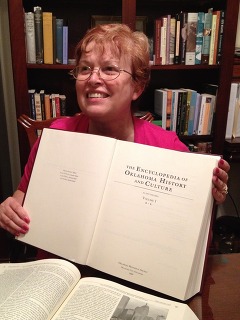
One of this year's Oklahoma Historians Hall of Fame inductee, Linda D. Wilson has written, published, and edited articles on Oklahoma and women’s history for thirty years. In 2000, at age 44, she returned to the University of Central Oklahoma and earned a master’s degree in history. She began working for the OHS while working on her master’s, where she was eventually hired as associate editor for The Encyclopedia of Oklahoma History and Culture. She remains an active contributor to the publication, having written over 250 entries. |
|
Oklahoma Historical Society Awards Banquet |
|
|
On Thursday, March 19, the Oklahoma Historical Society will honor award recipients and Oklahoma Historians Hall of Fame inductees at our annual Awards Banquet. This event is held at the Oklahoma History Center, located at 800 Nazih Zuhdi Drive in Oklahoma City. There will be a cocktail reception at 6 p.m. The dinner and program will begin at 6:30 p.m. Cocktail attire is requested, and guests are asked to RSVP by March 9.
The Oklahoma Historical Society will induct Donald L. Fixico, David W. Levy (posthumous), Linda D. Wilson, and Timothy A. Zwink into the Oklahoma Historians Hall of Fame during the Oklahoma Historical Society 2026 Awards Banquet.
|
|
Follow the OHS website calendar to learn about our events and programs at OHS museums and historic sites across the state! Our calendar constantly changes with the latest programs and activities, from seasonal events to celebrations, exhibits, films, educational classes, and workshops. |
|
|
Connect with the Oklahoma Historical Society on social media—where you can learn more about Oklahoma history and get up-to-date information about events and exhibits across the state!
|
|
|
Masthead image:
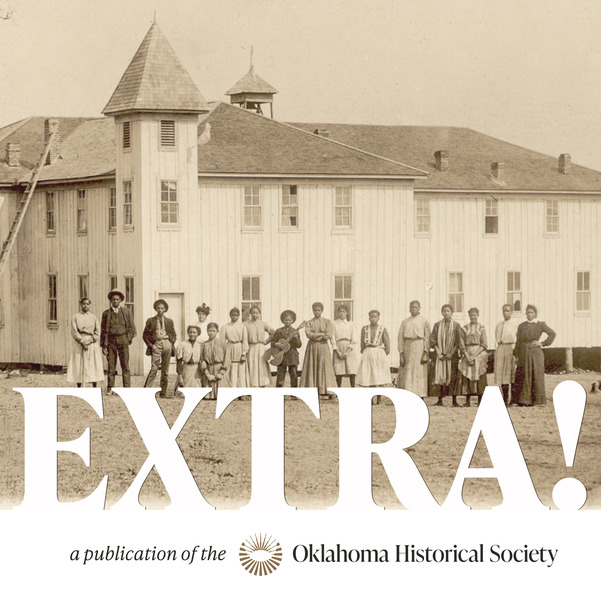
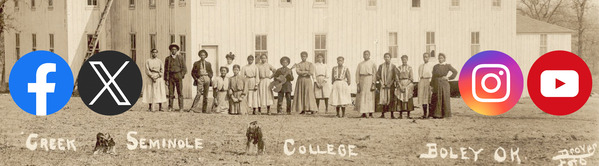
Black teachers and students stand in front of the Creek Seminole College, Boley (3377.E, Oklahoma Historical Society Photograph Collection, OHS).
About All-Black Towns
All-Black towns first emerged in Indian Territory after the Civil War, when Freedmen (those formerly enslaved by the Five Tribes) settled together for mutual protection and economic security. Amid the forced subdivision of tribal lands into individually owned parcels, a process known as allotment, many Freedmen selected allotments next to each other. African Americans also migrated to Oklahoma Territory to participate in the Land Run of 1889 and other land openings. E. P. McCabe, who helped found the All-Black town of Langston, urged thousands of African Americans to participate in the land runs. The creation of All-Black towns represented an attempt to achieve individual, economic, and social advancement amid a racially segregated society.
All-Black towns represent townsites that were established by African Americans and communities where local governments and key positions such as federal postmaster were controlled by Black officials. Some towns existed for only a short period while others remain incorporated today.
|
|
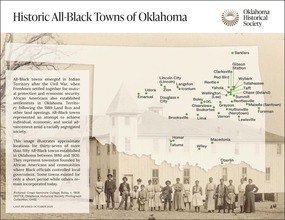
View the All-Black Towns map of Oklahoma, created by the OHS. It illustrates the approximate locations of a range of All-Black towns established in Oklahoma between 1880 and 1920. |
|
|
|
|