August 2026
Starting in January 2027, a new federal law requires some SoonerCare members ages 18-64 to work, go to school or help in their community. This will ensure those members keep their SoonerCare health coverage. Members can review the Work Requirements Screener to see if they may be impacted.
Please tell your patients to make sure their information is up to date in the MySoonerCare.org member portal. Advise them to be on the lookout for mail from SoonerCare or the Oklahoma Health Care Authority. Members will get a yellow letter if they are impacted.
A poster advising members of next steps will soon be available to order for your office or clinic. Check the OHCA publications page in the next couple of weeks.
Centene is offering two provider training opportunities. Attendees earn education credits while learning to care for SoonerCare members with sickle cell disease.
-
Sickle Cell Disease: Navigating Complexity in Clinical Practice
This course explores navigating sickle cell disease in clinical practice, including its epidemiology, pathophysiology, diagnosis and common complications. Clinicians will evaluate current and emerging therapies and evidence-based strategies to improve management and prevention of SCD-related complications.
-
Sickle Cell Pain: Understanding Its Impact and Personalizing Care
This activity reviews the pathophysiology and clinical presentation of pain in sickle cell disease and applies evidence‑based strategies for acute and chronic pain management. Learners will explore guideline‑supported, patient‑centered approaches and interprofessional care to improve outcomes across care settings.

Oklahoma is transitioning from AuthentiCare’s Electronic Visit Verification EVV system to Acumen’s Direct Care Innovations (DCI) EVV system. Steps to take to prepare for the transition:
- Assign who will be responsible within your agency to act as the point person or people for the EVV transition.
- Review how your team captures EVV visits today or begin the plan for capturing EVV visits based on the available options (state EVV aggregator or third-party vendor).
- If your agency uses a third-party EVV system, begin the conversation with your vendor about connecting to DCI.
Please note that the Aug. 18 town hall has been canceled. It will be rescheduled at a later date. Visit the EVV webpage to learn more.
|
 |
|
According to the U.S. Food and Drug Administration, smokers are 30% to 40% more likely to develop type 2 diabetes than nonsmokers. SoonerCare offers two benefits to assist members with these challenges — tobacco cessation medications and diabetes self-management services. Learn more about these free benefits, and refer your patients today. |

Antipsychotic medications can provide important benefits for members with serious mental illness. However, they are also associated with increased risks of weight gain, diabetes and lipid abnormalities, particularly in children, adolescents, and those receiving two or more antipsychotic medications. Regular metabolic monitoring can help identify complications early and improve outcomes.
|
|
RECOMMENDED METABOLIC MONITORING* |
| Parameter |
Baseline |
4 Weeks |
8 Weeks |
12 Weeks |
Every 6-12 Months |
| Weight/BMI |
✓ |
✓ |
✓ |
✓ |
✓ |
| Blood pressure |
✓ |
|
|
✓ |
✓ |
| Waist circumference |
✓ |
|
|
✓ |
✓ |
| Fasting blood glucose or HbA1c |
✓ |
|
|
✓ |
✓ |
| Fasting lipid panel |
✓ |
|
|
✓ |
✓ |
*More frequent monitoring may be appropriate based on patient risk factors or medication selection.
Antipsychotics are consistently among the most frequently prescribed medications for SoonerCare members. Providers are encouraged to follow best practice recommendations, which generally support the use of antipsychotic medications for psychotic disorders and caution against their routine use for behavioral symptoms, especially among children and anyone in foster care.
If you're concerned that your prescribing or monitoring may not align with best practice recommendations, please consider the following resources:
If you have questions about a specific medication or other pharmacy benefit questions, please call the Pharmacy Help Desk associated with your patient’s health plan.

Can a re-evaluation CPT code be requested in a PA submission?
Re-evaluation requests are approved by OHCA when submitted documentation supports an additional evaluative service because of a member’s change in status or condition. The re-evaluation CPT codes, 97164 and 97168, can be approved for PT and OT, respectively. Providers must submit a progress note that describes the member’s current status and justifies additional evaluative services. Furthermore, a re-evaluation can be requested at least six months from the previously performed evaluation. Routine assessment of a member’s progress in accordance with the established plan of care (progress notes) is an expected component of ongoing care. It should not be coded as a re-evaluation.
When should a subsequent/continuation PA request be submitted?
A PA request should always be submitted with a present or near-future start date. It is important to note the end date of a previously submitted PA. Services may be rendered on both the start and end dates of approved PAs. For example, if a PA is approved from Aug. 1 to Dec. 1, 26, then services can be rendered on both these dates as they fall within the approval timeline.
A new PA should not overlap with a previously approved PA. So, if a subsequent/continuation PA is necessary in the example above, then it should be submitted to start on Dec. 2, 2026 or after.
Clinics should be aware of existing authorization timelines. If continued services are medically necessary, they should timely submit a subsequent/continuation PA request to resume services as soon as possible.
What are some recommendations to complete an SLP SGD/AAC evaluation?
Depending on a member’s level of speech/sound production and language comprehension, an SGD/AAC evaluation may be needed. Review the guidelines for this evaluation PA request.
- Note that CPT 92507 or 92609 are not the recommended codes to satisfy aspects of the SGD/AAC evaluation, including the trialing phase.
- An SLP’s SGD/AAC evaluation will ultimately recommend a device best suited to meet the member’s needs. Per the guideline, at least three devices must be trialed before coming to a conclusive recommendation. Three models of the same device do not meet this requirement.
- Because this process can be lengthy, no more than 4 units of CPT 92608 could be used per day added on to an SGD/AAC evaluation.
- An SGD/AAC evaluation should be completed within 90 days of the signed prescription for this service.
The completed SGD/AAC evaluation should be provided to an OHCA-contracted SGD DME provider so that a timely DME PA request that meets requirements can be submitted.
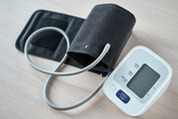
August 19 is World Humanitarian Day, and during the entire month of August, Oklahoma ABLE Tech’s Device Reutilization Program is looking for community heroes to donate blood pressure monitors and shower chairs.
Device Reutilization Program staff will pick up, sanitize, refurbish and match donated durable medical equipment (DME) with Oklahomans who need it. The program is available to any Oklahoman in need of DME or assistive technology devices, regardless of income, with priority given to SoonerCare members.
A donated device or DME you no longer use could make a meaningful difference in someone else’s life. To learn more about donating, visit the Donate Medical Equipment webpage or complete the Authorization for Donated Equipment form if you have DME to give. Together, we can help turn unused equipment into greater independence for our fellow Oklahomans.
|
|