|
|

|
July 2026

Thank you to the provider agencies who completed our recent transition readiness survey. Your feedback is directly shaping our communications and the resources we are building for the transition ahead.
Oklahoma’s transition from AuthentiCare’s Electronic Visit Verification (EVV) system to Acumen’s Direct Care Innovations (DCI) EVV system continues. There are steps you can take now to prepare for this transition.
- Assign who will be responsible within your agency to act as the point person or people for the EVV transition.
- Review how your team captures EVV visits today or begin the plan for capturing EVV visits based on the available options (state EVV aggregator or third-party vendor).
- If your agency uses a third-party EVV system, begin the conversation with your vendor about connecting to DCI.
We’re resuming our bimonthly town hall schedule, and our next town hall will be at 2 p.m., Aug. 18, 2026. Register in advance. Topics covered include current EVV changes within the state, HHAX updates, developments and progress on the transition, EVV compliance and provider readiness activities to prepare for the transition. Participation is strongly encouraged.
Visit the EVV webpage to learn more. Send any questions to EVV@okhca.org.
|

SoonerCare covers dozens of prenatal vitamins at no cost to female members, ages 10 to 50. Prenatal vitamins do not count toward monthly prescription limits, and many are available without prior authorization. While not listed on the 90-day Maintenance Drug List, several prenatal vitamin formulations are available for a 90-day supply.
In fiscal year 2024, only 15% of pregnant SoonerCare members filled a prescription for prenatal vitamins.
Of those who filled a prescription for prenatal vitamins, more than two-thirds filled it just one or two times, suggesting inconsistent use despite the need for continued use throughout pregnancy.
Prescribing prenatal vitamins at the first pregnancy visit and reinforcing continued use can support healthy fetal development. If you have questions about a particular medication or other pharmacy benefit questions, please call the Pharmacy Help Desk associated with your patient’s health plan.
As a reminder, SoonerCare also covers additional services for pregnant members in certain circumstances. And SoonerCare provides 12 months of postpartum care for eligible members.
|

Should SLP continue to use CPT code 92507?
CPT code 92507 is a commonly utilized treatment code for the delivery of speech-language pathology (SLP) services. This is an untimed code, and providers apply clinical judgment to meet a member’s needs using this code over a session of at least 30 minutes. As this CPT code lacks specificity, it can be used by the SLP for treatment of multiple areas, including:
- Fluency disorder (e.g., stuttering and cluttering)
- Speech sound production disorders (e.g., articulation, phonological process, apraxia and dysarthria)
- Language comprehension and expression disorders (e.g., receptive and expressive language)
- Voice, upper airway dysfunction and/or resonance disorders
Since the initial use of CPT code 92507, SLP practice patterns have evolved significantly — especially considering research and newer technologies, equipment and supplies — to provide treatment targeted to a disorder. Accordingly, CPT 92507 is scheduled to be differentiated into timed codes by the end of this year, with the change effective in 2027.
Recommendation: We recommend that all providers submitting a PA request for CPT 92507 ensure a PA end date of Dec. 31, 2026, at the latest. As the new differentiated CPT codes are finalized, a future newsletter topic will cover them. New PAs for 2027 dates of service will need to be submitted starting in mid-December, using the new 2027 codes.
Do providers need to be contracted with OHCA?
To ensure service reimbursement, regardless of whether PA approval is required, both referring and rendering providers must be contracted with OHCA. View information on provider contracting.
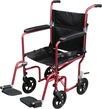
Through Oklahoma ABLE Tech's Device Reutilization Program, Oklahomans may be able to obtain mobility equipment such as transport wheelchairs and other devices that can make daily life easier, more comfortable and more accessible. These lightweight, portable devices can help individuals with mobility needs participate more fully in community activities while reducing the physical demands on family members and caregivers.
Contact the Device Reutilization Program at atreuse@okstate.edu or visit okabletech.org/reuse to learn about the equipment available in inventory.
Equipment availability changes regularly based on donations received. Available sizes, styles and features may vary.
|
|
|
|
|
|
|
|
|
Chief Executive Officer
Clay Bullard
OHCA Board of Directors
Marc Nuttle, Chairman
Norman, OK
Alex Yaffe, Vice Chairman
Oklahoma City, OK
Tanya Case
Duncan, OK
John Christ
Oklahoma City, OK
Kevin Corbett
Edmond, OK
Jeffrey Cruzan, M.D.
Oklahoma City, OK
Clark Jolley
Edmond, OK
Kim Leland
Norman, OK
Phillip Kennedy
Lawton, OK
Information contained within this newsletter is subject to change. Be sure to check OHCA provider letters, global messages and web alerts at OKHCA.org for the most up-to-date information.
Our vision is for Oklahomans to be healthy and to have access to quality health care services regardless of their ability to pay.
OHCA Core Principles:
Passion for Our Purpose
Empowerment and Accountability
Trust and Transparency
Solution-oriented
Servant Leadership
The Oklahoma Health Care Authority does not discriminate on the basis of race, color, national origin, sex, religion, age or disability in employment or the provision of services.

|
|
|



