|
|
Thanks to spring rains and warming temperatures, Oklahoma’s reptile and amphibian community is hopping! We’ve rounded up stories about resident species, tips for avoiding negative snake encounters, and a timeline of herpetological discoveries and research in the state.
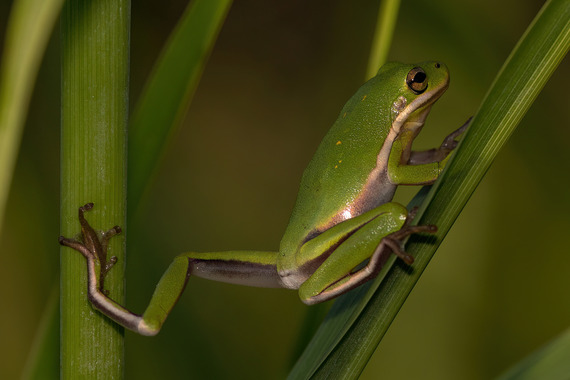 📷 Green treefrog by Greg Silva.
|
|
|
Oklahoma is often thought of as an ecological melting pot, where forests, prairies, and wetlands meet to provide habitat for a truly impressive list of animals. That blend of eastern and western species – including those rare and common, secretive and showy – undoubtedly holds true for Oklahoma’s reptiles and amphibians.
Collectively known as herpetofauna, or simply “herps,” 140 species of salamanders, frogs, turtles, lizards, snakes, and alligator have been documented in the Sooner State. Reptiles and amphibians can be found across the entire state, including the 100 or so wildlife management areas owned or operated by the Oklahoma Department of Wildlife Conservation.
|
|
|
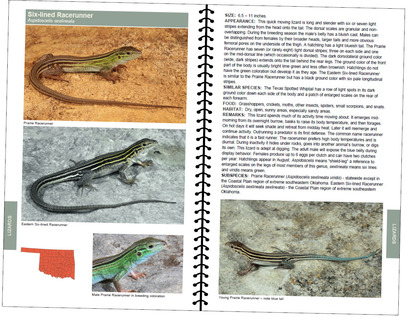
Learn about even more species in the Wildlife Department's “A Field Guide to Oklahoma’s Amphibians and Reptiles." Each account shares a photo of the animal along with a physical description, information about the food and habitat preferences, and notes on the life cycle and habits of the species.
|
|
|
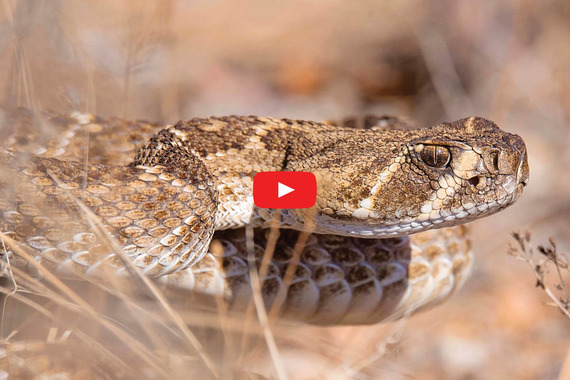 🎥 Click to get tips for avoiding unwanted snake encounters. 📷 Western diamond-backed rattlesnake by Jeremiah Zurenda.
|
|
|
Love ‘em or hate ‘em, snakes are an ecological mainstay in Oklahoma. They can be found across the state – in urban areas as well as places more rural and wild – living in burrows, around rocks and brush, and even part-time in water and trees. They’re also found on opposite sides of the food chain, serving as both predator and prey. As a group, snakes eat almost anything from insects, frogs, and fish, to lizards, small birds, and mice. As prey, they may become a meal for larger birds and mammals, and even other snakes!
We know encountering one of these ecological “jacks-of-all-trades” isn’t on everyone’s Outdoor Oklahoma bucket list, but the chances of an encounter rise with increasing time spent in snake habitat. We checked in with biologists on both sides of the state to get tips for avoiding negative snake encounters and learned so much more about Oklahoma snakes.
|
|
|
|
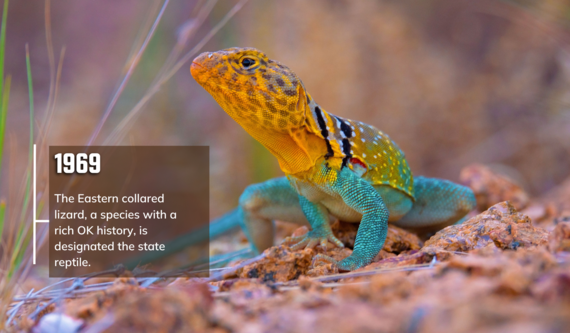 🎥 Click to get highlights from Oklahoma's history of herps.
|
|
|
Since the first known mention of a Northern cottonmouth in 1819, Oklahoma’s list of reptiles and amphibians has grown to include an incredible mix of species. And while the history of those species extends back to before the 19th Century, with an understanding of and names given by Native cultures, the state’s archived history of herpetology begins after the Louisiana Purchase. More than 200 years after expeditions by English Americans, Oklahoma is recognized as one of the top twenty states for reptile and amphibian diversity and hosts a variety of herpetological conservation efforts.
In his career managing and monitoring nongame species, the Wildlife Department's Mark Howery has regularly leaned on findings from reptile and amphibian research and surveys conducted in the state, searching for past records as the need arose. But he recently dove deep into the archives and developed a more complete picture of Oklahoma’s herpetological history.
|
|
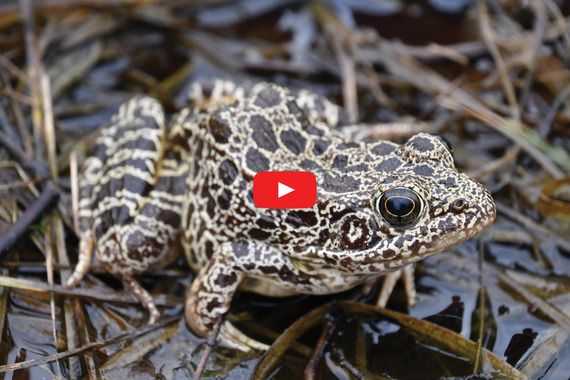 🎥 Click to Watch: 12 Steps for Studying Crawfish Frogs
The secretive crawfish frog is experiencing severe declines across much of its range but appears to be thriving in Oklahoma! A team from Oklahoma State University has captured and tagged crawfish frogs at Atoka WMA and documented breeding populations in at least 32 Oklahoma counties.
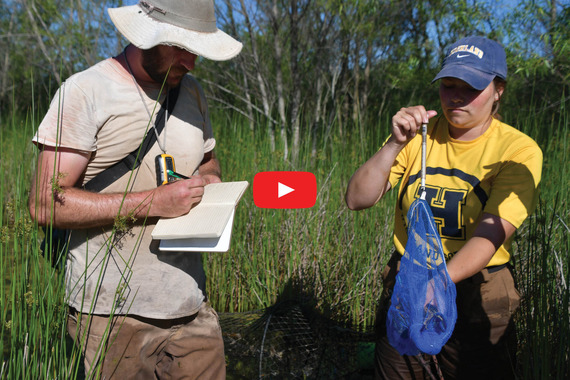 🎥 Click to Watch: Wading into the Wetlands to Study Oklahoma's Turtles
A team from the University of Arkansas waded into a wetland to learn more about the chicken turtle. These secretive turtles may resemble the more familiar red-eared slider but have a more restricted range, extremely long necks, and green and yellow stripes on the hind legs.
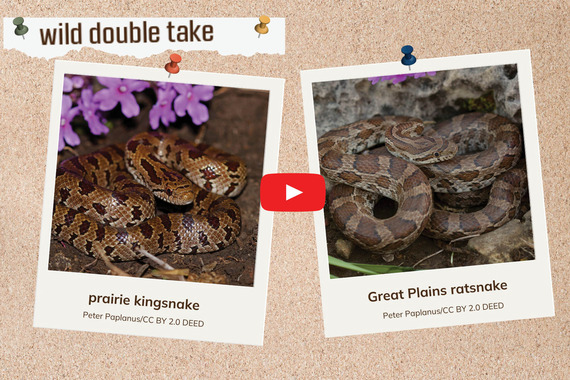 🎥 Click to Watch: Wild Double Take: 🐍 Kingsnake and Ratsnake
Nearly half of Oklahoma’s snake species, including the nonvenomous prairie kingsnake and Great Plains ratsnake, can be broadly described as “brown and blotch.” We share tips for identifying these Oklahoma look-alike species, with notes about the subtle differences in size and the texture of scales, in our Wild Double Takes playlist.
|
|
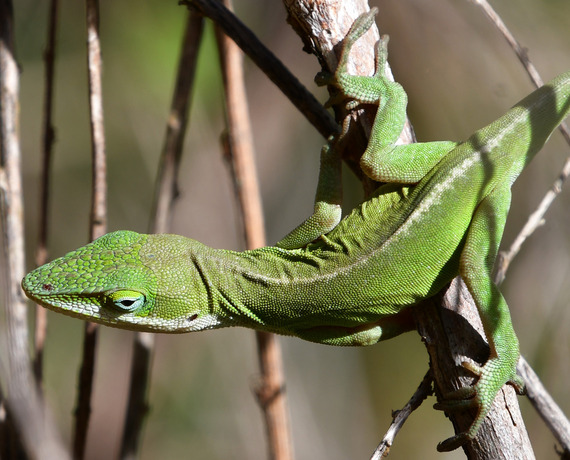 📷 Green anole.
Sharing nature sightings is one of the easiest and most effective ways you can get involved in conservation. It’s something you can do whether you’re new to nature or have years of experience, and every sighting helps biologists learn a little more about our state’s natural resources.
The free nature-sharing app iNaturalist is a great place to log sightings from your Outdoor Oklahoma adventures. After creating a free account, you can add observation details from their website or mobile app, share notes beyond the standard “what, when, and where” fields, and search for sightings made by other iNaturalists in your area. As an added bonus, iNaturalist automatically recommends species identifications when a photograph is uploaded with the observation. Members of the iNat community also may recommend identifications once the observation is posted.
|
|
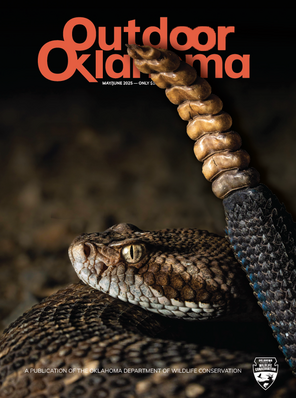
Can't get enough of Oklahoma's reptiles and amphibians? Many of these stories were first shared in the May/June issue of Outdoor Oklahoma and in the monthly e-newsletter, the Wild Side. Subscribe today to keep info slithering into your physical and virtual mailboxes! |
|
|
|
|