|
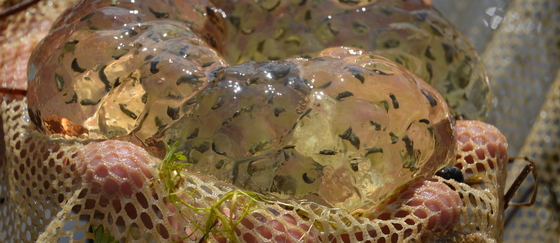
Surveyors will soon hit the field in search of Oklahoma’s diverse wildlife. In addition to surveys of insects and birds, two projects will focus on salamanders and may reveal the location of egg masses like these found at Cookson WMA.
Researchers will soon be learning more about
Oklahoma’s nongame wildlife, thanks to funding from the State and Tribal
Wildlife Grants Program. These grants are congressionally appropriated, distributed through the Wildlife Diversity Program, and must be used
for research or surveys of Species of Greatest Conservation Need. Oklahoma’s 311 SGCN are listed in
the Comprehensive Wildlife Conservation Strategy.
Fifteen project ideas were submitted through the Request for
Proposal process; the below six were recently funded. These grants are available at a 65:35 cost-share ratio, with a federal share cap of $90,000.
Remote Acoustic Biomonitoring for Prairie Mole Crickets
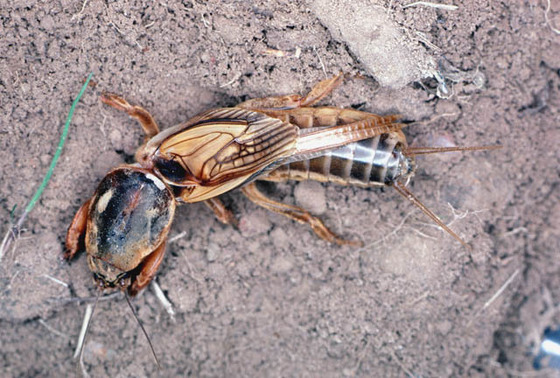
Male Prairie Mole Cricket. Photo by T.J. Walker, University of Florida.
Principal Investigators: Daniel Howard, University of New Hampshire, Peggy Hill, University of Tulsa, and Carrie Howard, University of New Hampshire
Grant Period: July 1, 2018 - June 30, 2020
Once thought to be extinct, the Prairie Mole Cricket is a
rare grassland insect found in tallgrass prairie remnants in the southern
plains of the United States. Researchers will conduct listening surveys to determine the abundance and
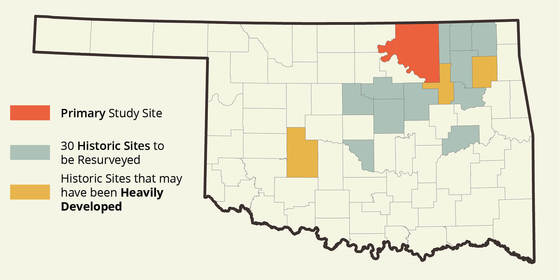
distribution of the Prairie Mole Cricket at the Tallgrass Prairie Preserve and reconstruct the current Oklahoma range map by surveying historic sites and
predicted sites.
Prairie Mole Cricket Survey Sites:
Distribution, Habitat and Abundance of the Ringed Salamander
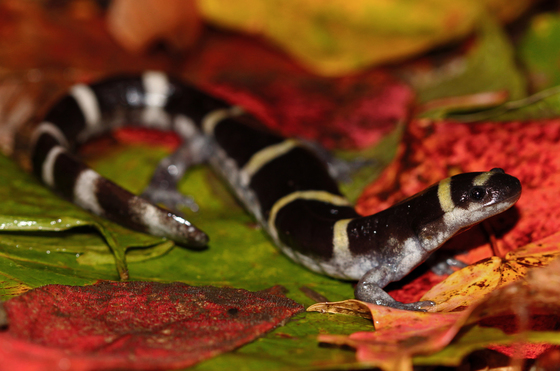
Ringed Salamander. Photo by Peter Paplanus/Flickr.
Principal Investigators: Stanley Fox, Oklahoma State University, and Elisa Cabrera-Guzman, Oklahoma State University
Grant Period: July 1, 2018 - June 30, 2020
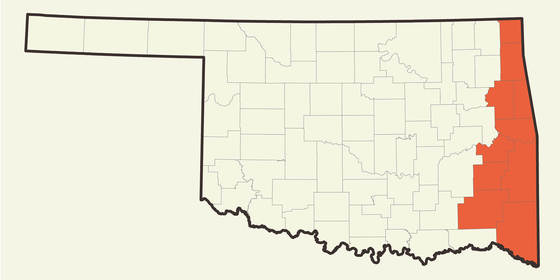
Rarely encountered outside of the fall breeding season, the
Ringed Salamander spends much of the year in underground retreats in wooded
areas. Researchers hope to better understand the distribution and abundance of
this salamander by focusing surveys at known locations as well as at sites with
suitable habitat. Surveys on rainy fall nights could document mass migration to
breeding ponds.
Ringed Salamander Survey Sites:
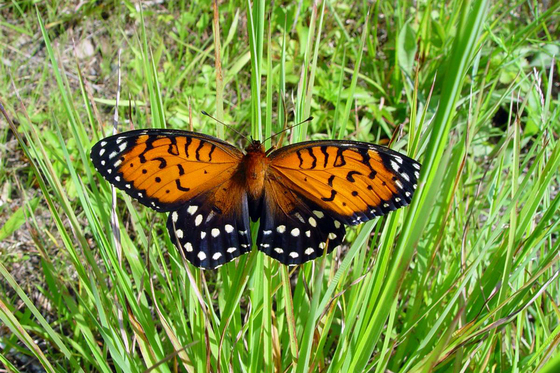
Status of the Regal Fritillary in Oklahoma
Regal Fritillary. Photo by Pennsylvania Army National Guard.
Principal Investigator: Kristen Baum, Oklahoma State University
Grant Period: January 1, 2019 - June 30, 2021
A butterfly of the prairies, Regal Fritillaries are active
from late May through early October. In Oklahoma – the southern edge of the
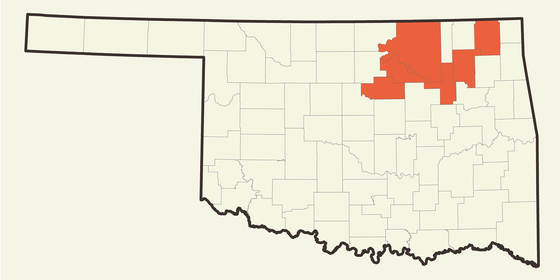
butterfly’s range – surveyors will estimate the distribution and abundance of
adult butterflies and record larval host plant use if oviposition is
observed. Associated species of butterflies or other pollinators and relevant habitat information will also be provided.
This species was petitioned to be listed as endangered or
threatened in 2013 and is currently under review by the U.S. Fish and Wildlife
Service.
Regal Fritillary Survey Sites:
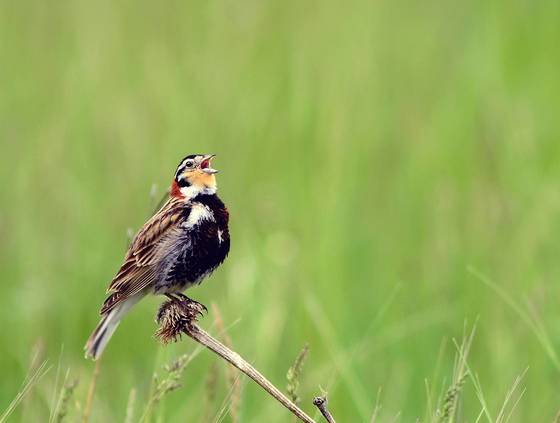
Winter Habitat Use in Three Longspur Species
Chestnut-collared Longspur. Photo by Rick Bohn/USFWS Mountain-Prairie Region.
Principal Investigators: Jeremy Ross, University of Oklahoma, and John Muller, University of Oklahoma
Grant Period: October 1, 2018 - September 30, 2020
Winter visitors to our state’s prairies, longspurs (and
their habitat preferences) are poorly understood. Researchers plan extensive
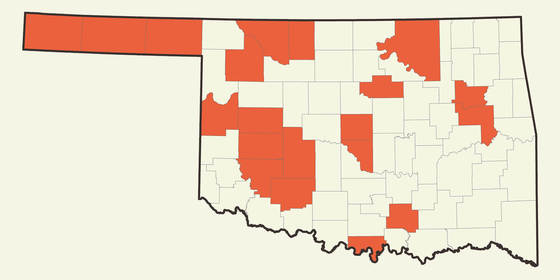
surveys of three species of longspur - the Chestnut-collared, McCown’s and Smith’s - on at least eight conservation areas. In addition to surveys, Chestnut-collared Longspurs in Comanche, Caddo, and Kiowa counties will be
captured, banded and tracked with hopes of learning more about
their daily foraging patterns and seasonal movements.
Longspur Survey Sites:
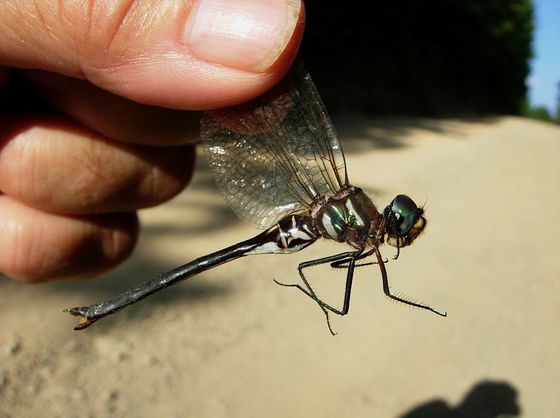
Life History and Ecology of the Ozark Emerald
Female Ozark Emerald. Photo by David Arbour.
Principal Investigators: Daniel Allen, University of Oklahoma, Daniel Nelson, University of Oklahoma, Brenda Smith-Patten, Oklahoma Natural Heritage Inventory, and Darin Kopp, University of Oklahoma
Grant Period: July 1, 2018 - June 30, 2020
Ozark Emerald dragonfly larvae have never been found in the
wild and only 50 confirmed adult records exist for Oklahoma. Investigators hope to
discover the larval form of this Species of Greatest Conservation Need and
determine their habitat needs. Surveyors will also report co-occurring
macroinvertebrate species in areas where adult Ozark Emeralds are found and
compile occurrence data for 73 stream and river dwelling SGCN in the Ouachita
Mountains.
Despite the common name, Ozark Emeralds appear most common
in the Ouachita Highlands. This species is under review for a federal listing by the U.S. Fish and Wildlife Service.
Ozark Emerald Survey Sites:
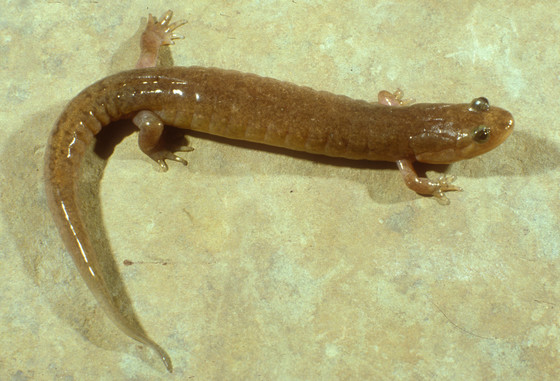
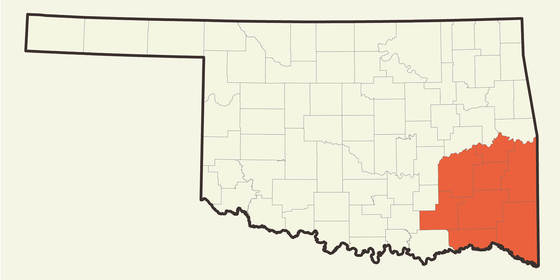
Distribution, Diversity and Ecological Limits of Ouachita Dusky Salamanders in Oklahoma
Young adult Ouachita Dusky Salamander. Photo by Greg Sievert. Learn more about this species and other amphibians in "A Field Guide to Oklahoma's Amphibians and Reptiles."
Principal Investigators: Ronald Bonett, University of Tulsa Timothy Clay, University of Tulsa
Grant Period: July 1, 2018 - June 30, 2020
Geographically restricted to the Ouachita Mountains, Ouachita
Dusky Salamanders are found only in Oklahoma and Arkansas. In Oklahoma, they
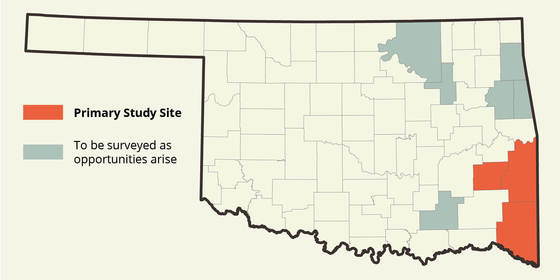
are only known from the five most southeastern counties with the highest number
of records being in LeFlore County. Researchers will survey multiple stream
reaches at night to determine the current distribution and abundance of this
salamander. Genetic tests conducted during these surveys should reveal if any
of Oklahoma’s Ouachita Dusky Salamander populations are genetically different
enough to be recognized as a separate species.
Ouachita Dusky Salamander Survey Sites:
The State Wildlife Grants Request for Proposal contained ten focal items, each of which was aimed at improving our knowledge of or the habitat quality of species that are rare and/or thought to be in decline. The Wildlife Diversity Program strives to collect the most accurate status information feasible for nongame species and believes this information can prevent the need to list many species as threatened or endangered.
|